
After purchasing a washing machine, you don't necessarily need to call a technician for installation. However, if you're hesitant to do the work yourself, this information will allow you to verify that the technician performed the installation correctly.
Selecting a location
This should be done taking into account the following factors:
- presence of a level floor;
- the presence of a water supply and sanitation system nearby;
- the ability to directly connect the device to the power grid;
- dimensions of the device and the method of loading laundry.
Typically, a bathroom, kitchen or hallway is chosen for this purpose.
Preparing for installation
To protect against possible damage during transportation, the rotating elements of the device are secured using fasteners:
- The rear panel of the device contains brackets for rigidity. These elements also hold the electrical cord and hose in place.
- There are blocks between the machine body and the tank. To remove them, simply tilt the machine forward slightly.
- The drum is secured with boots. The remaining holes are filled with the included plugs.
Installation and alignment
The base must be strictly horizontal, stable, have a dense structure, and not create vibrations. The horizontal position of the installation is determined by the top panel. A two-degree tilt is acceptable. To check whether the washing machine is installed correctly, try rocking it. If there is no free movement or the amplitude is the same for all diagonals, the installation has been completed correctly.
Connecting to the water supply
The appliance comes with hoses, but they're not always large enough. Therefore, extension cords may be needed. The technician may also request a valve, a special tap, or a tee.
The washing machine is connected to the water supply in one of the following ways:
- pipe insertion;
- connection to the mixer;
- connection to the toilet cistern inlet.
If the washing machine will be installed in a country house without a central water supply, an alternative solution can be used. To do this, raise the large water tank to a height of at least one meter and connect the hose from the machine to it. Water should be added regularly during operation.
Connection to the sewerage system
Draining dirty water can be done in two ways:
- through a special hose directed into the bath or toilet (usually used temporarily);
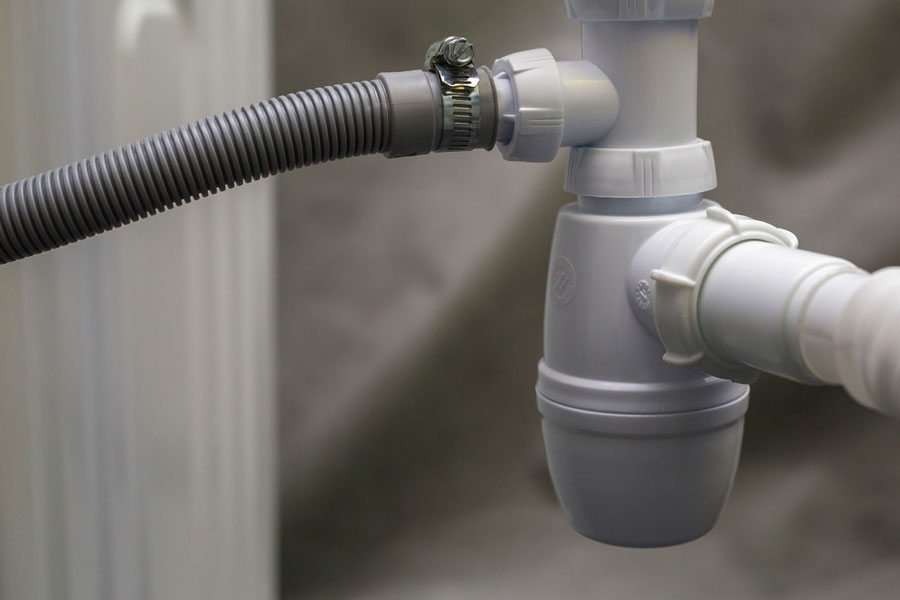
- through a stationary drain (through a siphon with a separate outlet or through a hose connected directly to the sewer pipe).
Connecting to the power grid
When choosing a socket, pay attention to models with a high protection rating. Ideally, these should have a ceramic base and a moisture-resistant cover. Avoid extension cords and adapters, as additional connections can cause the contacts to heat up and damage the washing machine.
Test inclusion
When checking the correct installation, the machine should be run without laundry, alternately in different modes.
In this case, attention is drawn to:
- the speed of water filling the tank and the correctness of drainage;
- full heating of liquid;
- uniform rotation of the drum and the required spin speed;
- no leaks.
During operation, the washing machine should not make any unusual sounds.


