
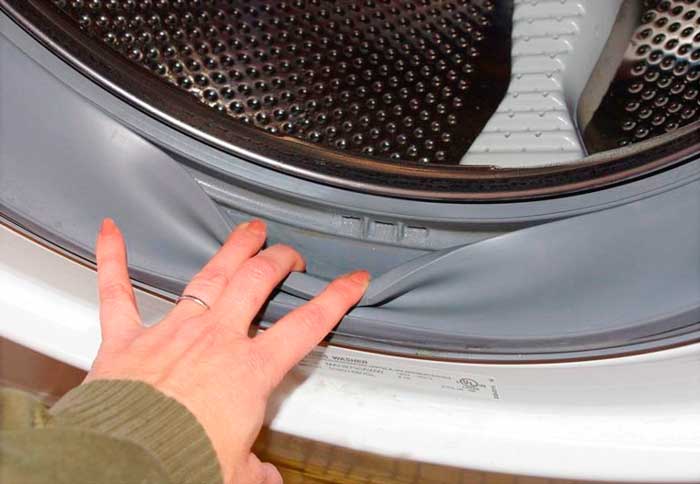
 Where, if not in the washing machine, is there a favorable place for the development and reproduction of fungi and scale, mold and microbes not only on external places, but also inside on the parts?
Ideal conditions are humidity, darkness and warmth.
If the machine is heavily damaged by plaque, it may sometimes even be necessary to replace its internal parts.
We often clean the outside of our washing machines and maintain their appearance, but we often forget or are unaware of the rubber seal, which plays a vital role in preventing leaks between the drum and the door. Does it need maintenance, and how can we clean the dirt under the rubber seal on our washing machines?
Gum cleaners
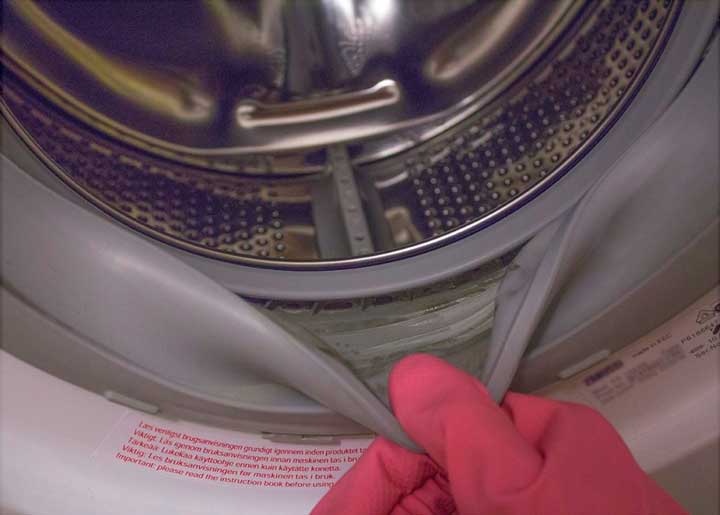 The sealing rubber is in direct contact with water.
Due to its shape, it cannot remove all the water itself, and if liquid stagnates in it for a long time, then it appears unpleasant odor rot followed by the growth of fungi and deposits.
How to clean the rubber seal in a washing machine
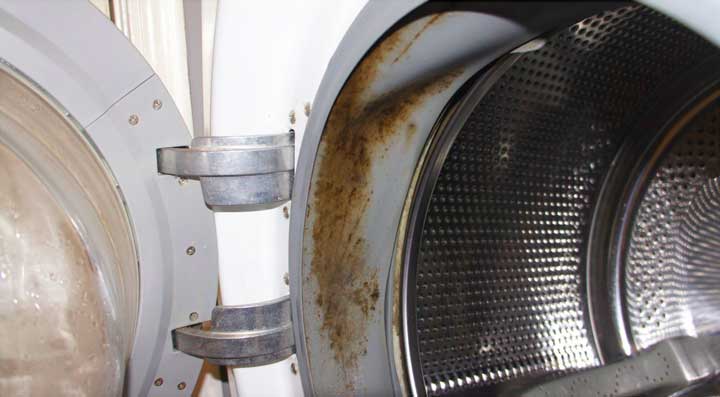 Moisture causes mold to grow, which manifests itself the presence of black spots.
It appears when machine users try to save money and wash clothes on a low temperature setting. This makes disinfection impossible.
Mold grows on the cuff, in the powder tray, in the conditioner, in the hose.
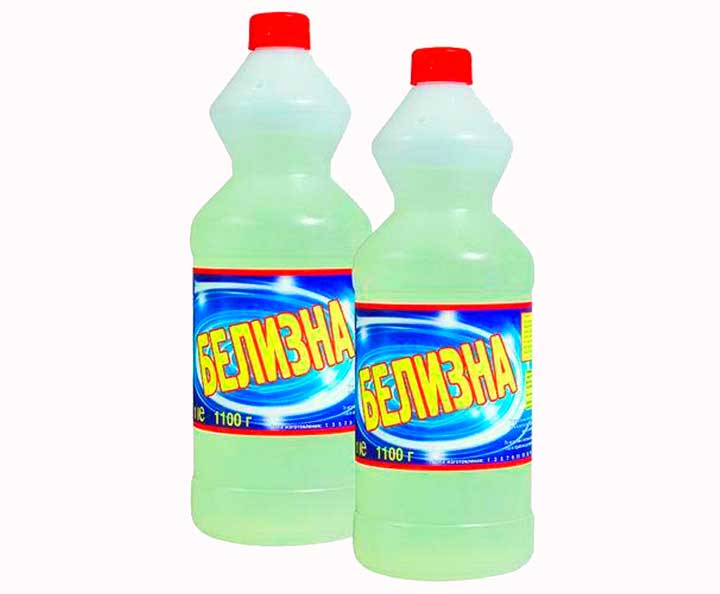 To You can get rid of it using:
- chlorinated agents – bleach, toilet duck or Domestos and similar liquids;
- nail polish remover;
- with copper sulfate.
Scale can also cause mold to develop, as the fungus thrives in its porous structure.
 If there is scale on the cuff and you want to get rid of it, you can use folk remedies in the form:
- citric acid;
- white and table vinegar;
- Chemical powder "Antinakipin".
Every six months, to combat scale, you can use a mixture of 1 liter of vinegar and 400 grams of citric acid. Pour it into powder compartment and start the wash cycle at a temperature above 65 degrees. This preventative maintenance can rid the machine of limescale, mildew, and slime deposits.
How to clean under the rubber seal in a washing machine
Following simple rules will help prevent the growth of mold, germs, and unpleasant odors.
All you need is:
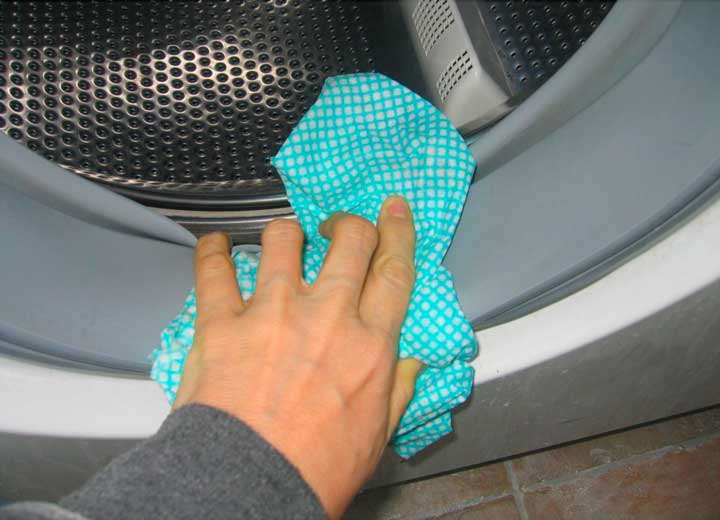
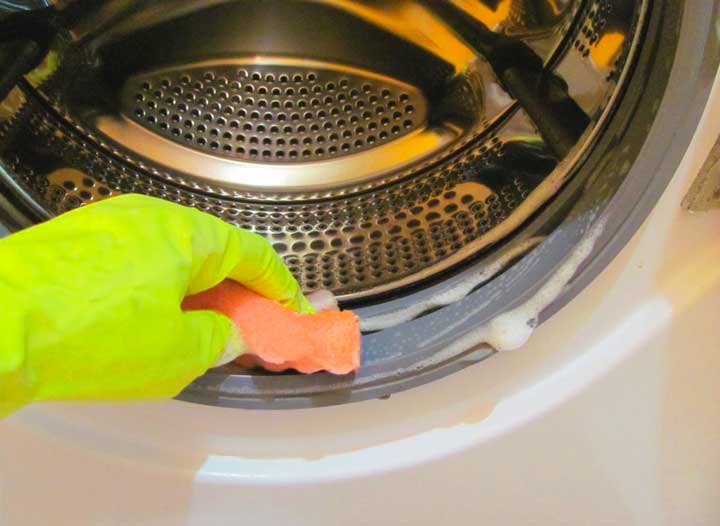
 Remove plaque and mold by wiping the outer and inner sides of the cuff with a damp cloth.
- Wipe the entire rubber and the drum with a sponge soaked in a chlorine-containing solution, applying more chlorine into the grooves.
- Close the loading door and leave it that way for at least half an hour.
- After the processing time has elapsed, turn on the rinse program.
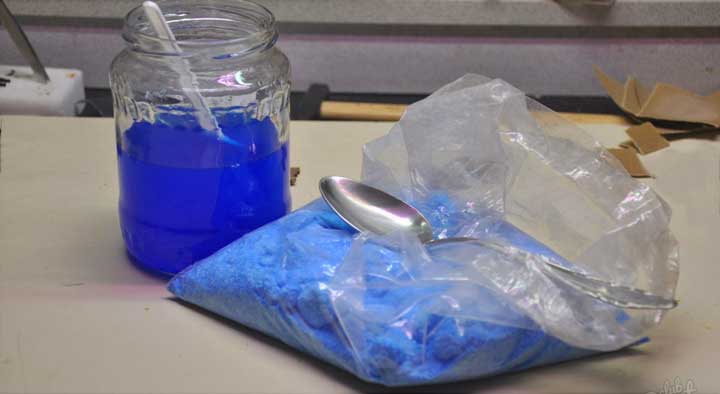 Copper sulfate solution It's excellent for fighting mold and cleaning. It's diluted in water—you'll need 30 grams of the substance per liter.
Apply this solution to the cuff and leave it for 24 hours! Then, run the machine on a quick wash cycle to rinse out all the cleaning solution.
There are times when so much debris accumulates under the cuff that it seems like a chore to clean a washing machine under the rubber seal.
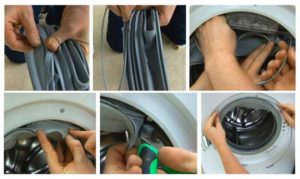
In this case, only removing it completely from the drum. The process is simple. Every procedure has its pros and cons. The big advantage in this situation is that the cuff can be completely washed and disinfected, and replaced with a new one if necessary.
Complete cleaning of the washing machine
If you have decided that the car needs a complete cleaning, then you need to know that it consists of several stages:
 Fighting scale. Unfortunately, tap water isn't always of good quality. It contains a lot of impurities and iron, which settles on the internal parts of the washing machine. drum, cuff, and heating element. To prevent scale buildup, you can use chemical water softeners, but descaling will still be necessary at least once a year, for example, with citric acid or a descaler.
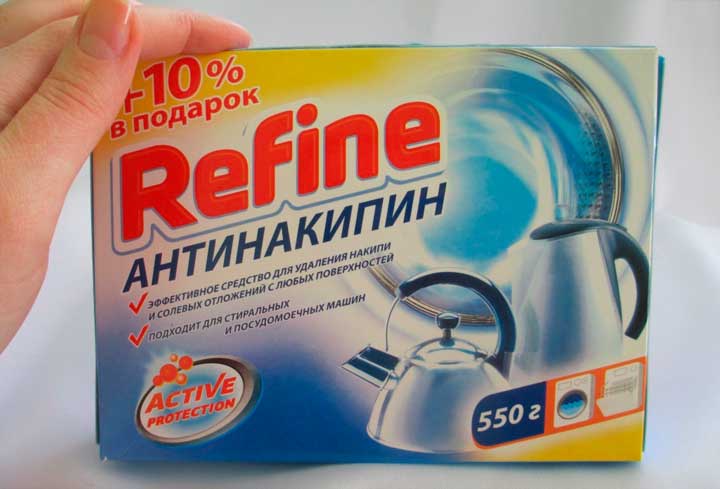
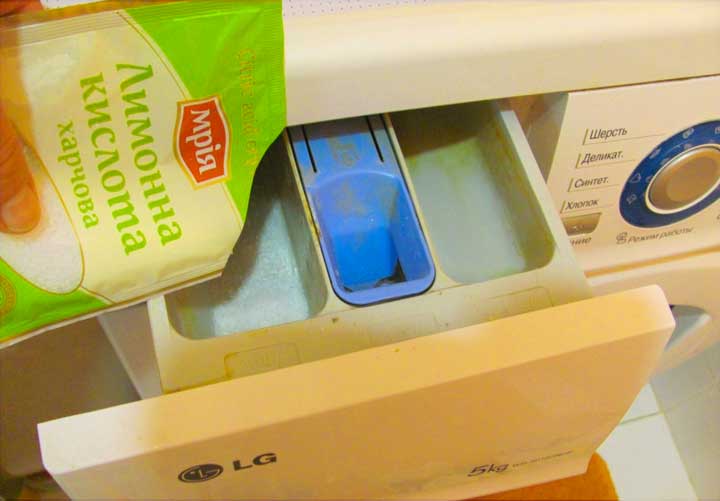 Take 100 or 200 grams of citric acid and pour it directly into the washing machine drum, running it on the longest cycle at the highest temperature. After washing, check the seal and wipe it with a dry cloth.
Some users believe that white vinegar can be used instead of citric acid. If you don't mind the lingering smell, then yes, you can use this remedy.
 Cleaning the drum seal.
- Working with the loading doorThe door can be cleaned with any glass and mirror cleaner.
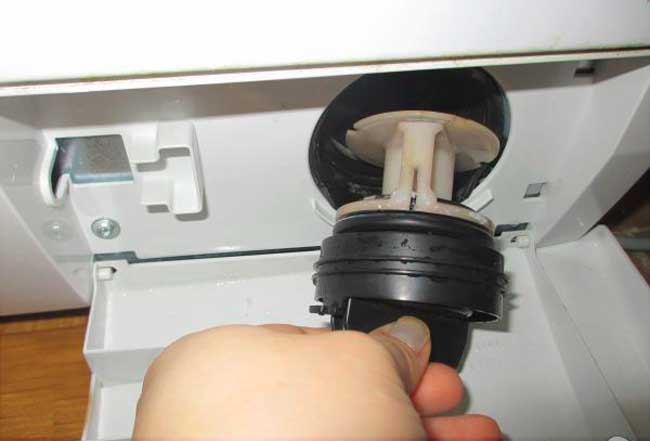
- Cleaning the drain filterAn important part of washing machine maintenance. It should be done as often as possible, otherwise the machine may break down and malfunction. To clean drain filter, unscrew it from the machine counterclockwise and rinse it under running water. It's important to disconnect the machine from the power and water supply. When unscrewing the part, water may spill onto the floor, so be prepared to use a low container or rags.
- Caring for the litter tray for detergents.
Prevention
If the washing machine is installed in the bathroom, then it definitely requires careful care and prevention and knowledge of how to clean the rubber from scale and mold in an automatic washing machine.
When the machine is installed in the kitchen, problems of this nature arise less often, if only because there is a window (mushrooms are immediately killed by ultraviolet light) and it is not the darkest place in the apartment.
Mold and bad smell will not develop if leave the machine open after each wash, and also wipe its internal parts with a dry cloth.
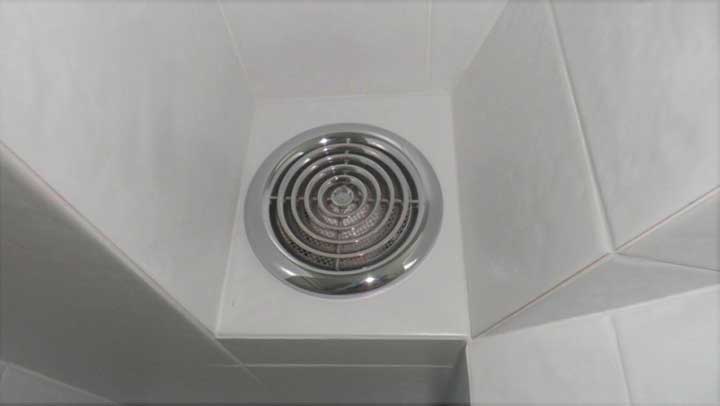 It is possible to equip the bathroom with a special exhaust fan.
Excellent option use an ultraviolet lamp for 15 minutes once a week.
It is absolutely necessary to get it out detergent tray and get rid of any remaining powder by rinsing it under water.
By keeping your washing machine clean not only externally but also internally, you can avoid future problems with the seal and the machine's performance.


