
 LG washing machines are quite reliable, but they can still malfunction. If you own one of these machines and it suddenly stops draining, this article is for you. What should you do if your LG washing machine won't drain?
We'll figure it out.
General questions
Causes of water drainage problems:
- The pump hums louder, and the water drains slower. This results in less spinning, and the wash time is longer than usual.
- If your washing machine becomes louder (humming or crackling), the filter is clogged and needs cleaning.
- If water doesn't drain during the rinse cycle, this indicates a programming error. The control unit is faulty. The same problem is also indicated if the washing machine door intermittently fails to open.
Note! You can try unplugging the machine and plugging it back in. The water may drain automatically when you restart it.
Manifestations of the problem
- The water is draining slower than usual.
- The program is experiencing some strange problems. An error appears.
- The program is interrupted before draining, and the water simply does not drain from the machine.
- Drainage problems are intermittent (they do not occur every wash).
- The rinse cycle drain isn't working. The washing machine sometimes hums or crackles, but doesn't drain.
- The washing machine does not spin when spinning.
Overview of solution options
Possible causes of poor spinning and how to fix them
- Washing machine LG I turned on reduced speed. Restart the program. This should help.
- The motor power has decreased. The brushes and motor windings need to be checked.
- The tachogenerator is broken. The drum rotation speed fluctuates erratically. The tachogenerator needs to be repaired.
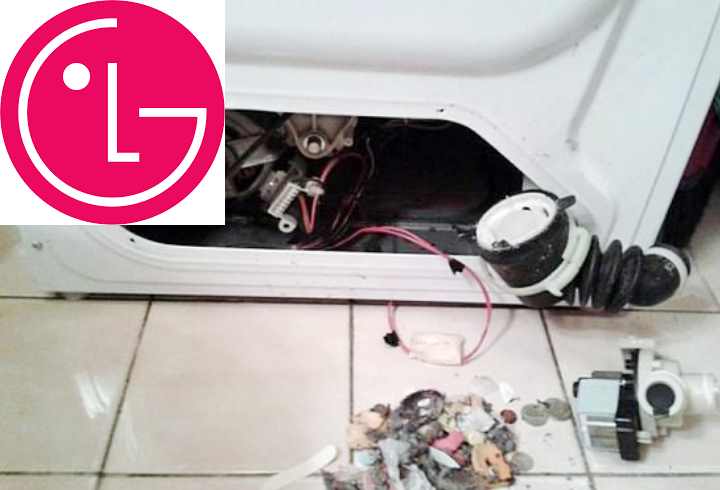
Reasons, Why a washing machine? LGdoes not drain water:
- There's a connecting pipe between the washing machine's tub and the pump. It could be clogged with debris.
- There is a foreign object stuck in the pump itself.
- The filter is clogged with debris washing machine.
- The pump is broken.
- The sewer is clogged or the drain trap is blocked.
- There is a blockage in the drain hose.
- The program control unit is faulty.
- Problem with water drain sensor.
We've listed only the main reasons why an LG washing machine might stop draining. Other causes are possible. A technician can pinpoint the cause. Let's figure out how to repair this type of washing machine. Another extreme case might be constant draining.
Why does my washing machine constantly drain water?
- Scale on pressure switch or its blockage;
- Incorrect connection of the washing machine;
- The inlet valve is broken;
- Problem with water level sensor;
- Leaks.
How to drain water from an LG washing machine?
If the water fails to drain automatically, we will try to do it forcibly.
Caution! Before draining the water, unplug the washing machine and have basins and rags ready.
To drain a broken LG washing machine, follow these steps:
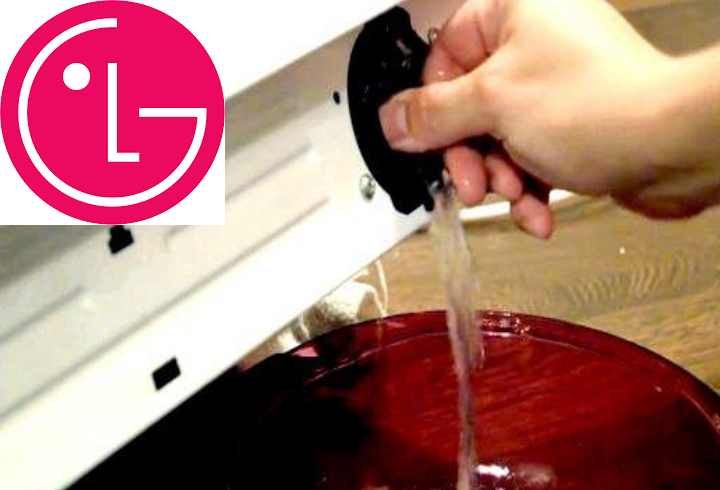
- Some washing machines have an emergency drain feature. Behind the front panel, next to the filter, there's a tube with a cap. Unscrew it and slowly drain the water. If you don't have such a cap, don't despair. There are other options. But don't close the decorative hatch yet. We'll need it later.
- If your washing machine is on a podium, you can disconnect the drain hose from the sewer and lower it below the machine (for example, into a toilet or basin). The water will drain by gravity. If this doesn't happen, your machine has a leak-prevention valve in the hose. Proceed to the next method.
- There's a filter at the front bottom of your LG washing machine. It collects debris from your washing machine. Remove the panel (usually a small square whose purpose you might never have guessed), slide the tray under the filter, and unscrew it slightly counterclockwise. To make this easier, you can tilt the machine forward onto a basin or other tray.
Caution! Be careful with the plug. The water pressure could knock it out, causing a flood.
- Alternatively, you can move the machine and unscrew the back panel. There's a tube with a clamp under the drum. Remove it and disconnect the tube. This tube may be clogged, so don't be surprised if water doesn't flow right away. Then clear it and be prepared for a stream of water.
- If none of these methods work for you for some reason, you can try tilting the machine backwards, then opening the door and scooping out the water with a can, ladle, or something else.
Important! Do not attempt to open the door if it is locked. You may damage the automatic lock.
How to repair a washing machine after water has drained
- Cleaning filter.
If you didn't get rid of the water using the third method, it's worth checking the front filter hatch and cleaning it. There, you might find the cause of the problem and a bunch of items that fell off during the wash cycle.
- Cleaning the pipe.
We suggested this procedure as a fourth method. If you didn't choose it, remove the back cover. Unscrew the drain assembly fasteners. Remove the hose. Remove the clamp. The water has already drained, so not much may leak out. Then simply press on the hose. If there are any bumps or obstructions, there's a blockage. Remove it and put everything back together.
- Checking the impeller.
If you've checked the filter and hose and found no blockage, the problem is in the pump impeller. It's located right behind the filter. Something may have gotten caught in it, causing it to jam. Try twisting it. If you can do this without any problems and nothing falls out, it's fine.
- Drain pump repair
Remove the filter. Turn the machine on to spin mode. Shine a light on the impeller and see if it's spinning. As a reminder, we didn't find any foreign objects in it. If it's not spinning, the problem remains in the motor.
We buy a new pump and replace it as follows:
- We remove the entire drain unit of the machine;
- We detach the drain pump from this unit;
- We disconnect all the wires from it;
- We install a new pump and assemble it in reverse order.
We've explored the causes of drain failures, the reasons for this, and the methods for draining and repairing them. Now you shouldn't be alarmed if your toilet suddenly refuses to drain.


