
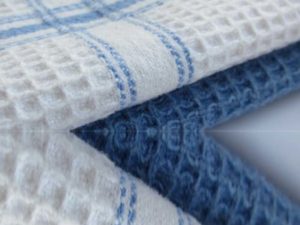
 Every housewife knows how quickly kitchen towels get dirty and how difficult it is to clean them. Regular washing typically doesn't remove stains from grease, berries, and other foods that are abundant in the kitchen. Furthermore, most bleaches and strong cleaning products are highly allergenic, which is becoming increasingly common. In such cases, alternative cleaning methods come to the rescue, such as the "Japanese" method of washing kitchen towels with mustard and oil, soaking with laundry soap, soda, salt, and many others.
General information
NOTE: To keep your towels looking their best, choose natural cotton fabrics. Terry towels take longer to dry and can harbor bacteria.
Let's take a closer look at recipes for washing towels and any other linens.
Details
The "Japanese" method of washing with vegetable oil has several variants.
1) With vegetable oil and mustard: Dissolve two tablespoons of dry mustard, two tablespoons of sunflower oil, and one tablespoon of vinegar in 20 liters of hot water. Soak dry towels or other linens in the prepared solution for 12 hours. It is recommended to cover the linens with a lid to slow down the cooling process.
Next, the laundry should be rinsed at least 4 times, alternating cold and hot water.
2) With bleach and detergent: Dissolve two tablespoons of bleach, two tablespoons of sunflower oil, and one cup of non-sudsing laundry detergent in a bucket of hot water. Soak the dirty towels in this solution for 12 hours, also covered.
Important: Use a bleach suitable for colored or white fabrics, suitable for your items.
In general, soaking is an excellent way to clean old stains without boiling; there are a large number of solution options available.
1) Washing powder with baking soda. For five liters of hot water, mix five tablespoons of baking soda and the same amount of washing powder. Soak the laundry for eight hours. The washing powder will dissolve stains, and the baking soda will eliminate unpleasant odors.
2) A salt solution is also effective against tough stains. The recipe is simple: add a tablespoon of salt to one liter of cool water. You can soak the laundry overnight and then rinse thoroughly.
Caution: Do not boil kitchen towels in water containing vegetable oils, as this will weaken the fabric and cause it to quickly become unusable!
 3) A very popular method is soaking in a solution containing chlorine, such as Domestos, Bleach, etc. However, this method only works on white fabrics; it is not suitable for colored fabrics.
4) Grate some laundry soap and make a soapy solution, or simply rub the towels vigorously with it. Soak them in a weak, slightly pink solution of potassium permanganate overnight. Potassium permanganate is an excellent disinfectant and removes unpleasant odors.
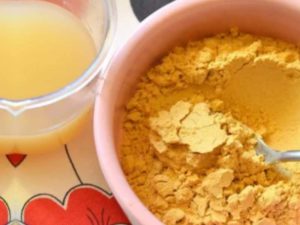
5) Mustard solution. Dissolve mustard powder in boiling water at a ratio of 1 tablespoon per 1 liter of water. If you want to remove gray stains and whiten towels, make the solution more concentrated: one packet of mustard per 5 liters of water. Mix thoroughly and strain to remove lumps. Soak the laundry for 2 to 12 hours, depending on the degree of soiling.
This is interesting: Mustard is not only a solvent for fatty acids, but also an excellent disinfectant.
6) Fresh greasy stains are treated with dishwashing detergent, such as Fairy, and left to soak overnight, then washed as usual, after rinsing off the foam.
 7) Excellent solvents for stubborn stains are citric acid and hydrogen peroxide. Prepare a solution using one of these solutions and soak the stains in it for two to three hours. Then, soak the stains in laundry detergent for half an hour and wash as usual.
 Ammonia works well on stubborn coffee stains. Make a 1:1 solution, pour it directly onto the stain, and let it sit for about an hour. Then, soak the stain in the powder solution for half an hour and wash.
Please note: Use ammonia only in a well-ventilated room or outdoors!
If none of the above methods remove stains and dirt, boiling will help. This is one of the earliest methods of bleaching laundry, used even by our grandmothers.
Linens should be boiled in enamelware, not food-safe. Solutions containing bleach or laundry detergent are commonly used.
You can also use a bar of grated laundry soap mixed with baking soda, in a proportion of half a bar to five tablespoons of soda.
With so many laundry methods to choose from, you won't find the best one until you try it. Go for it, and you might just find your own unique method!