
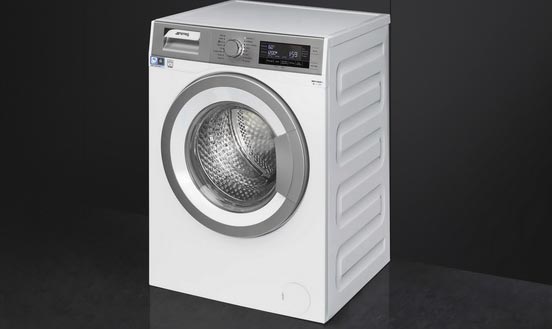
 Most people who watch commercials know that the best and most reliable washing machines are those with an inverter motor. What is this motor, and how does it differ from standard motors? In our article, we'll explore this component and some machine models that feature this type of motor.
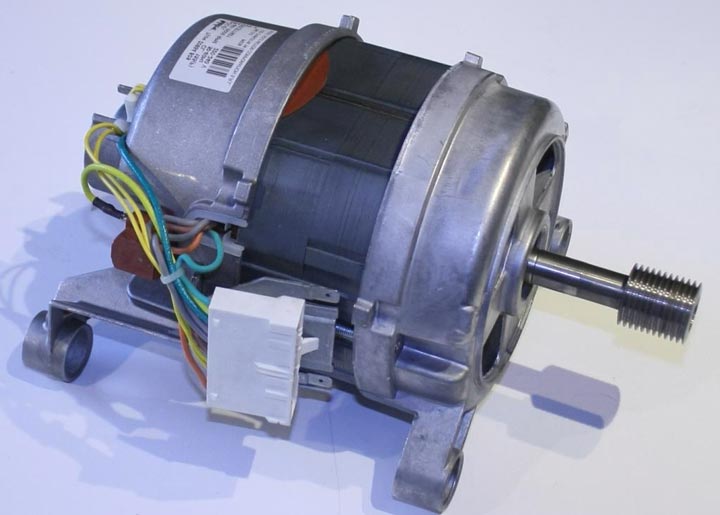
What is an inverter motor, its types and advantages
As the name suggests, this motor is based on inverter or frequency converter control, which generates alternating current at the required frequency. This maintains the desired rotational speed and frequency.
An inverter motor has no brushes, and this is its main distinguishing feature. The rotor rotates using an electromagnetic field.
Advantages of an inverter motor
Based on the basic characteristics of a washing machine with such an engine, we highlight the following advantages:
 Energy savings and increased efficiency are achieved due to the fact that the machine does not have any parts or brushes that rub against each other, which means less energy is spent on rotating the rotor;
- During use, you will not have to change parts that are not there initially;
- The engine is low frequency, which makes it have a reduced noise level;
- The user can choose the number of revolutions, which makes it possible to maintain the cycle washing process.
Advantages and disadvantages: which is more important?
Now that we've grasped the operating principle and overall design of this unique motor, it's time to consider how useful and necessary this motor is for a washing machine. What are its advantages, and what do they contribute to the design? Is it worth paying extra for a washing machine with an inverter motor or sticking with a drum type with electric brushes? Let's consider the advantages of this motor:
 Energy efficiency;
- Reduced hum level (noise);
- There is an option to spin at maximum speed;
- Long term use;
- Accurate correspondence of the revolution value during the washing process.
There are also some disadvantages:
- Quite a high price;
- Repairs can be quite expensive if the structure breaks, as the parts are expensive.
More details about the basic characteristics
Once we've reviewed and learned all the characteristics, it's time to examine them up close. The primary and most important advantage is energy efficiency.
Inverter washing machines use twenty percent less energy than conventional drum washing machines.
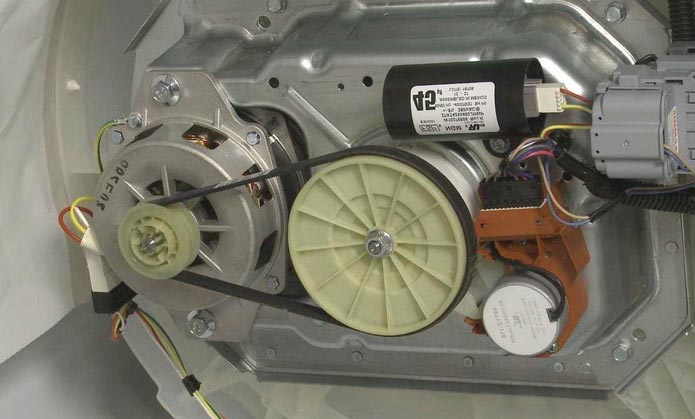
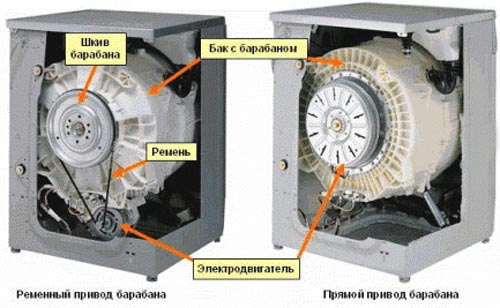 The claim of the lowest noise level among all is rather debatable, as conventional collector designs are slightly quieter. However, if we take a washing machine with a direct drive, the hum level becomes much lower. Direct drive washing machines are designs where there is no motor in the drum. belt.
The issue of spinning at maximum speed is also quite controversial, although the laundry will come out quite dry. There's a chance that if you set the spin speed to 1600 or much higher, for example, 2000 rpm, the items coming out of the drum won't be completely dry, but rather shredded. Even if your items come out relatively intact, there's no point in talking about their lifespan.
The longevity of an inverter motor offsets these shortcomings quite well, although conventional washing machines typically last fifteen to twenty-five years. Even if yours lasts much longer, you'll still want to upgrade to a newer model. Is a long-lasting motor even necessary?
Another advantage is the ability to accurately determine the RPM of a given engine type. Do you need this value and what does it even mean?
It's assumed that the main function of a washing machine with an inverter motor is fast washing and incredible spinning. And whether this is truly the case is becoming irrelevant.
Buying a washing machine: choosing
We've reviewed the advantages of an inverter motor in a washing machine, and we now know and understand what it is. Based on these findings, all that remains is to decide whether you need a washing machine with such a motor or stick with a conventional drum motor.
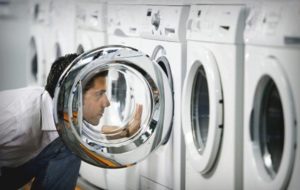
You should understand that this motor isn't a complete advantage that can outweigh other conventional washing machines. Of course, the fact that it uses much less electricity than conventional machines, resulting in savings, is a welcome addition for those living in a country with incredibly high utility bills. The lack of electric brushes is also a plus, but is this advantage worth the extra cost?
Energy efficiency classes for washing machines
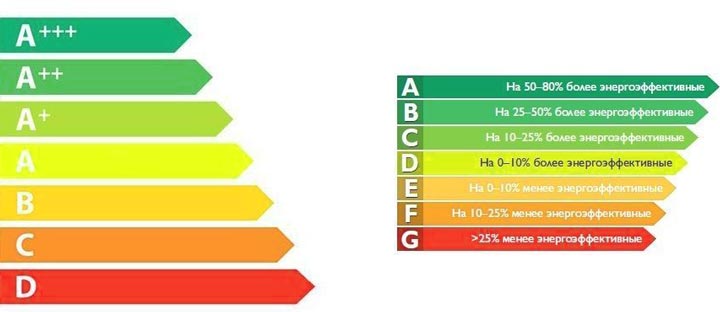 If energy savings are very important to you, you should look not at the presence or absence of inverter technology, but at the energy efficiency class. Energy efficiency classes are designated by alphabetical letters; the first letter in the alphabet (with two plus signs "A++") is the most energy-efficient machine. Class G operates in the opposite direction and uses the most energy.
Let's show how it is measured, for example:
A++ uses up to 0.15 kW/wash cycle;
G uses from 0.39 kW/wash cycle.
Not only the class affects the energy usage, but also the following values:
 The selected temperature and combination of washing programs - the higher the temperature and duration of the program, the more electricity you will need;
- The amount of laundry placed inside also affects energy consumption;
- The type of material matters, because dry or wet laundry, or more precisely their weight, differs;
- Usage time: The more time you spend using your washing machine, the more energy it needs.
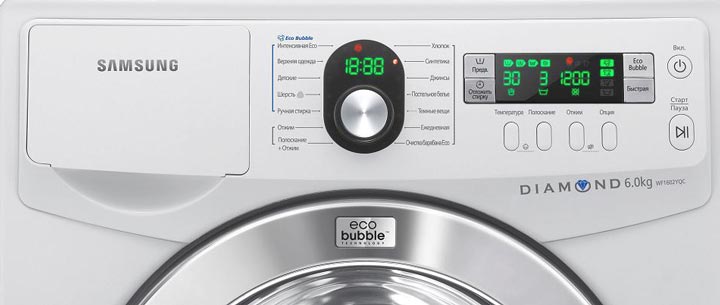
Washing machines with inverter motors from Samsung
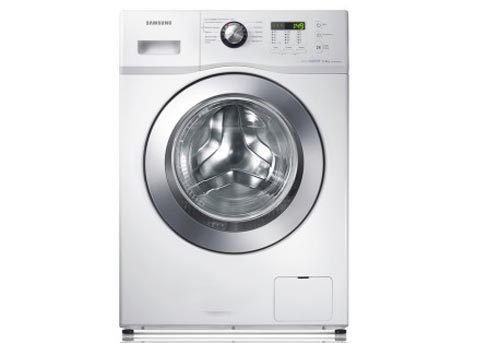 Model Crystal StandardThe Eco Bubble system (bubble wash technology) is present, which can wash dirty items even at a temperature of fifteen degrees.
Washes fairly gently and stains can be removed in both warm/hot and cold water.
There is a special mode for washing in cold water.
In addition to its functionality, the washing machine can fit into various types of interiors.
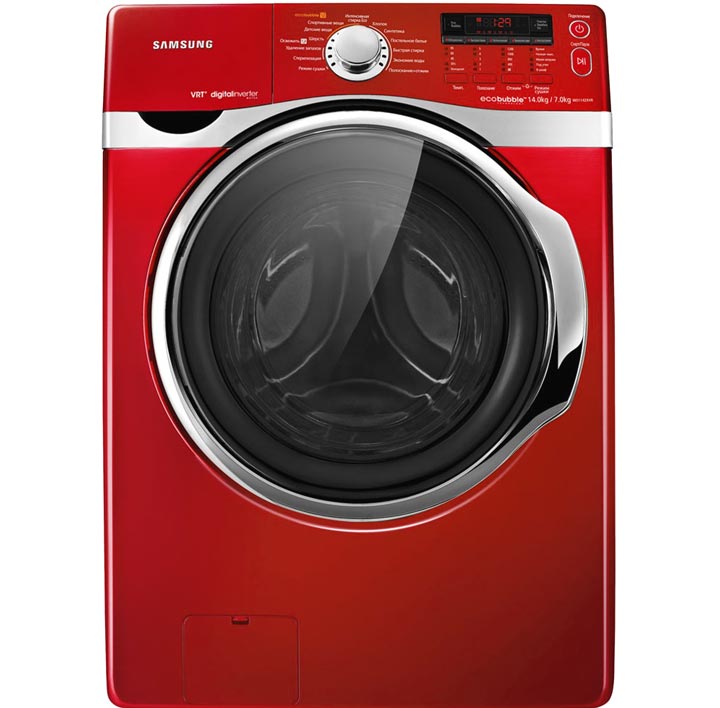 Model YukonThe body is painted red, which adds a touch of elegance.
This machine features a dry wash system, which uses hot air to remove soiled items, eliminating various odors and microorganisms.
Costumes and woolen items They fit well enough for this type of washing system. They have the Eco Bubble system.
LG Inverter Washing Machines
LG also produces models with this engine.
Model 6 MotionThe technology is that the drum rotates in all directions, rather than just one direction as usual. This machine has six such functions:
 In order to laundry detergents quickly dissolved in its process, a reverse motion is used;
- Soaking laundry is effective thanks to the rocking function;
- Saturation fairly evenly divides washing products (powder, fabric softener);
- The spin function allows you to spin your laundry inside the bubble surface;
- The ironing function will help you to easily iron out creases in your washed laundry without any difficulty;
- Standard rotation function.
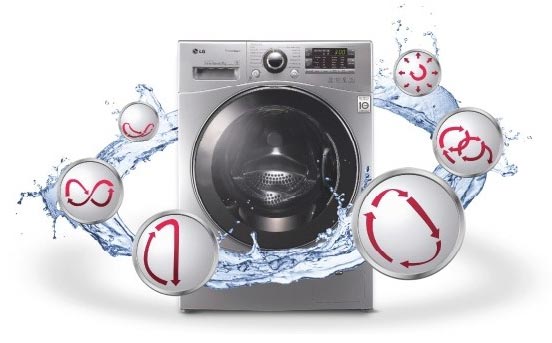
There is also a steam washing system, as well as the aforementioned inverter motor, the operating technology and design of which you have already learned from our article.
This engine has a direct drive, which has proven its efficiency to many customers.
Conclusions
We can conclude that before purchasing a washing machine with an inverter motor, you should pay attention to additional features and read reviews from users who have purchased such a machine.
It's best to consider such a motor as an addition to the design's other advantages, but there's no point in overpaying for it.
There are a lot of comments on the Internet about cars with this engine (mostly reviews are addressed to the manufacturing companies) LG (and Samsung). Consumers are focused not only on the presence of a powerful motor in washing machines, but also on the presence of a direct drive and other various programs.


I found my HotPoint washing machine. I've had it for two years now, and I like that it's not overloaded with unnecessary information; all the program hints are hidden in the tray.
When we bought a HotPoint washing machine, we also couldn't figure out what kind of inverter motor it was. But in practice, it turned out that the washing machines with it run quietly.