
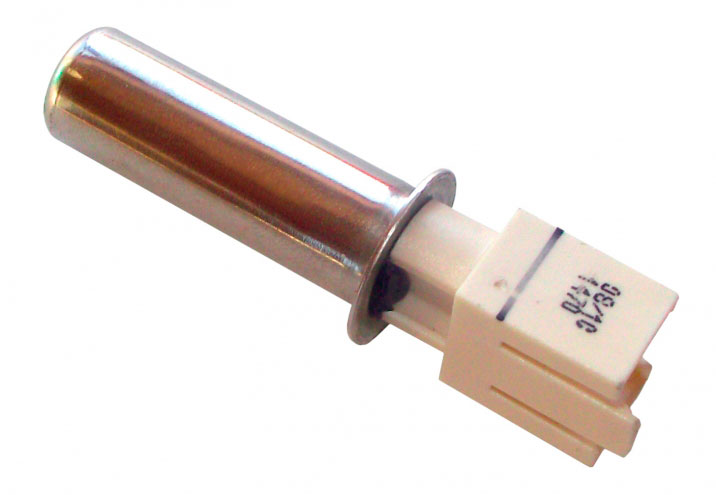
 The temperature sensor is one of the main and important elements of a washing machine – it is responsible for heating the water to the required temperature, and then the temperature sensor switches off.
If you notice that your washing machine is overheating the water or, on the contrary, not heating it at all it doesn't warm, then the problem lies with the temperature sensor. In our article, you'll learn how to check the temperature sensor for functionality and replace it (if necessary).
A variety of temperature sensors
The automatic washing machine can be equipped only with one of the following three temperature sensors:
- Bimetallic;
- Thermistor;
- Gas-filled.
Each of these three temperature sensors has its own different capabilities and may differ in the design and operation, so each of them is replaced and tested differently.
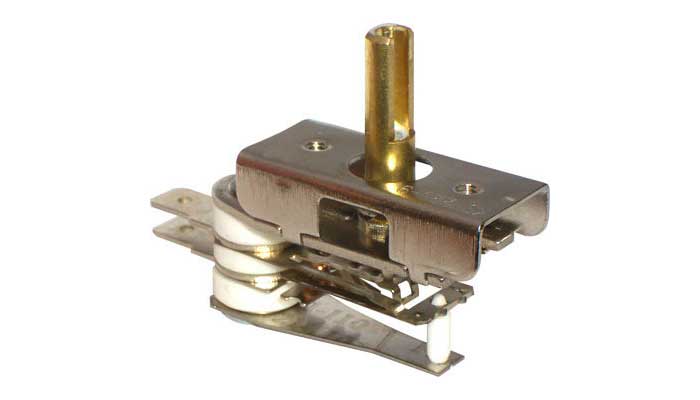 Bimetallic The temperature sensor looks like a tablet, approximately 20-30 millimeters in diameter and 10 millimeters in height. Inside this small tablet is a bimetallic strip. When the water is heated and reaches a certain temperature, the strip bends, creating a contact closure. At this point, the heating process is complete.
Thermistor It has become a fairly popular element among modern washing machines, replacing the temperature sensor.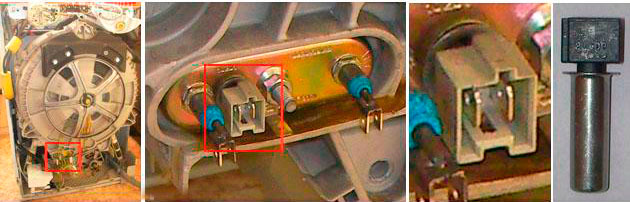
A thermistor looks like a small, elongated cylinder. Its diameter is approximately 10 millimeters, and its length reaches approximately 30 millimeters. This cylinder is attached directly to the heating element. This element's operating principle doesn't involve any mechanical work, but simply changes its resistance as the water heats up to the desired temperature.
Gas-filled The temperature sensor has only two parts: the first is a tablet made of metal with a diameter of approximately 20-30 millimeters and a height of about 30 millimeters.
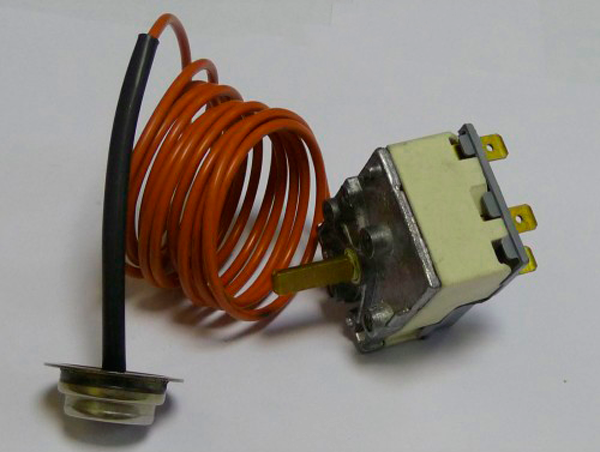 The first element is located primarily inside the tank itself and always touches the water to change the temperature. The second part of the temperature sensor is a copper tube connected to the external temperature controller, which is located on the washing machine's control panel. These elements contain a gas called freon. When exposed to water temperature, this gas can compress or expand, causing contacts to close or open, which then lead to the heating element.
Checking the temperature sensor for functionality and subsequent replacement
First, you need to find the temperature sensor itself to determine whether it works in the washing machine or not.
The first step will be de-energizing the washing machineThen the machine needs to be disassembled. The easiest option is to remove the thermistor from the washing machine, which is located inside the heating element. In most washing machine models from different manufacturers, the heating element is located in the bottom (base) of the machine.
We perform the thermistor removal in four steps:
- We remove the back panel of the washing machine;
- We disconnect the wires from the sensor that are directed to the temperature controller (external);
- Slightly loosen the screw that holds the heating element;
- We remove the thermistor from the device.

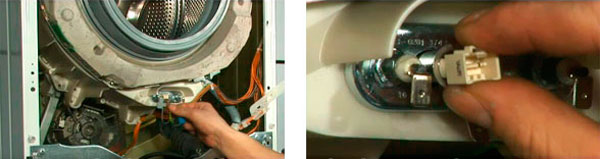
Here's the thermistor in our hands. To test it, you'll need multimeter, which we can use to measure resistance. Let's go through it step by step:
 First, you need to set the multimeter to measure resistance;
- Now you need to connect the wires to the contacts of this sensor. (Reference: 20 degrees is about 6000 Ohms, or 6 kOhm);
- To check its functionality, place the sensor in hot water and observe the multimeter reading. The sensor is functional when the resistance is lower. For example, if the temperature is 50 degrees Celsius, the resistance reading should be approximately 1350 ohms.
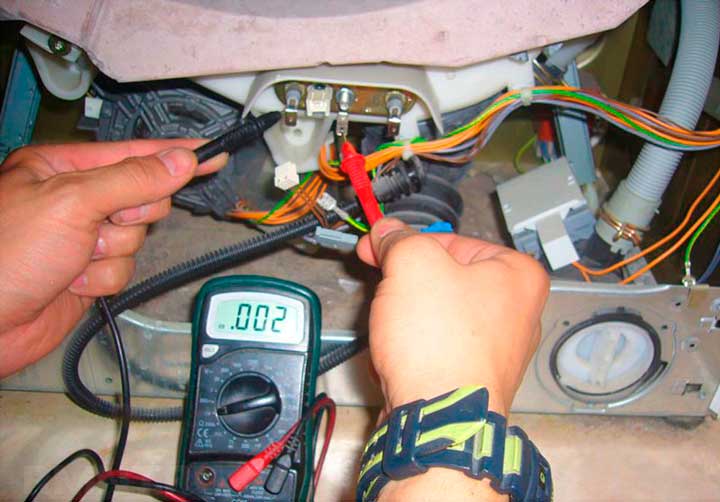
If the temperature sensor is not working, it needs to be replaced, as it cannot be repaired. Reassemble the unit in the same order as you disassembled it.
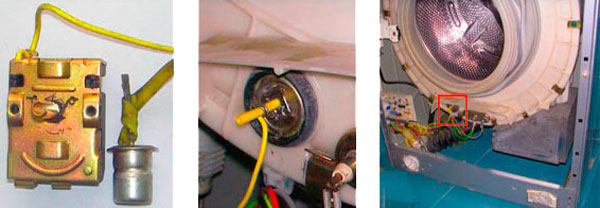 To access the gas-filled temperature sensor, you need to open not only the rear panel but also the front cover (where the control panel is located). This is necessary to disconnect the sensor (or rather, its outer part) from the panel itself.
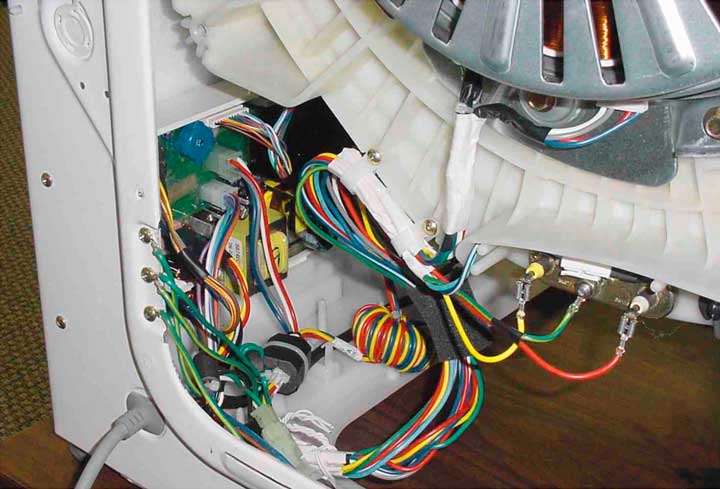 Once you've disconnected the external sensor, return to the back cover, remove it, and locate the wiring on the tank body. Carefully pull off the rubber insulation, being careful not to damage the copper tubing. You can do this with a thin awl or a needle. Carefully insert the rubber insulation under the skin and draw a couple of circles – this will make the insulation easier to pull off. Apply a little pressure while gently pressing on the sensor (press the base, pushing the sensor slightly inward), and it will pop out of its groove. After this, you can safely pull the temperature sensor out through the tank (or rather, the hole in it). The rest is simple – disconnect the wires and test it with a multimeter.
In most cases, the copper tube in gas-filled sensors breaks, and at that moment the gas (freon) inside escapes.
Eventually, the sensor becomes inoperable. Replacement is as follows: First, purchase a new sensor (preferably a kit that includes a switch) and install it in the old one's place, then reassemble everything in the same order.
The bimetallic temperature sensor is also difficult to access; you also have to reach it through the tank. Then, disconnect the wires from the thermostat.

Then connect the contacts to a multimeter and read the resistance reading. Heat water to a hot temperature and immerse the sensor in it—this is necessary to check for changes in resistance. If the resistance reading drops sharply, the temperature sensor is working; if not, it needs to be replaced.
Bimetallic sensors usually fail due to a worn plate. In this case, replacing the sensor is very simple: buy a new thermostat (the same one) and install it in the old one's place.
Signs of a faulty temperature sensor: main faults
The entire future life of your washing machine depends on the proper functioning of the temperature sensor. A malfunction can also be assessed visually, without disassembling anything.
Here are some of the main signs.
- With different washing modes and a certain temperature selected by you, the heating element brings the water in the washing machine to a boil;
- During the washing process, the body of the machine gets very hot, and steam is coming out of the loading door.
If your washing machine has this problem, it needs to be addressed immediately. Otherwise, it could lead to the heating element burning out. And remember, replacing the heating element is several times more expensive than replacing the temperature sensor.
Replacing a washing machine's temperature sensor is a fairly easy and straightforward task that anyone can handle. All you need to do is buy an identical temperature sensor and install it in its place. Good luck!


Very useful info.
My washing machine doesn't heat the water.
The heating element is fine. I replaced it with a new one. It only heats up to 95 degrees.
The resistance of the old sensor was 33.5 kOhm at room temperature. The new one is 9.5 kOhm.
LG washing machine