
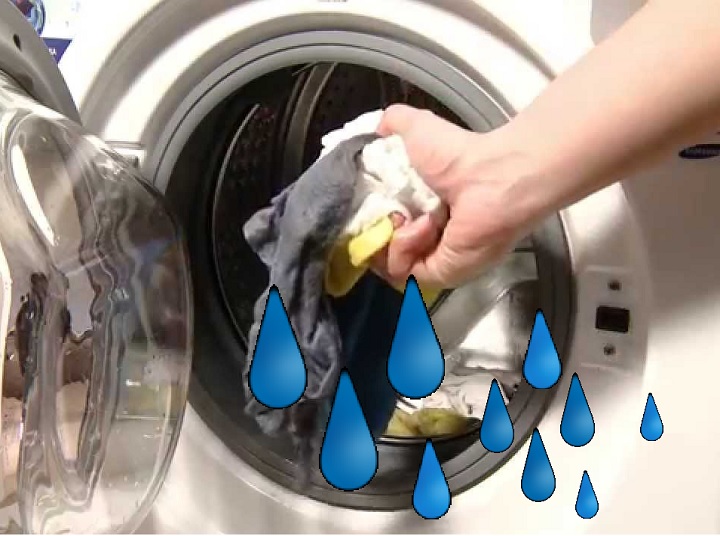
 Washing machine owners don't always pay attention to poor spin performance. But they should.
A malfunctioning spin cycle is a common problem with washing machines.
There may be many reasons why a washing machine may not spin properly.
Let's consider these reasons in this article.
We fix the problem ourselves
Incorrect program
The reason is simple. Sometimes washing machine owners use a program that doesn't include a spin cycle. These include:
 silk;
silk;- wool;
- gentle care.
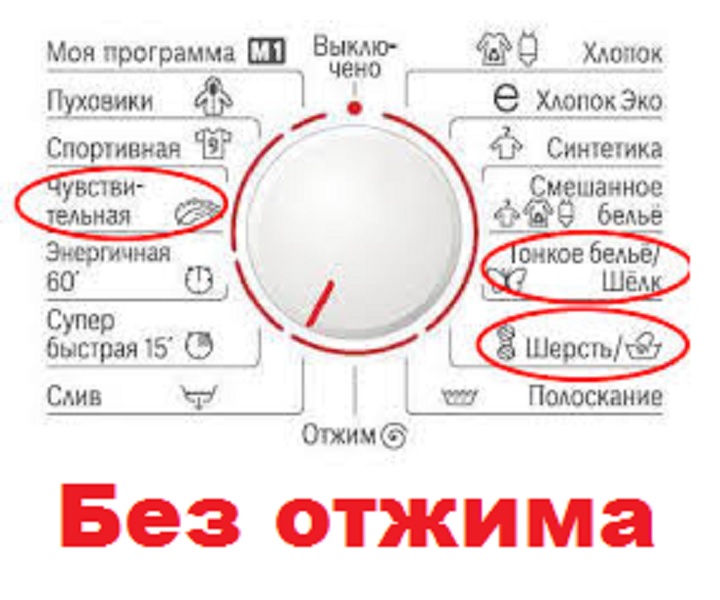
To make sure of this, simply open the instructions and check whether the correct mode has been selected.
If the selected program doesn't include a spin cycle, then everything is fine; there's no problem. You can select a different program or enable the spin cycle.
There is also a possibility that the spin cycle may be deactivated.
Both problems do not at all imply technical problems, and this is good.
Unusual sounds during spinning
If small parts get caught between the drum and the tub, a creaking or knocking noise may occur. To remove these items, you'll need to remove the heating element.
Washing machine overload
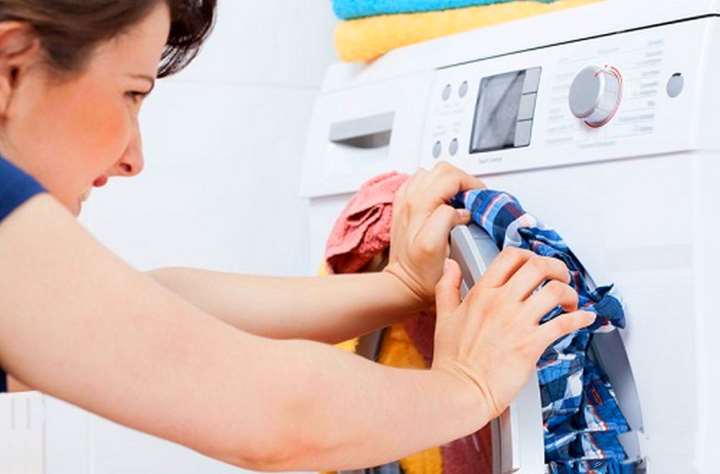 There are cases where the drum is overloaded, and an imbalance occurs due to uneven distribution of laundry inside.
Or there is too much of it and then even at 1600 rpm the equipment is not able to perform a full spin.
This can be understood by the repeated unsuccessful attempts of the drum to spin.
If this fails, the laundry arrives completely wet. If the machine's operating conditions are violated in this manner, the tachometer sensor may fail.
And its failure will disrupt the operation of the control module.
If the laundry is evenly distributed in the drum and loaded correctly, the question of why the washing machine is spinning poorly disappears.
Water in the drum
Before spinning, any washing machine must empty the drum of water and drain any remaining water during spinning.
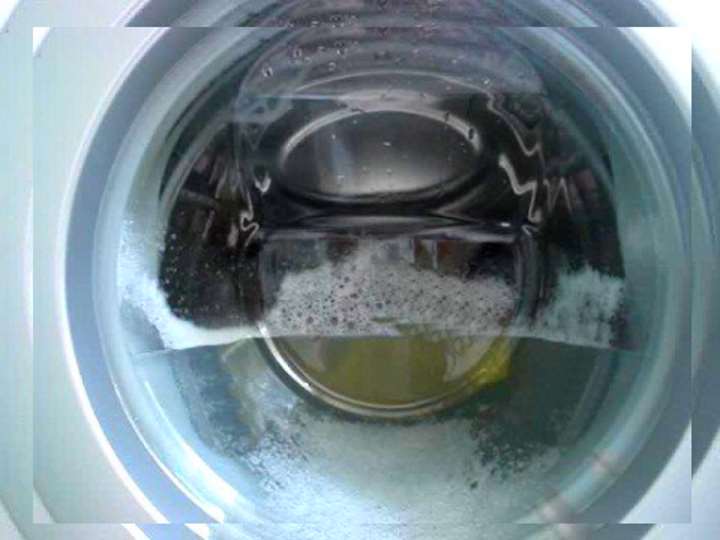 Look at the spin cycle while the machine is running and if there is water there at this time, then you need to:
- check the drain filter and clean it if necessary;
- check the drain hose for blockage;
- check the drain pipe.
You may need to contact a service center.
If the machine does not spin well, when should it be repaired?
If preventative measures and DIY repairs don't help and your washing machine isn't spinning properly, it needs to be inspected by a professional. In these cases, you'll definitely need to seek help from a service center:
- software problem;
- engine failure;
- bearing wear;
- pump replacement.
Problem with the tachometer
The tachometer sensor is located on the engine and fails when the machine is frequently overloaded and pushed to its limits. This device monitors the machine's RPM, and if the tachometer is not working correctly, the machine's "brain" cannot correctly set the spin speed, resulting in poor spin performance.
There may be a problem with the tachometer contacts and it becomes necessary to check the fastening, wires and contacts.
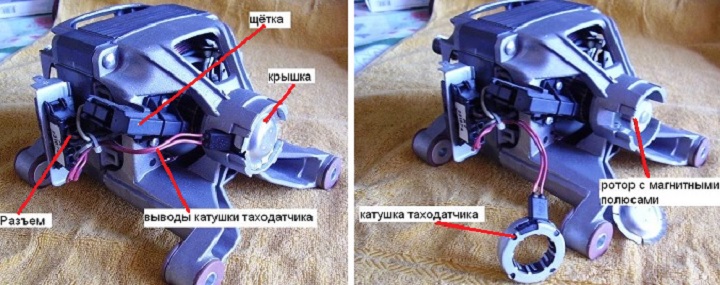
Checking the functionality of the part is simple. A malfunction of this kind is characterized by a constant and inappropriate drum rotation speed. If the sensor is damaged, it must be replaced with a new one.
How to replace the sensor?
- The rear wall of the car is removed.
- The drive belt is removed.
- The tachogenerator is removed from the engine.
- A new part is purchased and installed in place of the old one.
- The repair ends with putting on the belt and screwing on the back cover.
Engine malfunction
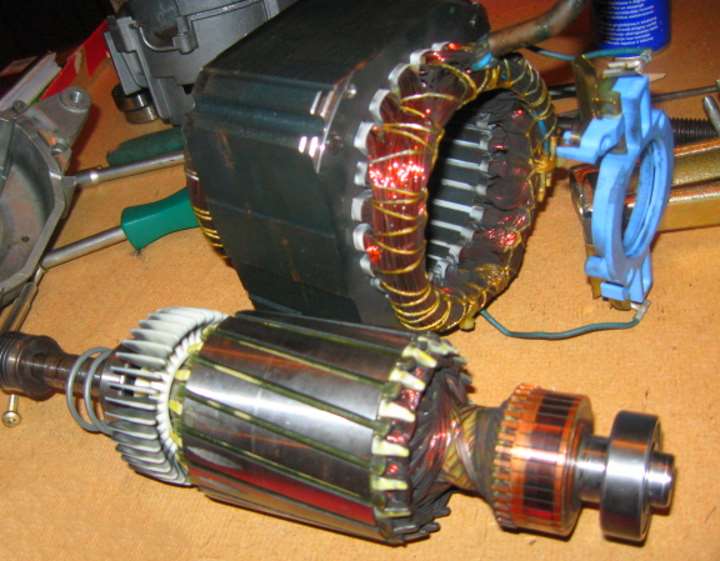 The motor is located under the body of the washing machine and will have to be removed.
To do this, you need to disconnect the wires, belt, and unscrew the part.
The purpose of all these actions is to identify the fault: remove the brushes, tachometer, check the coils.
The brushes inside the motor are subject to wear and tear, which causes its power to drop.
As a result, the number of revolutions is disrupted due to a lack of power and the washing machine does not spin the laundry well.
Control board fault
It is most likely that you will not be able to identify the problem with the board (module) on your own!
The module is the brain of the machine. It controls all processes, programs, sensors, etc.
The repair will not be cheap; the module is an expensive part, costing approximately 1/3 of the price of the car, and it is better if the repair is carried out by a professional.
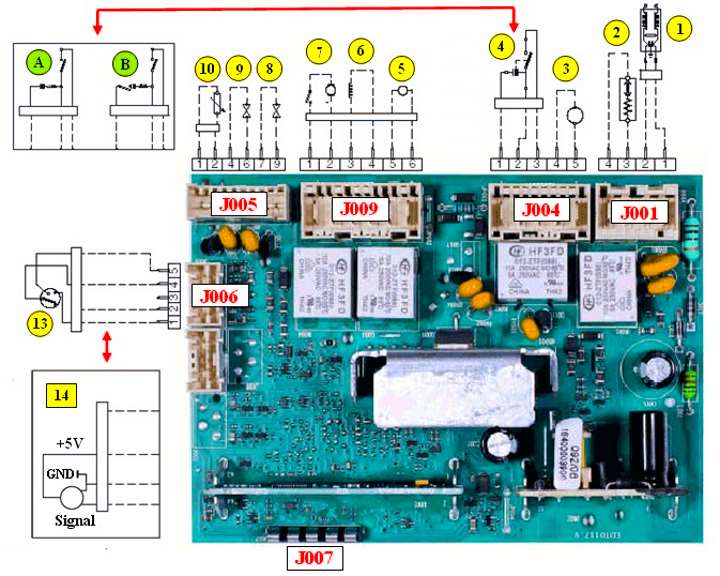 If such a cause is present, the following symptoms are characteristic:
- the machine freezes;
- random change of programs;
- alternating flashing of indicators;
- The wash cannot be completed.


