
In a short time, many well-known brands left the Russian market.
What electronics won't Russians see in the near future?
Some time ago, renowned Japanese companies such as Panasonic, Sony, Nec, Hitachi, and Yamaha left the domestic market. Consumers know that the products of these brands are renowned for their high quality. Now, we've also lost Sharp. According to a Sharp representative, the situation in Ukraine will be closely monitored to ensure timely and appropriate measures are taken. It's not entirely clear what this meant, but it's clear the company is interested in resolving the conflict as quickly as possible. If you live outside the city, like me, you can find out how much construction costs are.
Along with Japanese companies, South Korean firms such as LG, Samsung, and Electronics have also left the Russian market. The companies announced their decision to cease supplying their products, although service and warranty coverage for previously purchased equipment will remain available.
.
The German brand Siemens, like many others, announced its withdrawal from the Russian market. Furthermore, the company froze investments in business projects, citing this decision as a protest against military actions in Ukraine. Siemens supports anti-Russian sanctions.
Chinese companies have also restricted their product deliveries to Russia. For example, Oppo, Xiaomi, and Huawei have cut their deliveries by almost 50%. While they aren't currently talking about a permanent withdrawal, they do state that doing business in Russia is currently very dangerous.
Even at the initial stage of the special operation of Russian troops in Ukraine, Apple (USA) stopped supplying us with its products, and Russian citizens also lost their branded services.
According to Yale University (USA), since the start of the special operation (February 24 of this year), more than 400 companies have ceased cooperation with Russia, including Samsung, Bosch, General Electric, Siemens, Procter & Gamble, etc.
Let's take a closer look at some of the brands:
Samsung – one of the most popular brands in Russia. This company's products are probably found in every Russian home. Samsung's representative office explains its decision to cease operations in the Russian market due to security concerns and logistical difficulties. Our market is very profitable for the company, with approximately 30% of its profits coming from sales made in our country. Experts believe that Samsung's market share in Russia could eventually be occupied by Chinese competitors, which is undesirable for the South Korean company.
Bosch – a German company. It should be noted that the company was forced to terminate its cooperation with Russia due to difficulties with supplies from Europe. As a European company, Bosch must comply with EU regulations. Factories located in Russia will cease operations, but service and warranty coverage will continue..
SiemensMany people think this company produces mobile phones. No, it's not just that – Siemens is a manufacturer of high-quality home appliances. Service for previously purchased products will continue, but new shipments have been suspended. One can only hope the company will return to the Russian market in the future.
Alternative
Russian manufacturers produce their own refrigerators, some of which can compete with foreign counterparts: Pozis, Biryusa, Indesitm, and Stinol. However, it's important to keep in mind that we import compressors from abroad.
You can replace imported TVs with the following brands: Rubin, Vityaz, Erisson, SkyLine, and Polar. Sberbank has now launched a new brand – Sber.
After well-known electronics and home appliance manufacturers disappeared from the domestic market, some experts see a solution in the revival of the shadow market. Currently, importing these products is not prohibited for individuals. These goods can easily be purchased in neighboring countries. This system is reminiscent of the 1990s, when the shuttle trade flourished. So-called "shuttle traders" brought goods from abroad, thereby developing small businesses.
Most likely, there will be increased demand for online shopping on the official websites of manufacturing companies or trading platforms.
Considering that the duty-free import amount has increased to 1,000 euros (from 200) for the period from March 31 to October 1 of this year, the possibility of developing private imports is becoming a real possibility.
It's not as if all companies have stopped working with Russia, but many purchases fail at the transaction stage. This may be due to Western sanctions against Russian banks. To solve this problem, you can use a clever scheme: change the country name in the website settings, specify an address in that country, and then, once the payment is processed, replace the fictitious address with a real one in Russia. Even if the website itself is blocked, the purchase will still be successful.
Another option is to purchase through a guarantor-intermediary, meaning delivery is arranged outside the buyer's country. This means the intermediary purchases the goods in any country and then delivers them to the customer themselves, for which they receive payment from the guarantor.
Consequences of foreign companies leaving the Russian market
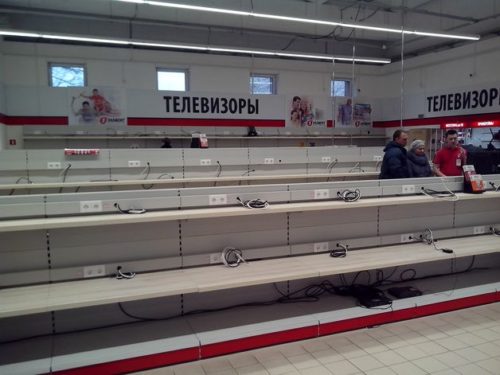
Since many companies have stopped working with Russia, domestic consumers may experience difficulties:
– Product shortages. This is clear: no supplies, no goods for sale. Many people are panic-buying what products are still available, not so much out of necessity as as an investment.
– High costs. Price increases are inevitable. Prices have already risen by approximately 30%, and this isn't the ceiling; they'll continue to rise.
Conclusion
Hopefully, the situation will eventually stabilize and, in the long run, foreign companies will return to the Russian market. However, Russians should also consider domestic brands. They are quite capable of competing with their foreign counterparts.
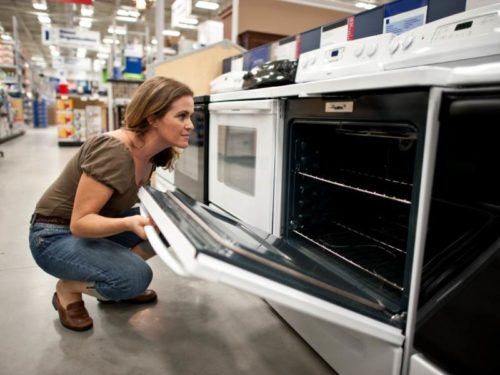
The Russian government is ready to encourage Russian manufacturers to increase the rate of production of household appliances.
Furthermore, there are still foreign companies that continue to operate in our market today. Near-term price increases are difficult to predict, but stockpiling goods is also not recommended. Random equipment purchases lead to unnecessary expenses and, in general, to product shortages.


