
 Many people know that washing machines use a significant amount of energy to heat water, so in an attempt to save money, you might wonder: how can I connect my washing machine directly to the hot water supply? How significant will the energy savings be, and will this harm the washing machine? Let's find out.
Why is it so important to check the manual? First of all, it's worth checking the manual. If your machine is very old, it may have two inlet hoses for cold and hot water, respectively.
…and for some modes, such machines took hot water, but still mixed it with cold water and heated it up as needed.
General information
But over time, this idea was abandoned, perhaps in favor of cost savings and the simplicity of the washing machines themselves. Therefore, most washing machines are now designed to be connected to cold water only, and connecting to hot water can cause some problems.
Details
Potential problems when connecting a washing machine to hot water
Washing machines with a cold water connection only are designed to heat cold water to the desired temperature according to the selected mode. When hot water at around 60°C (140°F) is added to the tank, many machines detect this as an emergency, suggesting that one of the heating elements within the machine has failed and overheated the water. In this case, the washing machine will simply stop working and display an error message.
A second, equally important problem is that hot water is considered industrial water and therefore isn't purified as thoroughly as cold water. It often contains impurities, and if your home is heated by a boiler, caustic soda is often added to the hot water to reduce scale buildup in the boilers. It's also possible that various small debris may end up in the machine. Laundry detergent doesn't dissolve well in such untreated water, and various bio-additives for improving washing quality are especially ineffective.
Important to know: This problem can be solved by purchasing a filter, but it will be quite expensive, because you will need a fine filter for various impurities in the water.
The third problem is the inlet hose. It's often made of plastic or similar materials, which are completely unsuitable for high temperatures, meaning it will need to be replaced frequently and you'll need to be careful about leaks.
The fourth and most important problem is that washing machines designed for cold water only don't have the ability to cool the water. Hot water is always around 60°C, meaning washing at 20°C, 30°C, and 40°C is impossible. Will this affect the washing quality? Definitely.
Important to know:
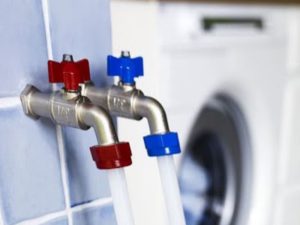 And yet, today you can find a modern washing machine with two inlet hoses for hot and cold water.
The source of your home's hot water supply. What kind of water is supplied to your washing machine?
If the previous disadvantages haven't dissuaded you from connecting your washing machine to hot water, then it's worth discussing where the hot water comes from.
There are two ways to deliver hot water to consumers. The first is through centralized hot water supply networks, which will always be no lower than 50°C and no higher than 70°C, which will lead to all the problems described above. Furthermore, what if the hot water is shut off in the summer for repairs? Should I reconnect the washing machine?
But the second option is if your apartment or house has a local water heater, such as a boiler or gas water heater. In this case, only cold water is supplied to you and is heated by the local heater, meaning its quality remains at drinking water quality, not industrial quality. But most importantly, you can regulate the temperature of the hot water yourself during the wash cycle. This means you'll have to take over the automatic water heater; while washing machines usually heat the water automatically, you'll have to cool it yourself.
Understanding the washing process
In this case, it is worth separately understanding what the washing process is in terms of temperature conditions.
First, soak the fabric in cold water, and you'll need to lower the temperature. Then, when the main wash cycle begins, increase the water temperature to your chosen setting, and rinse again in cold water to better remove any remaining detergent.
If you've accepted all the downsides, here's a quick guide on how to connect a washing machine yourself.
You will need:
- fluoroplastic sealing material.
 - adjustable wrench.
– ¾ inch silicone or rubber gasket rings
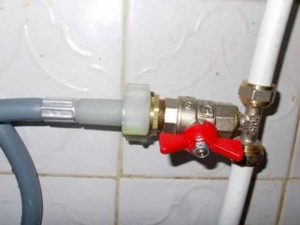
– two main ¾ tee taps with a side outlet.
- adapters also for ¾ inches
- and flow filters, also ¾
Before installation, it is necessary to screw filters onto the tees to eliminate the risk of contamination of the washing machine with dirt from the pipeline.
Then turn off both hot and cold water risers.
Find the junction area under the faucet where the main pipe and the hoses leading to the faucet meet. Disconnect them.
Tighten the tees on both pipes. Adapters may be useful here; they should be included in the kit.
Then screw the hoses from the mixers to the tees, then add the intake hoses, for this use fluoroplastic sealing material.
Now we'll connect the water and the washing machine. It's important that all connections are tight and there are no leaks. Check everything carefully!
Important: If you are unable to connect the washing machine yourself, it is better to use the services of a specialist.
Disappointing conclusions
So what's the bottom line? Connecting your washing machine to hot water is possible, but the wash quality will inevitably deteriorate, and you'll have to constantly check the machine's condition. Will you save on electricity? Only if you have a local water heater, as the cost of hot water can also be high. Even then, you'll have to manage the washing process using the automatic system. Whether the savings are worth the effort is, of course, up to you.


Capitalism is that thing where you make what you need, not what people need, but what people need, while still convincing them it's exactly what they wanted. It's the same here. The only reason is to simplify the design. The manufacturer doesn't need to solve your cost-cutting problems. They need to sell you beautiful junk at the highest price with the lowest cost.
For example, the excuse about washing clothes improperly because hot water contains caustic soda is simply outrageous. In our mothers' and grandmothers' times, people washed with it. They simply washed with it because it's incredibly alkaline. And all detergents are alkaline. It can also be used to clear clogged pipes, clean burnt-on dishes, remove old paint, clean stubborn grease from ceramic stovetops, clean kitchen tiles, and much more.
But it's too cheap and simple. And then they sell you all sorts of Calgon, Anti-Grease, Mole, and Super Cleaners. It's the same old story, only with the opposite effect. Water purification is also a joke. You don't need fine filters for washing. Cold water contains just as many impurities as hot water. From a safety standpoint, hot water is even preferable, as it contains additives against corrosion and scale. Phosphates and soda. I've already written about soda. Phosphates are found in washing powders. And Coca-Cola has accustomed people to the taste of a phosphoric acid solution. And nothing dies. So these are all just excuses from the manufacturers. It's really easier for them to heat cold water to the desired wash cycle than to program the brain to mix cold and hot.