
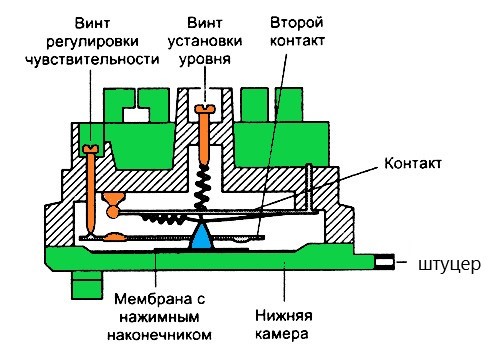
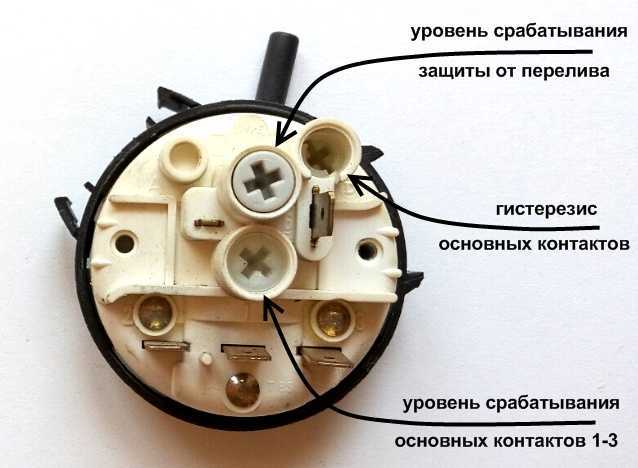
The pressure switch is a crucial component of any washing machine. This device controls the volume of liquid added to the drum for washing or rinsing. Without the pressure switch, the machine's complex mechanism would be unable to "understand" how much water to add. Despite manufacturers improving technology and producing increasingly high-quality washing machines in recent years, even the most expensive models can fail, including due to a faulty pressure switch. However, replacing this component is not difficult. Visually, the pressure switch is a small, round box located near the side of the machine. We'll explain how to replace this component.
Signs of a faulty pressure switch
To determine if the problem is actually related to a faulty water level sensor, examine the following problems:
- An error code has appeared on the display, indicating a faulty pressure switch. You can find out what codes appear when your washing machine malfunctions and what they mean in the operating instructions or online.
- When filling the tank with water, there is either too much or too little of it.
- Water is drawn in continuously.
- The rinse mode does not turn on.
- The water drains only partially, and the items remain very wet after the spin cycle is completed.
- The water heating function started when there was no water in the tank.
All of these symptoms may indicate that the pressure switch will need to be replaced to resolve the issue. However, if you have any doubts, it's recommended to call a technician from a service center that specializes in washing machine maintenance to determine the exact cause of the problem.
Features of replacing the pressure switch
Work to replace this part is carried out in the following sequence:
- Disconnect the washing machine from the power supply (unplug the power cord from the electrical outlet).
- Turn off the tap supplying water to the machine.
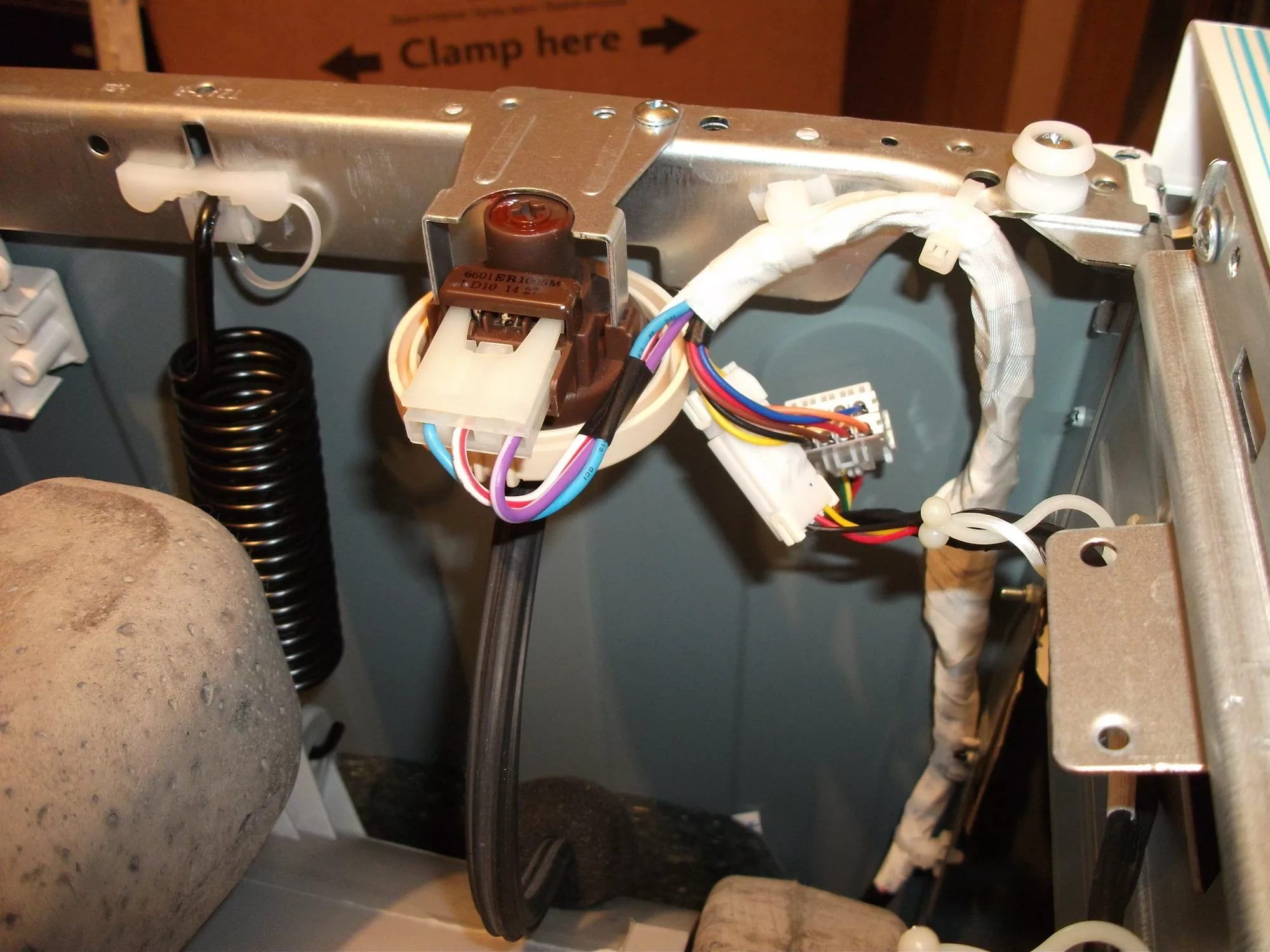
- Remove the top cover of the device (the required sensor will be located behind it).
- Using a Phillips-head hex screwdriver, remove the screws that secure the pressure switch.
- Push the lid forward a little and remove it.
- Use your phone to clearly record the location of the contacts (this will be needed for correct reassembly after replacing the pressure switch).
- Disconnect the wires.
- Pick up the phone.
- Unscrew the fixing screws.
- Remove the water level sensor.
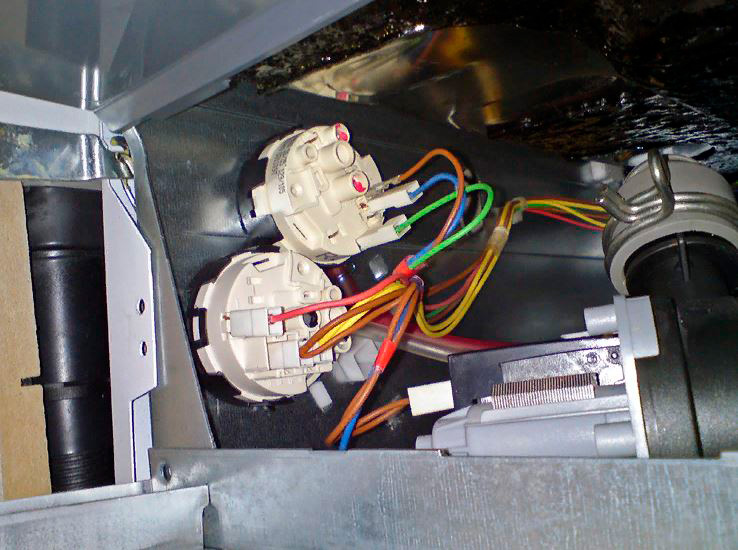
After removing the pressure switch, check it for any blockages. We also recommend testing it with a multimeter. If you're certain the device is broken and needs a complete replacement, use the broken part to purchase a new one. It's likely difficult to explain verbally which sensor is needed in a specific case at the store. After purchasing, reinstall the part (in reverse order).
When you hire a service center technician, you save time on trips to the store and receive a warranty, as the technician will select the right part and perform the repair themselves. However, such repairs will be somewhat more expensive. In any case, unless you have experience repairing washing machines, we would not recommend disassembling such an expensive appliance and attempting to fix the problem yourself. In practice, in most cases, users make mistakes in an attempt to save money, which only makes the situation worse.


