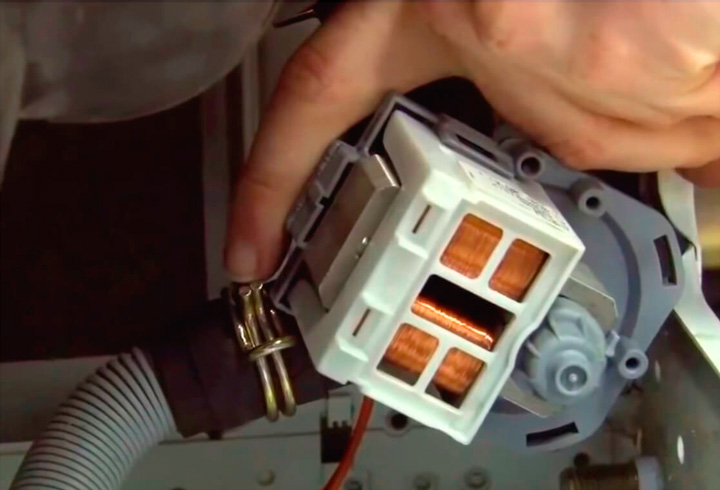
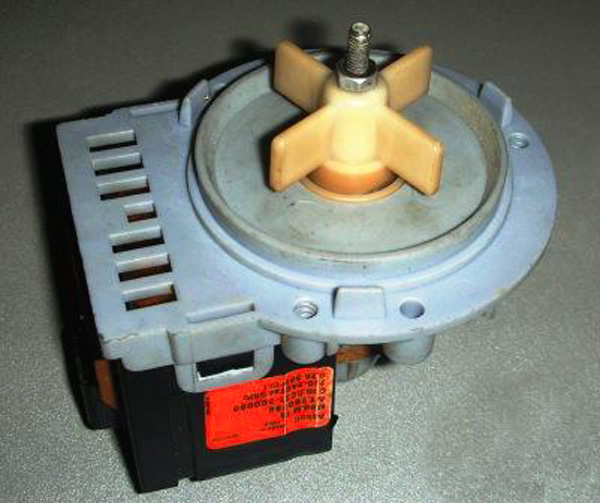
 A washing machine draws in and drains water thanks to a crucial component—the pump. Over time, it can fail due to physical wear and tear, which is quite common, making it considered a weak point in modern washing machines.
Signs of a broken washing machine pump
If you have problems with the pump, the machine can:
- do not respond to the installed program;
- publish humming sounds when filling or draining water;
- pour less water into the drum than required;
- During the process of collecting water, the equipment may shut down completely.
An automatic washing machine operates without user intervention. However, when intervention is required, problems have arisen.
To diagnose and if necessary, repair or replace the machine's pump:
 listen to how the machine works To detect any extraneous sounds. If the machine makes a loud noise when draining, it means there's water in the pump or some of its parts are deformed;
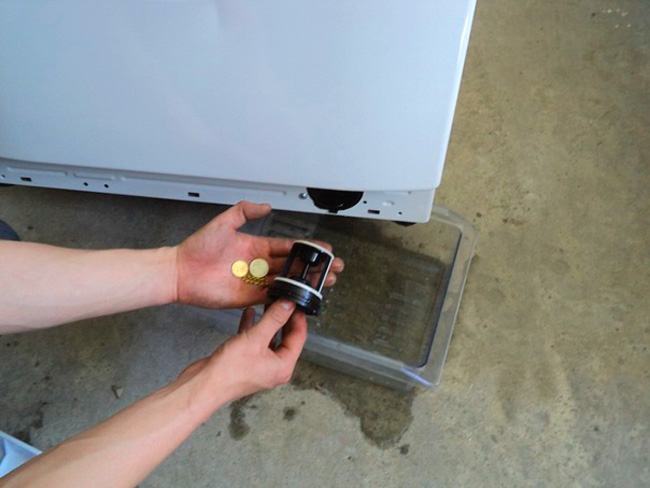
- open panel for removing blockages in drain filterAll small and foreign objects are located here – hair, threads, buttons, seeds, etc.;
- clean the drain hoseEven if it doesn't appear damaged, you still need to remove it and rinse it under hot running water;
 check the operation of the impeller, it might be jammed. It's located behind drain filter, which needs to be unscrewed and pulled out. The impeller blades will be visible and need to be rotated. The rotation shouldn't be too easy. If there is any debris—bra pins, coins, threads, or hair—it needs to be removed.
- Check the integrity of the contacts and the functionality of the sensors going to the pump.
If the diagnostic process identifies the pump as the cause of the washing machine's problems, it will need to be inspected. Accessing it will require standard tools.
If you don't repair your washing machine's drain pump in time, the contacts and even the machine's motor may burn out.
Causes of pump failure
 The pump broke down due to a motor malfunction, as a result of which there is no voltage to the pump.
- The seal (rubber or plastic) is damaged by scale and dirt that settles on the impeller.
- Incorrect connection of the pump or failure of the water level sensor causes the pump to run continuously.
- The pump will not be able to drain the water due to filter clogging.
- Small foreign objects can damage the impeller. This is easy to diagnose. When the pump starts, the machine makes a thumping sound.
Where is the pump located?
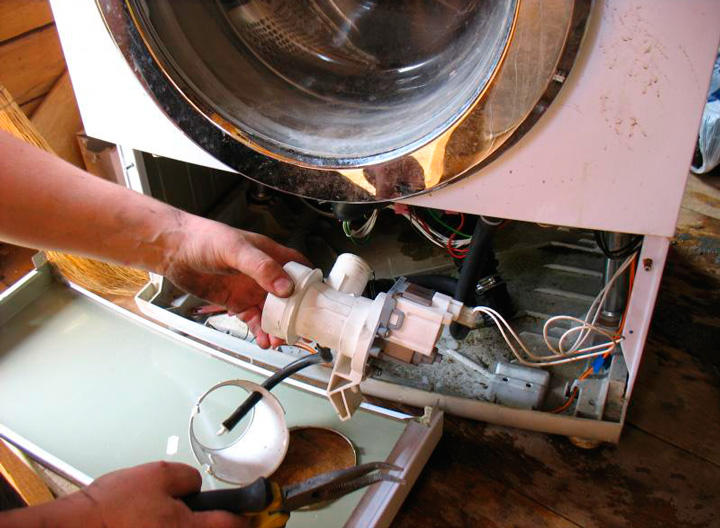 Washing machine models Candy, LG, Whirpool, Ariston, Beko, and Samsung models are equipped with a pump located at the bottom. To access it, lay the washing machine on its side and remove the bottom panel. The filter housing is attached with screws, which are then removed, revealing the necessary component.
If we talk about Zanussi and Electrolux models, the pump is located behind the back cover, which will need to be removed.
The most difficult models to disassemble are Bosch, AEG, and Siemens. For these, the entire front panel must be removed.
DIY Washing Machine Pump Repair
If the problem persists after checking and cleaning the impeller, it is more serious and will require disassembling the pump and performing a more detailed inspection.
Under heavy loads, the pump is protected by fuses located on the component's winding and trips. When the temperature returns to normal, the contacts are restored.
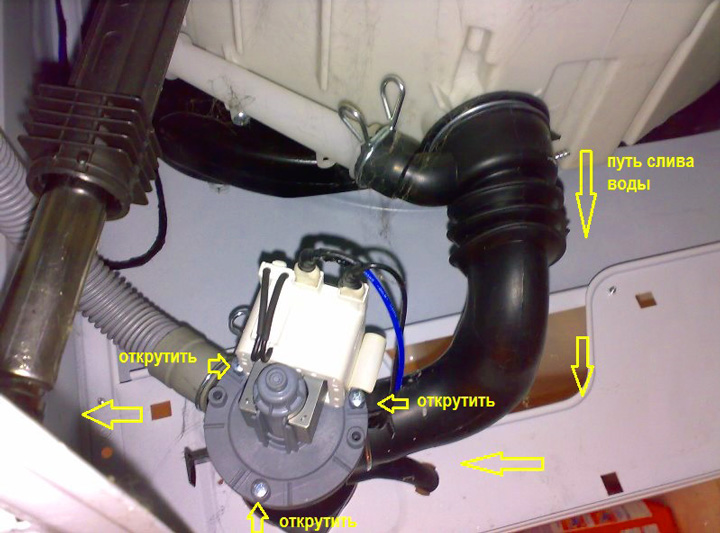 First you need to disconnect the pump from the snailThere are generally two types of fastening: simple screws and screwless (just turn the pump counterclockwise). At this stage, you can determine whether the impeller is rotating on the shaft. Normally, it should rotate with slight delays, called jumps. This is caused by the action of the magnet rotating in the coil. If it's difficult to turn and there's no debris, then you'll have to completely disassemble the part and see if the washing machine impeller can be repaired.
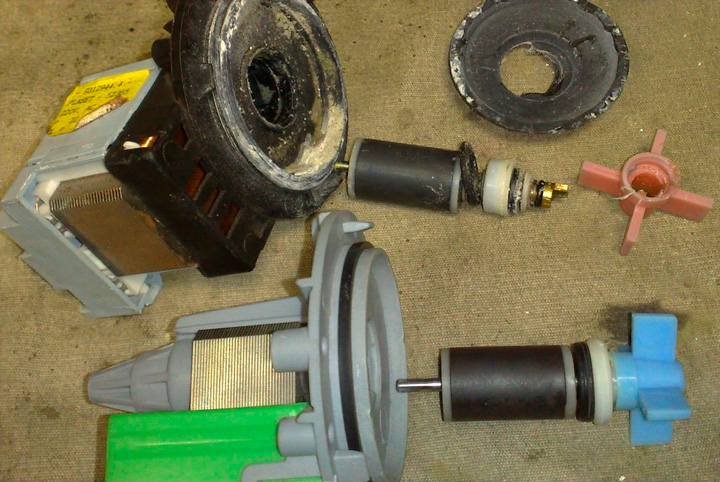
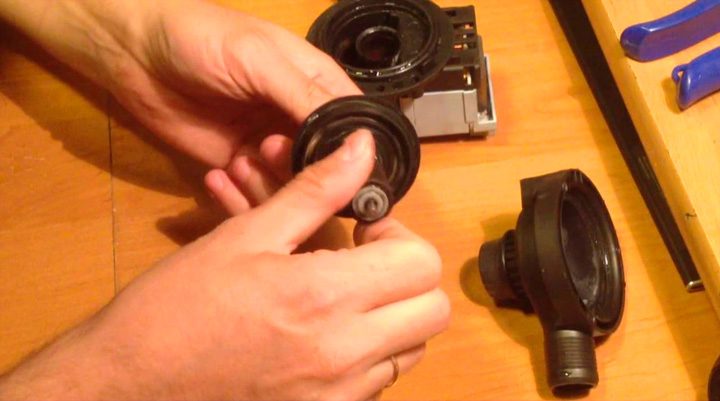 There is a latch on the motor body On both sides, which needs to be unhooked with a screwdriver. This is true if your washing machine has a disassemblable motor, but some models are non-disassemblable. At first glance, it seems impossible to disassemble, but if you know a few details, it's possible.
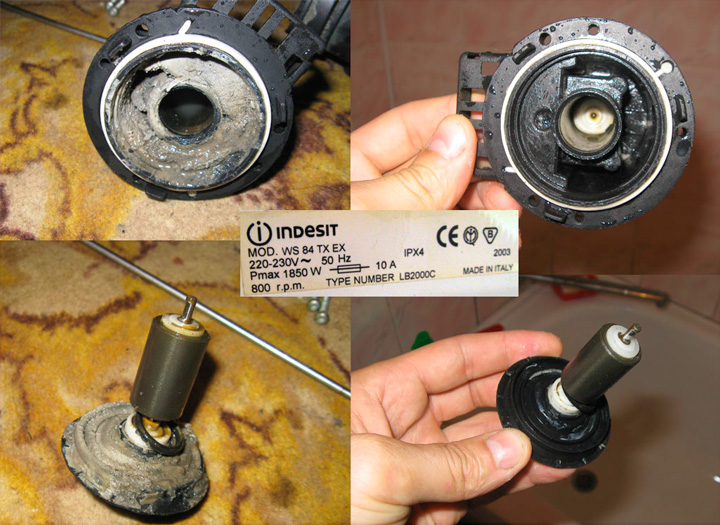 A construction hair dryer will help, which you need to heat the long part of the part, the so-called shank At low temperatures. After heating the shaft, the spider with the magnet is removed from the housing. Dirt typically accumulates on the magnet and in the area where it was removed. After cleaning, the magnet itself is removed. The bearing will then be visible, which is also cleaned and lubricated. After these procedures, the part is reassembled. Under the blades is a ring that should fit tightly. The seal may need to be replaced.
Bearing wear
If the shaft starts to beat during operation, the bearings are faulty.
This causes friction between the volute and the impeller, which causes malfunctions and requires repairs to the washing machine pumps. The problem can be solved by replacing the pump. bearingsIn an emergency, when a new part isn't available and washing can't wait, shortening the blade by no more than 2 mm will do the trick. This is done with a sharp knife.
After repair, the housing is installed into the coil and secured. This completes the pump troubleshooting process.
How to prevent pump failure
By following these recommendations, you can significantly extend the life of your drain pump.
 Always remove foreign objects from pockets before washing.
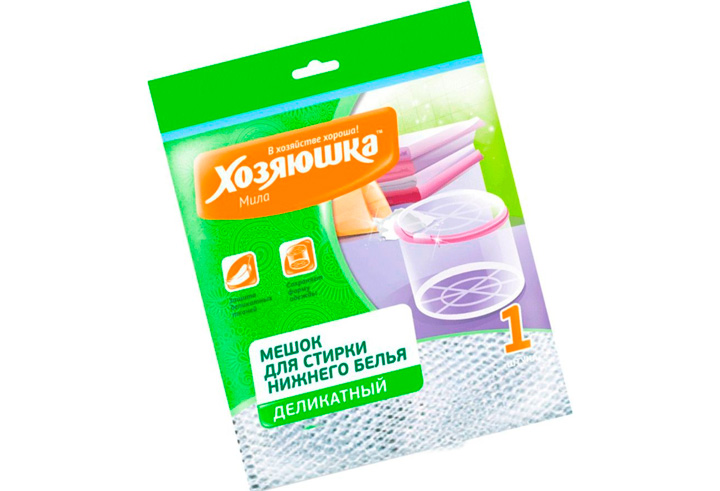
- Use laundry bags to wash your clothes.
- For heavy, coarse dirt, clean items and remove any animal hair by hand before loading into the machine.
- Install filters on the inlet of the filler pipe.
- See you off scale prevention.
- When washing items with buckles or rivets, turn the items inside out.