
 Try to picture this in your mind: you've bought a new washing machine, it works perfectly, and your laundry always smells pleasantly of your favorite detergent and fabric softener after washing.
Why does an unpleasant smell appear?
The problem lies in your washing machine: moisture constantly accumulates inside the drum, and mold and limescale begin to form.
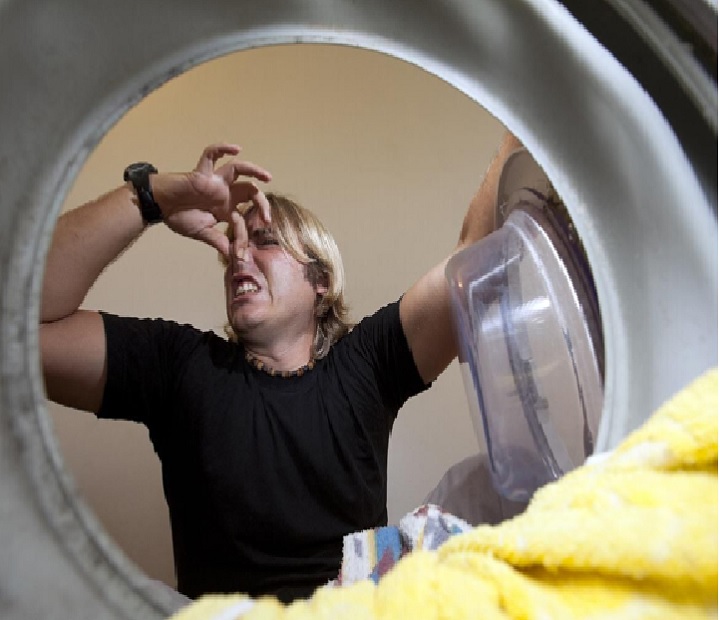
This unpleasant combination leads to the emergence of far from pleasant odors.
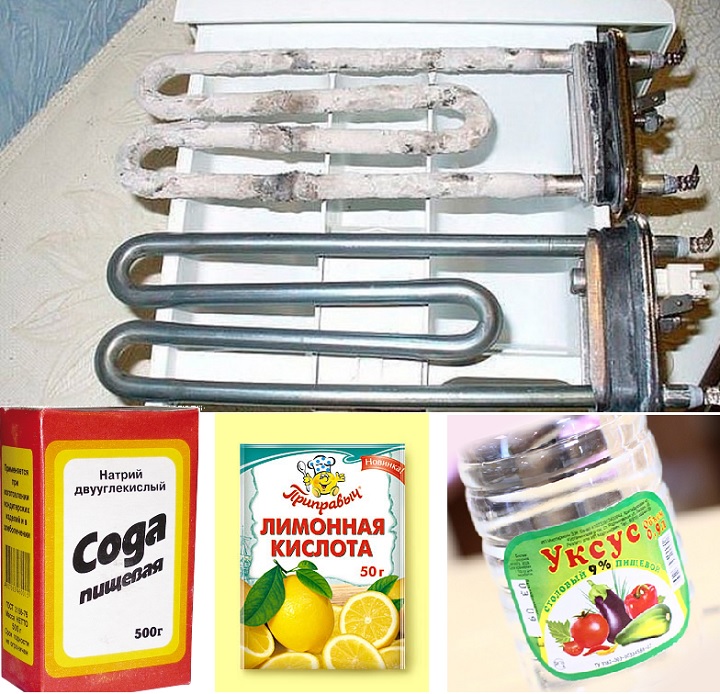
This problem can only be solved by thoroughly cleaning the washing machine using:
- vinegar,
- citric acid,
- soda.
Causes of bad odors
Let's begin the article by taking a closer look at why bad odors occur. Later, we'll explore how to clean your washing machine using folk remedies. We'll also explore other interesting facts about how to quickly and inexpensively remove unpleasant odors.
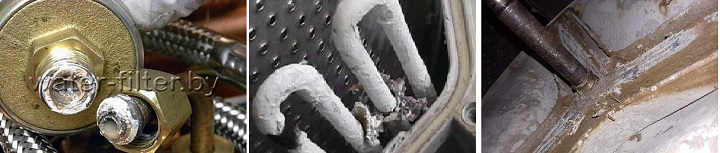
Limescale
Limescale, or scale as it's also called, typically forms in the "guts" of your washing machine. If you don't clean it regularly, even a simple buildup can significantly affect the odor coming from your machine.
Mold
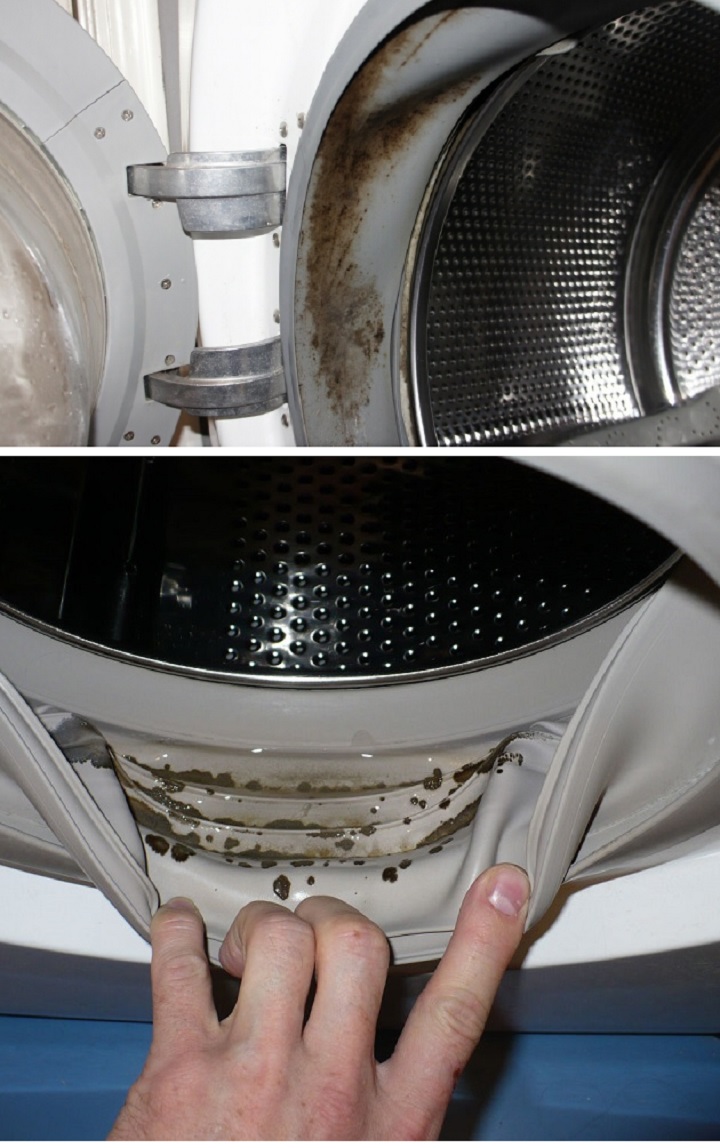 Mold and pathogenic bacteria are mostly typical for front-loading washing machines.
Typically, in this type of washing machine, after each wash cycle, the water is not completely drained, and a small amount remains in the gasket of the door for loading and unloading laundry.
It is for this reason that after finishing washing, most people consider it a good idea to leave the drum open to “air out”.
Excess moisture
But in a closed drum, moisture will accumulate, and dampness, as we know, is the best assistant for the formation and reproduction of microorganisms.
The pattern is the same: the unpleasant smell will only get worse.
Some people wash their clothes at low temperatures and on a quick rinse cycle.
This saves a significant amount of time, but dirt and bacteria are not completely washed off the clothes, but settle on the inside of the machine and the walls of the tank.
Basically, germs just move from one place to another.
Bad powders
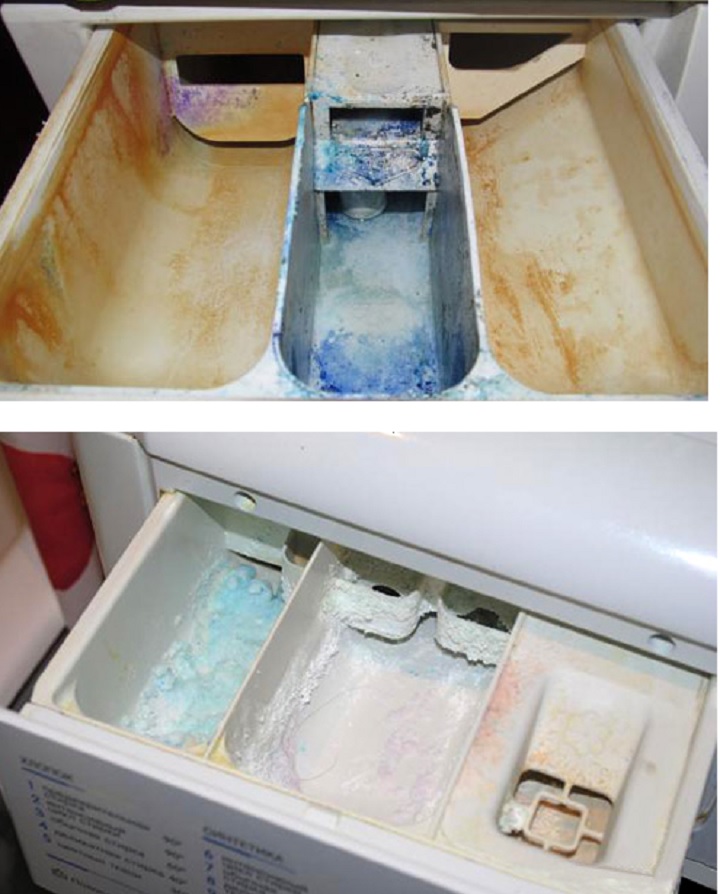 You are using low-quality detergents or detergents that are not intended for washing.
The drain hose is not connected to the sewer correctly.
The water does not drain completely, which disrupts water circulation and causes sewer odors to rise up into your apartment.
Salt deposits and hard water cause plaque on the internal parts of the machine.
Effective methods for cleaning your washing machine
How to clean a washing machine?
Dealing with the smell can be difficult, but it's still possible. To do this, you should get into the habit of giving your assistant a thorough cleaning every now and then.
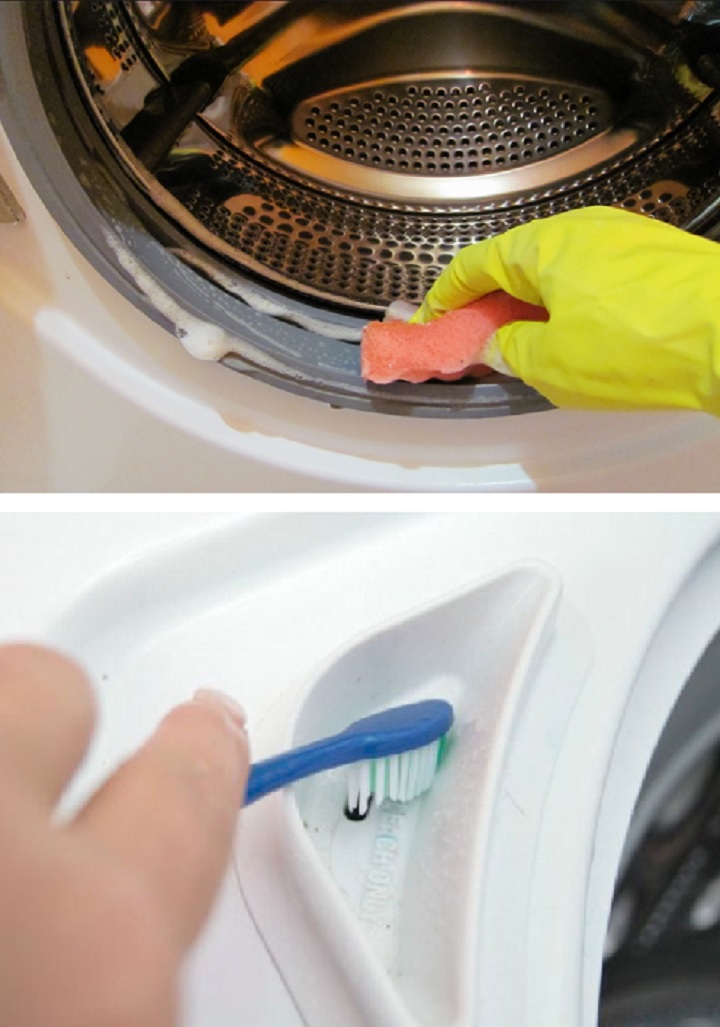 To do this you will need:
- Rubber gloves (household ones, which can be purchased in the hardware store, or non-sterile medical ones)
- A soft cloth, sponge and absorbent wipes.
- Cotton swabs, old toothbrush.
- Soda ash.
- Table vinegar (9%).
- Citric acid.
Soda
Baking soda is a real treasure for housewives, as it has been one of the most common cleaning agents since the times of our great-grandmothers.
Anyone who has ever tried to remove grease and limescale from dirty dishes, as well as other cutlery and household utensils, knows about its unique properties.
Baking soda is successfully used in the preparation of various dishes (often to create “airiness” in baked goods), as well as for removing stains from clothing and as a bleach.
We present you with some effective tips on how to clean your washing machine:
 Take rubber gloves and put them on before you start cleaning to avoid possible allergic reactions.
- Mix soda and water to form a homogeneous mass (1:1).
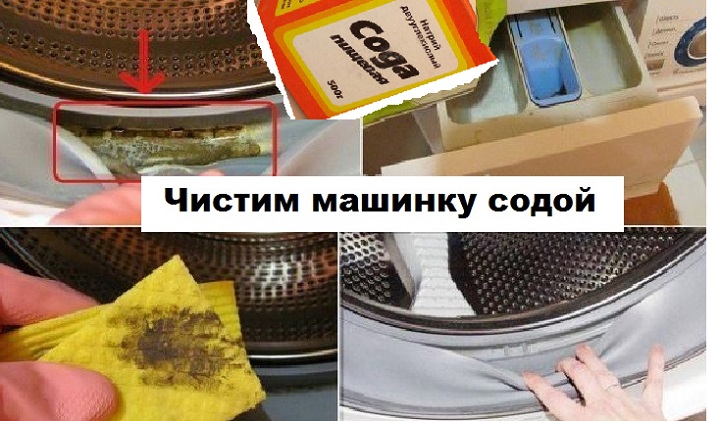
- Apply the resulting mixture to areas where mold is most likely to appear (cuff folds, drum, detergent drawer). To clean hard-to-reach areas of the washing machine, use an old brush and cotton swabs.
- Leave the solution on the parts for about 30-35 minutes.
- Next, using a sponge or soft cloth, wipe the dirty areas with special care.
- Turn on the quick wash cycle. To clean the washing machine, it's best to run the cycle empty instead of throwing laundry into the drawer.
Why specifically soda?
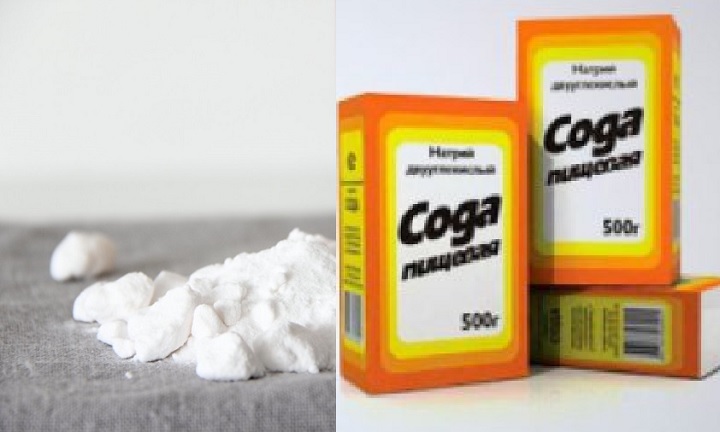
As we mentioned above, baking soda is an indispensable household tool. Most commonly, there are three types of baking soda:
 Food grade (used in cooking, baking and other confectionery products).
- Calcined. Contains strong alkalis.
- Caustic (used in industrial plants, has pronounced alkaline properties).
Incidentally, this explains its excellent cleaning properties. Baking soda is excellent for cleaning bathrooms, plumbing fixtures, tiles, dishes, ceramic tiles, and clothing.
It's also used as a water softener. If you constantly wash in hard water, limescale will eventually build up on the internal parts of your machine. To avoid this, add a little baking soda to your washing powder. However, it's important to consider the type of items you're washing.
If you wash silk in your machine, save these preventative measures for future washings.
Soda is a fairly aggressive product that should be used with extreme caution and without exceeding the required amount.
Citric acid
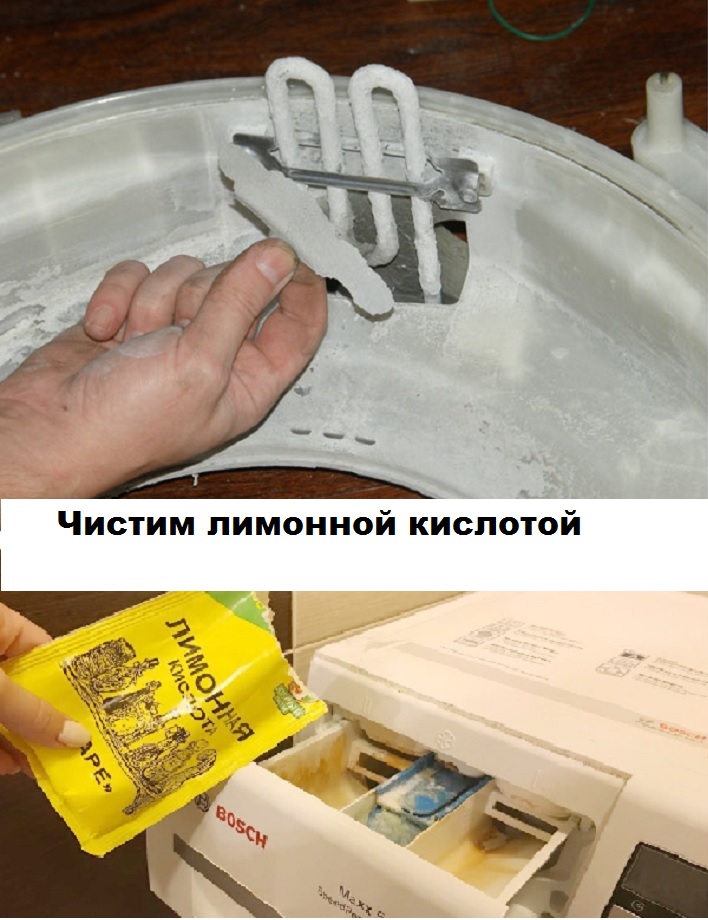 What else can you use to clean your washing machine?
Excellent cleaning of your washing machine can be done not only using soda, but also using other folk remedies.
For example, cleaning a washing machine with citric acid.
To clean the tank like this, you will need about 200 grams of citric acid.
Pour the required amount into the washing machine tank (or into the powder tray – it all depends on what exactly you want to clean).
Some people prefer freshly squeezed lemon juice, thinking that it will clean their washing machine much more effectively.
But this is a myth: the juice has a lower concentration than powdered acid, and it is unlikely to cope with limescale and scale.
Table vinegar
Also, one of the most effective combinations of several components for cleaning the inside of a washing machine is table vinegar.
You need to pour it into the powder tray and run the longest wash cycle at the highest temperature.
Washing is done empty, without adding detergents or laundry.
After an hour, stop the cycle, wait another hour, and then restart the wash cycle. Once the cycle is complete, clean any dirty parts with a brush or small brush. This will remove any remaining limescale.
After finishing the procedure, wipe all components with soft cloths or a rag. Leave the drum open to allow the air to air out, and after a while, the vinegar smell will dissipate.
Adviсe
 If you're experiencing an unpleasant odor while washing your machine or a broken part, don't rush to the hardware store right away. Chances are, you can fix it yourself.
- How often you need to clean your washing machine depends directly on how often you use it, as well as other factors such as water hardness, wear and tear on parts, and the quality of your detergents.
- In addition to the methods we described above, you can clean with special cleaning products sold in household chemical stores.
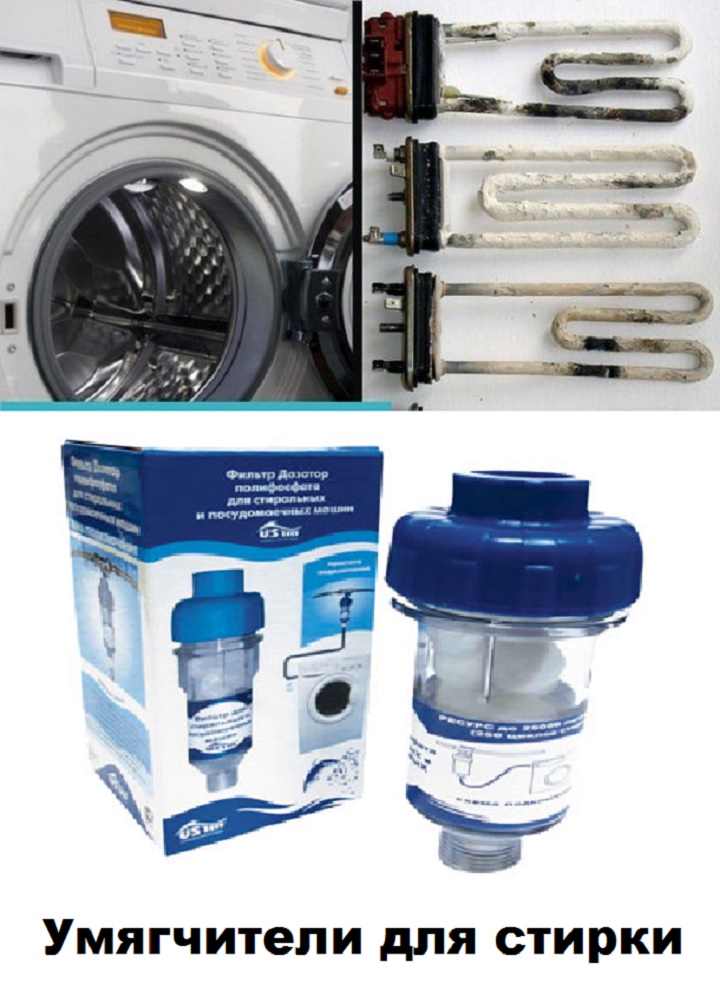
- Don't forget about water softeners, which can prevent the buildup of limescale inside your machine. You can add them to each wash cycle.


Thank you. I chose baking soda for cleaning. I clean everything with it. It's the safest product.