
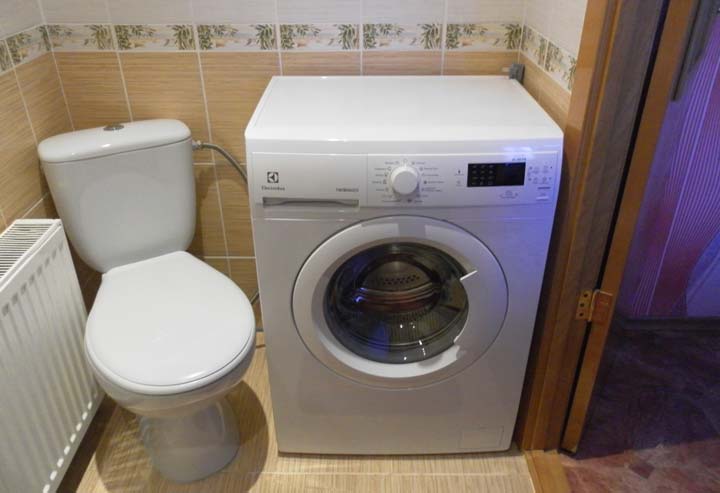
 If you have installed automatic washing machine, and because of the vibration it doesn’t stand in one place, as if trying to “run away”, and even jumps when spinning Then, most likely, you installed it crookedly. And even if the kitchen or bathroom floor appears level to the eye, that doesn't mean it's perfectly level with the ground.
The need for proper installation of a washing machine
Therefore, the answer to the question of why proper machine installation is necessary can be as follows.
Let's say you've bought a good, high-quality new bed, but something's wrong, something's missing. Then you realize it's missing a mattress. Once a special mattress is purchased and installed, sleeping on it naturally becomes much more comfortable and soft. The same principle applies to a washing machine.
Therefore, it simply needs to be installed level.
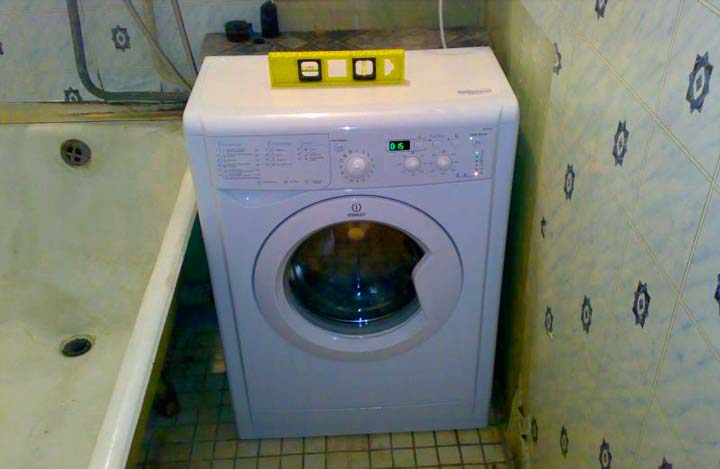
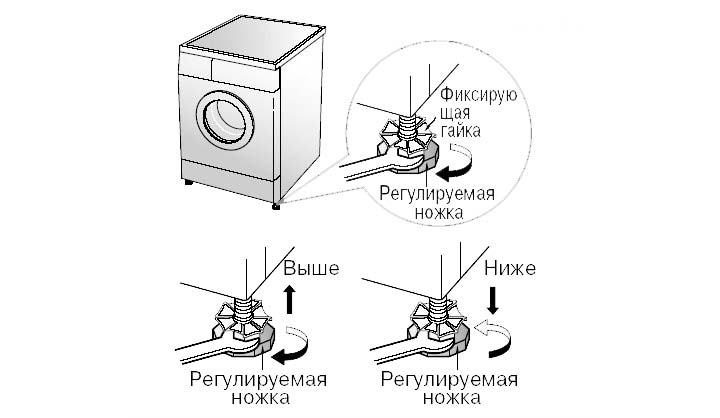
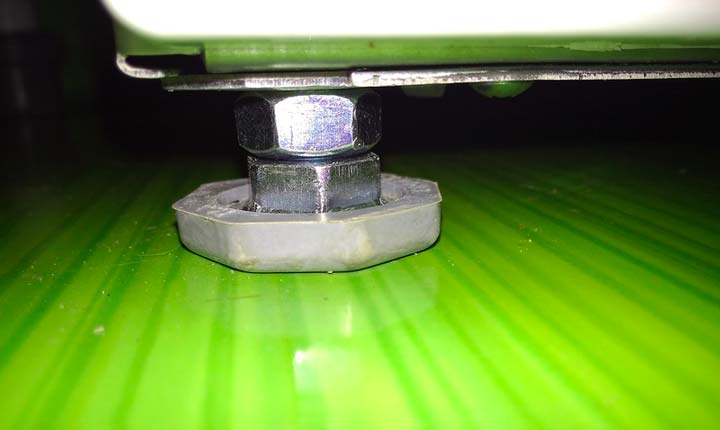
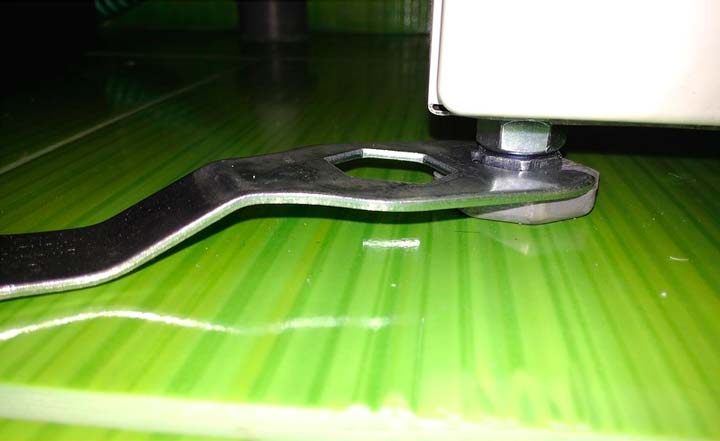
To level the washing machine, use the method described in the operating instructions, that is, tighten or loosen the washing machine's feet.
To ensure everything is done efficiently and correctly, we install a building level on the machine lid.
It will show us how we need to act and we can proceed directly to the adjustment.
It's important to note that you'll need to apply the spirit level in several directions to achieve near-perfect alignment with the horizon. If you've done everything correctly, the air bubble will be precisely centered.
 In some machines, such as washing machines LG carsThe operating instructions clearly state that it must be installed perfectly level. If you ignore these instructions, you could be facing repairs—and unplanned ones at that—as soon as you start using this appliance.
Parts that can break due to improper installation of the machine
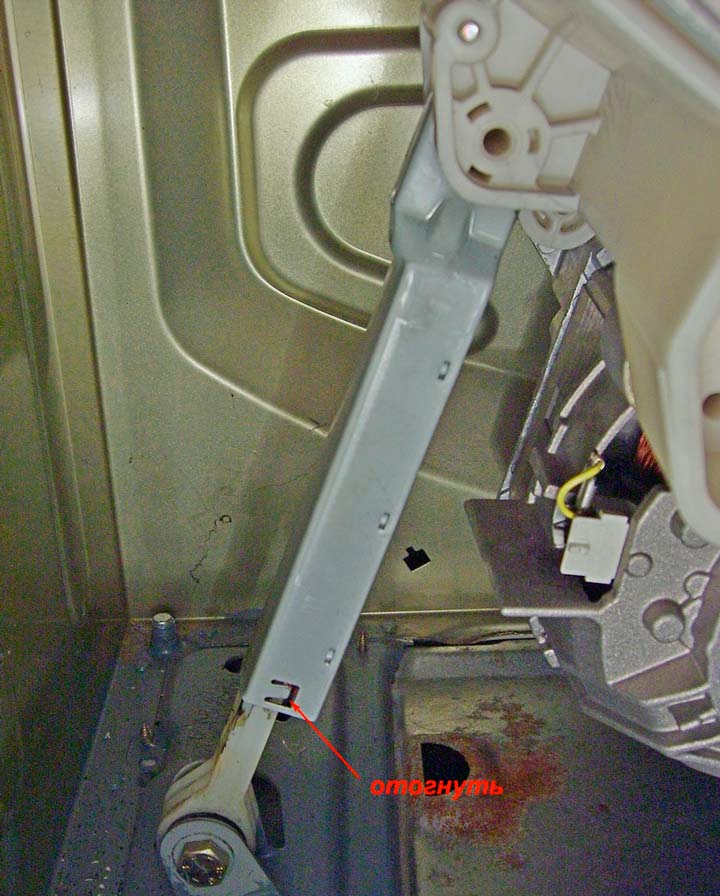 So what breaks first? Mainly the parts that are subject to mechanical stress.
Shock absorbers.
They are needed to dampen the vibration of the machine's feet during spin mode.
If the automatic machine is installed unevenly, then wear of shock absorbers occurs unevenly, and with prolonged use it may completely fail.
This can cause a strong vibration, which will accelerate the failure of the rest of the machine.
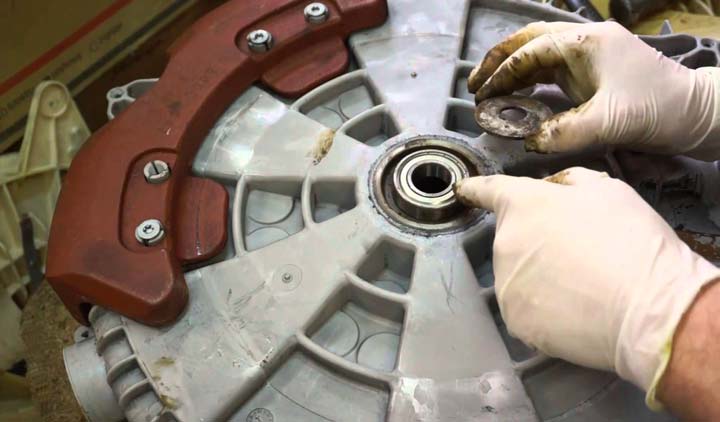 Bearings. Even a slight misalignment creates excess load on a certain group of bearings. While this may go unnoticed with a small load in a washing machine, it will be clearly noticeable at maximum drum rotation. imbalance.
Now let's compare the cost of replacing spare parts with the cost of repairs, and the few minutes it takes to properly install the washing machine.
Therefore, if you find it difficult to adjust the feet of your washing machine yourself, or you do not have the necessary tools, please contact a specialist.
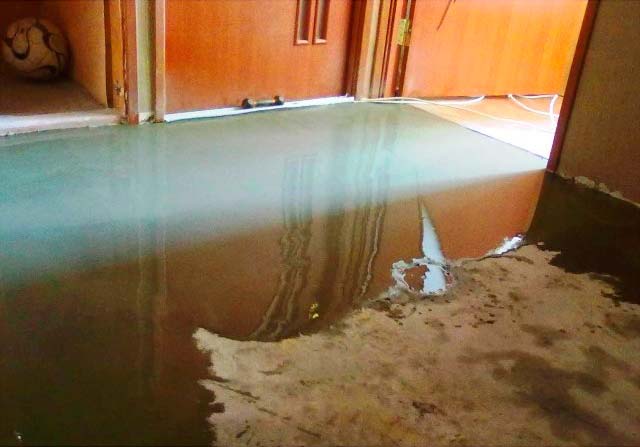
 There is another reason to adjust your washing machine – stagnant water.
A skewed machine will create a pool of stagnant water that the pump can't fully remove. This pool will harbor germs that can contaminate clean items.
How to adjust a washing machine yourself
You will need:
- Tools.
- Dowels.
- Liquid nails.
- Plywood.
 First, you'll need to check the surface you're installing your washing machine on. If the floor is uneven, whether it's tile or concrete, the machine won't sit properly. This means even the slightest vibration will cause the machine to bounce and slowly shift from its original position. If this applies to your situation, you'll need to... level the floor, and then you won’t even have to adjust the washing machine.
 If your floor surface is level, then you should look at how they stand washing machine feetTo do this, gently rock the machine back and forth. You can also tilt it slightly to the sides. This is necessary to determine which feet need to be raised for adjustment.
 Now we move on to the actual process of adjusting the washing machine. To do this, unscrew the feet that need to be raised (or rather, the washer on them), and then turn the foot clockwise or counterclockwise. This is the actual adjustment process. To check the accuracy of the setting, use building levelIdeally, the bubble in the level should be centered. It's easiest to measure by placing the level on the machine itself and making adjustments.
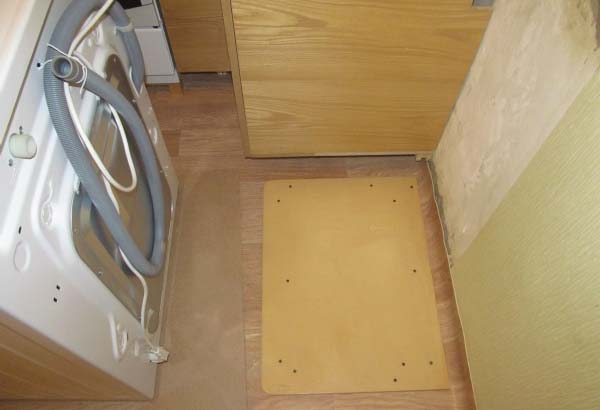
 To adjust and level certain types of machines, you can use an additional device. Take plywood sheet and cut out a base for the machine from it. Next, you should attach it to the floor using dowels or liquid nails.
- A popular method is to wipe the floors with very sweet water and immediately place your newly purchased appliance on them. It should stick to the surface. This method is, frankly, questionable, but those who have tried it swear by it.
What to do if you can’t get rid of the vibration?
The destruction of internal components such as shock absorbers, dampers and counterweights usually causes the washing machine to shake and shift when wringing.
Only a specialist can accurately diagnose the problem and replace the part properly. Therefore, if the vibration persists despite following all instructions correctly, we strongly recommend consulting a specialist.


Thank you, this is a very simple and detailed article. I immediately figured out how to turn the legs.
Unfortunately, this didn't help with my Bosch WLN2426MOE washing machine. It's new, but the drum shakes violently during the spin cycle, even thumping.