
Homes, offices, hotels, schools, retail stores, sports facilities, and other types of buildings typically have spaces that can be effectively heated with heaters such as convectors, radiant ceiling panels, or infrared radiant heaters. With the right combination of customization and performance, convectors can be the ideal solution for buildings with complex heating needs.
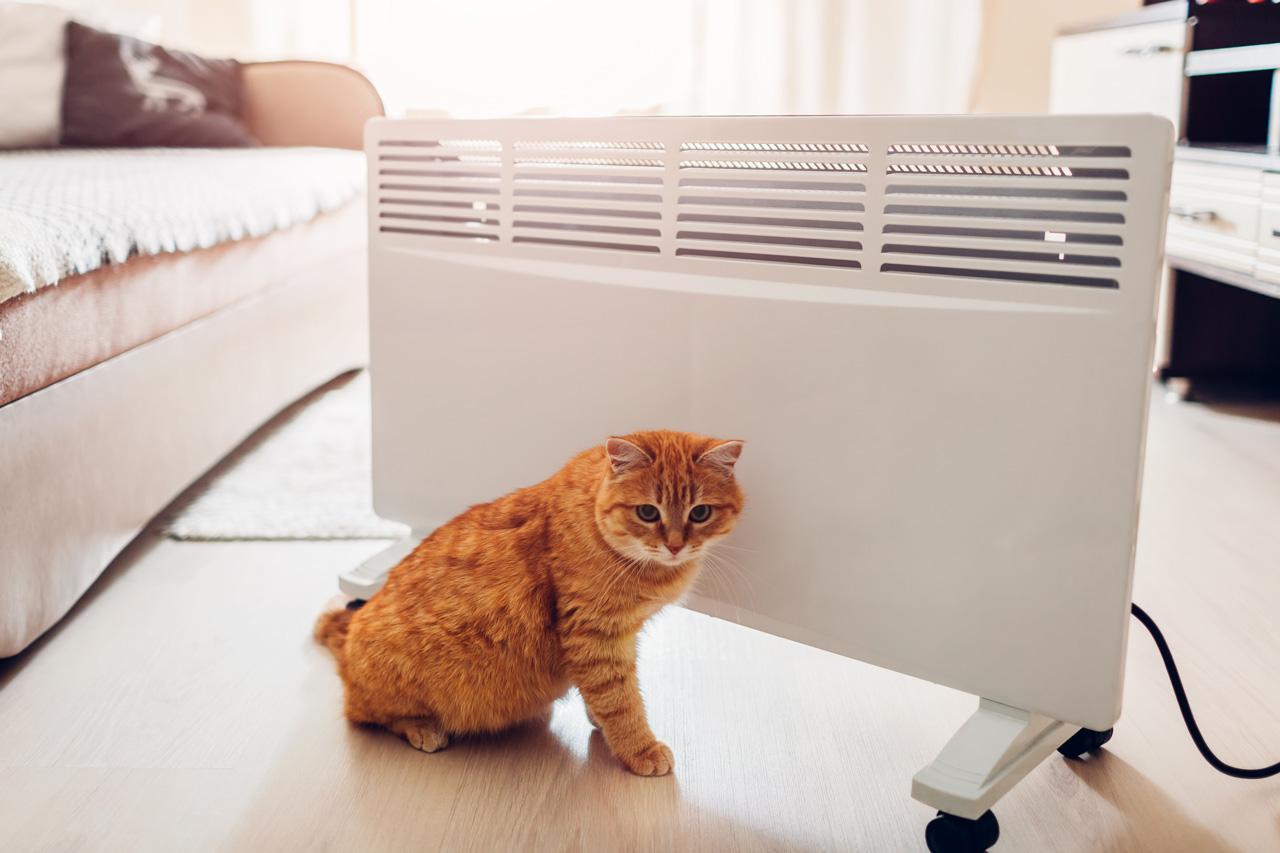
What is a convector heater?
Convector heaters are fanless heaters that use natural convection to move heated air into the conditioned space, making them much quieter than fan heaters.
At the same time, these devices can help solve heating problems such as counteracting cold drafts near windows, reducing condensation on glass, and assisting in destratification of indoor air. Convectors are ideal for use in spaces with large window bays, such as offices, schools, and hotel lobbies. Typically installed at floor level on exterior walls and beneath windows, they provide upward air movement to counteract cold downdrafts and minimize condensation.
Available in a variety of sizes, configurations, and colors, convectors also offer design and installation versatility. Electric convectors offer a wide range of control options, from built-in thermostats for individual units to silicon-controlled rectifier (SCR) controls that can be integrated into building management systems (BMS).
How does a convection heater work?
The air inside the convector heats up, becoming less dense than the surrounding cold air, allowing it to rise due to buoyancy. As the heated air rises, cooler air on the floor is drawn into the convector, creating a constant air flow. When convectors are placed under a window, the heated air rises and blocks the downward flow of cold air, creating an air curtain.
A heating element converts electrical energy into heat by passing an electric current through a specially designed resistance wire. Elements used in convectors have a metal sheath and consist of a helically wound resistance wire encased in an insulating powder (magnesium oxide, MgO) within a metal sheath.
Fins are added to the element core to improve heat transfer by creating a chimney effect, directing airflow toward the element. The large fin surface area heats the air passing through the unit. Most convectors have aluminum fins bonded to the core under pressure. However, heavy-duty and explosion-proof convectors have special steel fins brazed to the core to better handle higher demands.
Temperature sensors located on or near the element interrupt the power supply to the element if it becomes abnormally hot. In convectors, the overheating limiter is most often activated when the air inlet or outlet is blocked by drapery or furniture, causing heat buildup.
How to choose the right model?
Convectors are typically installed around the perimeter of rooms to block downdrafts caused by a cold exterior wall cooling the air next to it, as well as to counteract transmission losses. In most cases, convectors are mounted at floor level along the exterior wall and under windows, allowing heated air to rise from the top of the unit and blocking the cold "downdraft."
To accommodate different operating conditions, many manufacturers offer a variety of styles and configurations, including:
- Convectors with front and bottom air supply.
- Built-in cabinet convectors.
- Window sill convectors.
Because convectors have no moving parts and use natural airflow rather than forced air, they are ideal for quiet living spaces. This includes bedrooms and home offices, where convectors can be installed along exterior walls under windows to provide quiet, gentle heat.
However, when installing a convector, designers and engineers must ensure sufficient wall space for furniture and draperies, and also consider the location of electrical outlets. Convectors with electronic water elements have a lower surface temperature than standard ones, making them a safe choice for a child's room.
Convectors can be controlled individually using a built-in thermostat, in groups using a building automation system, or any combination of the two. When selecting a control system, consider the required level of precision and the parameters of the space being designed. Convector control circuits operate either at low voltage (24 VAC) or at line voltage (the heater's standard supply voltage).
24-watt electronic or mercury thermostats are more accurate than standard bimetallic line voltage regulators. They are best placed in the center of the heated space, but be mindful of the distance between the heaters and the thermostat. If the thermostat is located too far from the heaters, this will result in overheating and underheating of the pockets in the design space.


