
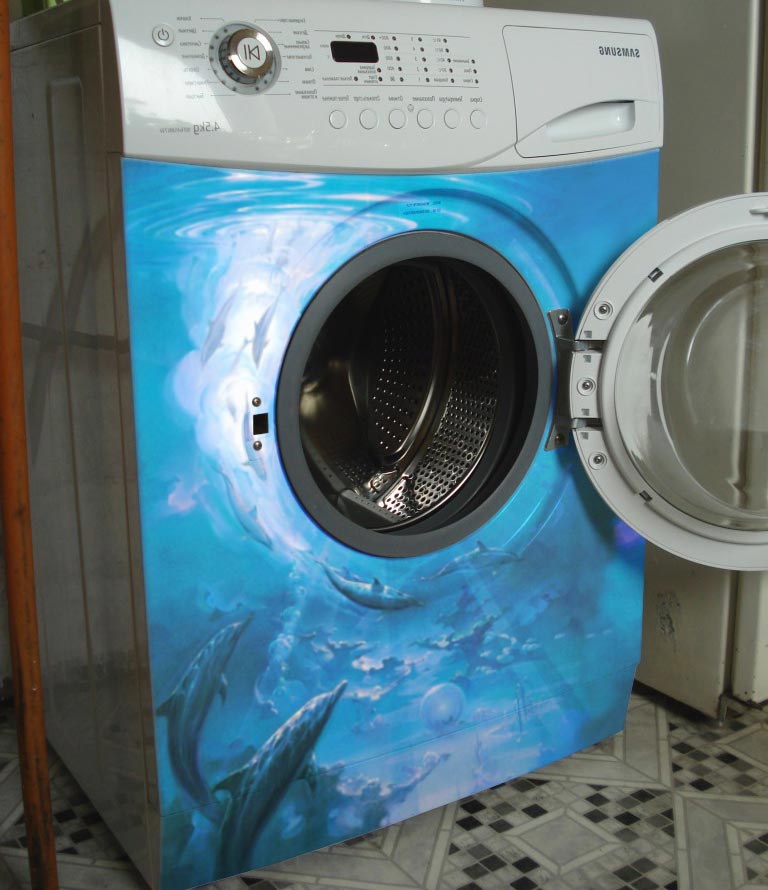
 To ensure that your home assistant serves you for as long as possible, you need to know her weak points.
Therefore, it would be better to carry out preventative maintenance on your washing machine than to spend a lot of money and time on expensive repairs and listen to reproaches from your loved ones.
How to combat scale
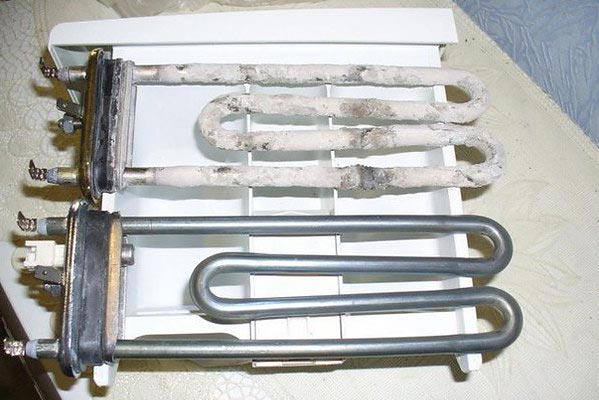 Heating element and water hardness. Since tap water is quite hard and contains various suspended particles (such as rust), this can negatively impact the lifespan of your washing machine.
When heated, such water releases carbon dioxide and forms an insoluble mineral precipitate. Over time, the heating element (tubular electric heating element) becomes coated with scale, which reduces the thermal conductivity of the metal. As a result, it overheats.
If desired, you can check its condition from time to time. Through the holes in the drum, you can shine a light into the lower part of the tank, where the heating element is located, and see how much scale has accumulated.
1.ChemicalsChemical methods are often used to combat scale buildup in washing machines: the heating element and the inside of the drum are treated with scale-removing agents such as Antinakipin-M, Kron Star, and so on.
If your washing machine is equipped with an enamel tank, then this method should not be used under any circumstances.
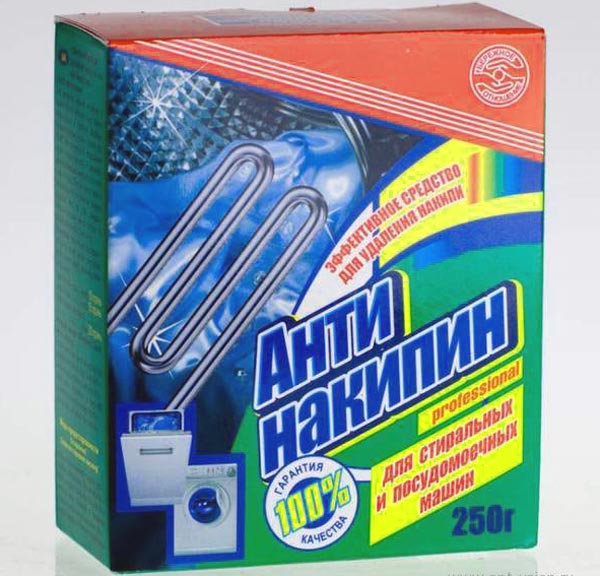 Only those will be suitable for him means, which only slow the formation of limescale deposits but do not dissolve them. For example, the water hardness reducer "Calgon" is added to the machine with each wash. Some detergents, such as "Ariel" and "Persil," have "softeners" added to them at the factory.
The disadvantage of this method is that it has a negative effect on the operation of the automatic system, on the rubber seals, and the fact that you yourself breathe in these fumes.
2.Technological methodWhen water is heated to 50 degrees, scale formation is slower than at higher temperatures.
Try to choose washing modes that are below 50 degrees.
T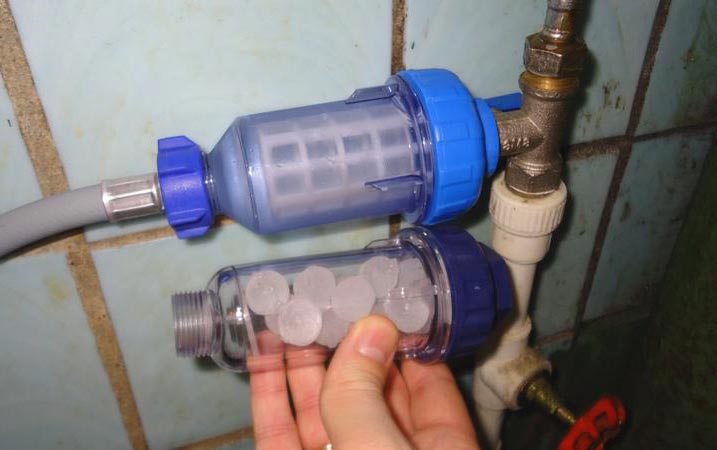 It is also necessary to know that when washing heavily worn linen, heating element It will become limescaled faster, as fabric particles separate from the laundry and contribute to further scale buildup. If you have very hard water, it might be better to invest in magnetic converters or softening filters.
The solenoid valve is very sensitive to mechanical particles in the water. These particles cause accelerated wear when they become jammed between the valve seals.
To prevent this, it is necessary to install mechanical water purification filters with replaceable cartridges.
Other problems and solutions
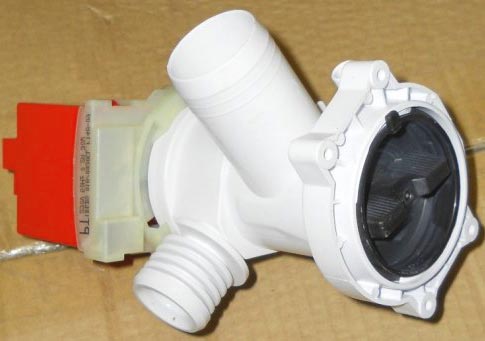 Drain pumpSince it is in water most of the time, after several years of use, it will need to be replaced. Sometimes pumps They break due to small objects (paper clips, buttons, etc.) getting caught in them. This problem can be solved by using a pump with an anti-blocking system.
Asko and Aeg washing machines have this feature. It allows the machine to reverse the water flow and clear the pump of any objects caught in it. Some machines have an automatic drain control feature, which displays information about pump malfunctions on the display.
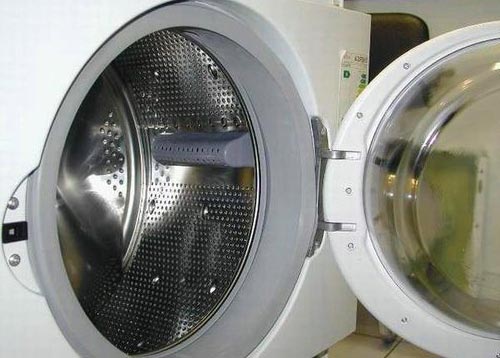 Hatch door. One of the weak points of front loading washing machines is rubber seal on the door. Loading laundry into the machine carelessly can damage the seal and cause it to fail prematurely.
It is also necessary to leave the machine doors open in order to dry the rubber seals and the inner surface of the tank (especially the enamel one).
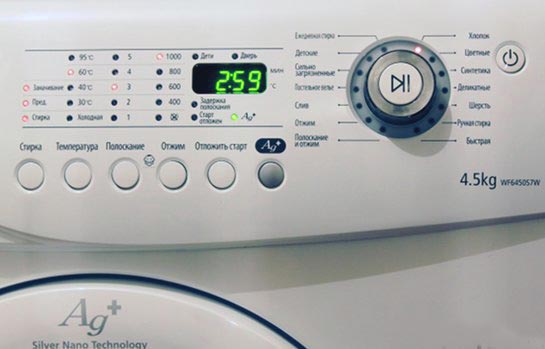 Electronics. Most often, the programming pen fails to function. Sometimes the whole thing breaks. electronic control system. Mainly due to oxidation of terminals caused by high humidity.
But the biggest danger is power surges. The machine starts to malfunction (it might not spin or rinse properly). Its lifespan is shortened, and its performance deteriorates. There's only one solution: a voltage stabilizer.
Don't skimp on it. Remember, a miser pays twice.
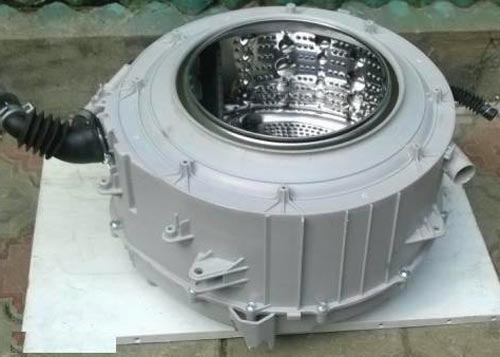 TankLeaking fuel tanks can cause serious problems. When purchasing a car, pay special attention to the material it's made of.
The tank can be made of enameled or stainless steel, as well as synthetic polymer materials (Carboran, Silitek). It's clear to everyone that stainless steel tanks are a good choice.
In enameled tanks, the surface begins to deteriorate quickly during use, as soon as even one crack appears.
It's been noted that a plastic tank can last just as long as a stainless steel one. However, the advantages of plastic are that it's quieter and lighter. Finally, the main advantage of non-metal tanks is that they are completely corrosion-resistant. The cost of a unit with such a tank will also be lower.
Vibration.
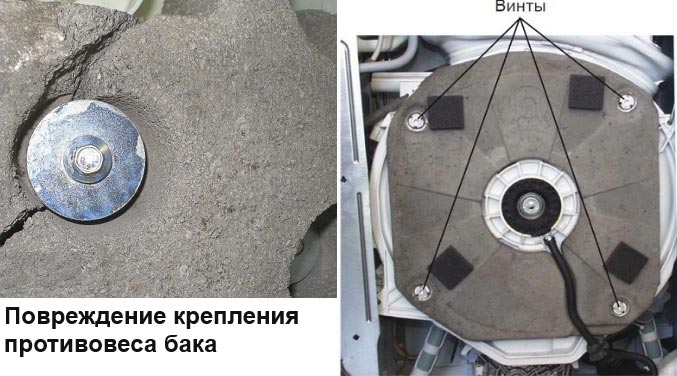 Without her at the stage wringing It cannot be avoided, since due to the uneven distribution of things in the drum, it increases.
In this case, the machine starts to shake, which is, in principle, the cause of most breakdowns.
To dampen vibration, the machine's design includes spring suspensions, concrete or cast iron counterweights, and hydraulic tank shock absorbers. Concrete weights, rather than cast iron, are typically used in machines.
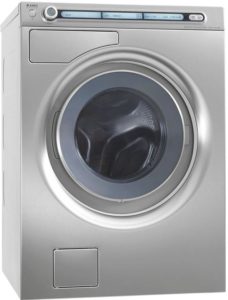
The machine's greater mass also helps reduce vibration. The larger the drum, the more evenly the laundry is distributed within it.
In the ASKO washing machine design, the moving part does not come into contact with the body. It is firmly attached to the frame with a strong base via shock absorbers.
Actually, you can overcome vibration yourself. To do this, you need a perfectly level floor or a specially installed foundation. Then, it's advisable to securely fasten the machine to it.
Important: do not overload the machine with laundry.


