
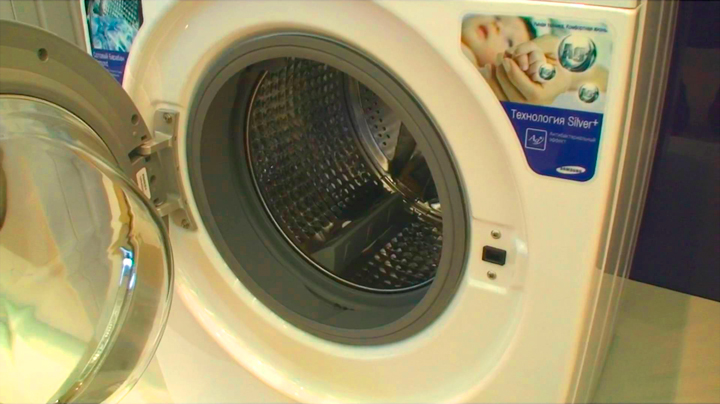
 The washing machine lock isn't the most complex device, but it's essential for washing. It's used to lock and seal the door during the washing, rinsing, and wringing out laundry.
This device is designed to provide reliable automatic protection against accidental door opening and, if damaged, stops the washing program. If the door lock malfunctions or wears out, the washing machine's lock will require repair or replacement.
How a washing machine lock works
Before checking the functionality of the blocker, you should at least know what it consists of and how it works.
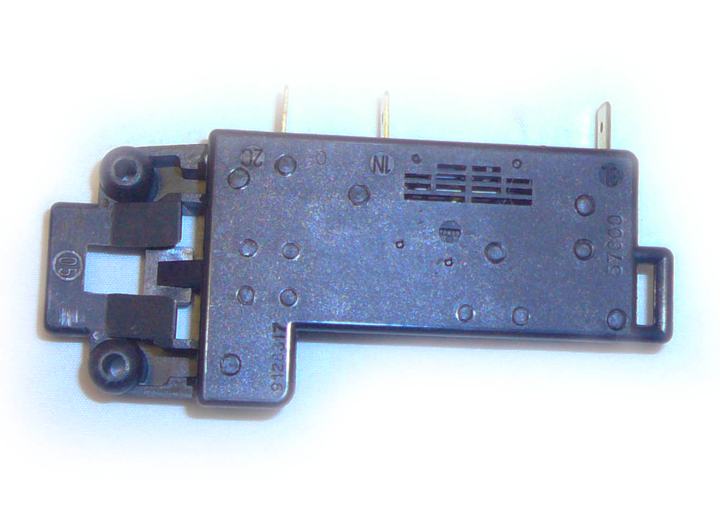 Washing machines from different manufacturers are equipped with one of two types of closing devices to lock the hatch:
- Electromagnetic. They cannot boast of reliability and efficiency.
- With bimetallic elements.
 They're common on modern cars and are more popular. This type of lock operates on the close interaction of three elements:
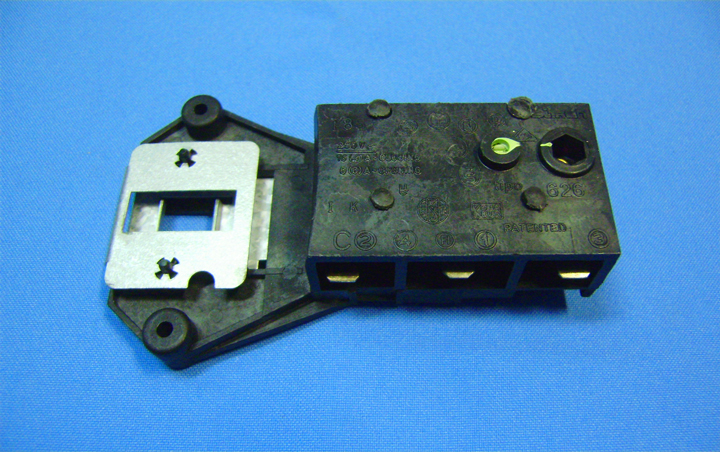
- retainer;
- thermoelement;
- bimetallic plate.
The washing machine door lock is hidden in a plastic housing, where at the bottom there is a hole for a spring mount that connects the system to the door.
Upon receiving a command from the control module, the washing machine's door locking device receives a current charge to the heating element. The heating element heats up instantly, causing the bimetallic plate to heat up, causing it to extend and expand. In this state, it presses the latch, which immediately reacts, locking the washing machine. This action remains active until the plate cools. door will be blocked.
When the power is cut off, the heating element is deprived of heat and the plate cools, causing the door to unlock. If the locking device or the triac responsible for its operation in the control module fails, and voltage is constantly supplied to the lock, it will not open until the machine is de-energized. If the heating element's contact is broken or damaged, no heating occurs, and the door will not close.
How to check a washing machine lock
To determine the functionality of the washing machine lock, you'll need a multimeter. Before testing, remove the lock. To do this: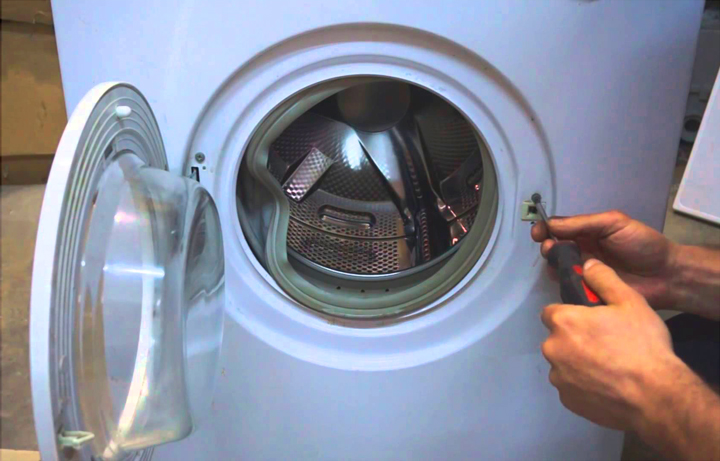
- open the hatch in the washing machine;
- detect the wire ring;
- remove the ring with a screwdriver;
- adjust cuff so that the lock could be reached;
- Unscrew the bolts that secure the lock and pull it out.
After removal, carefully examine its circuit diagram. This is done to get an idea of which contacts are responsible for what.
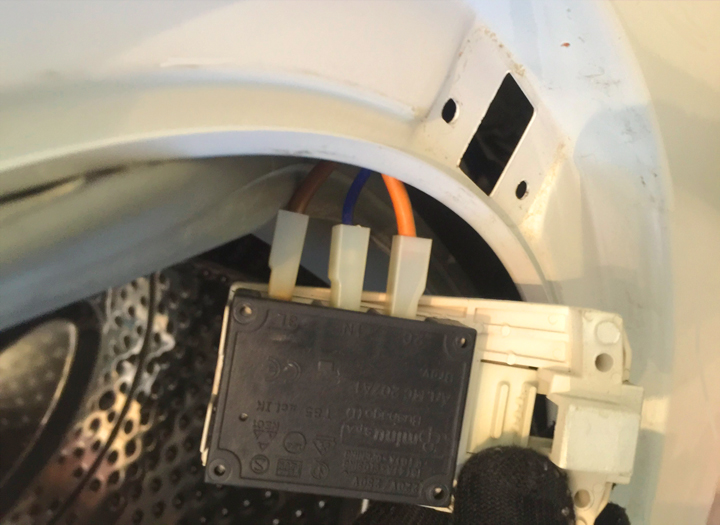 It is necessary to find out where the phase is, where the neutral is, and where the common contact is.
Bimetallic strip devices are manufactured by many companies, and the contact arrangements often vary. It's very difficult to use a multimeter and perform a test without studying the circuit diagram.
Let's assume we've sorted out the contacts. Let's begin testing.
- T
 The device's toggle switch switches to test mode.
 - One probe is attached to the neutral contact, and the other to the phase contact.
- If the tester shows a three-digit figure, then everything is fine.
- Now the probes are installed on the neutral and common contacts.
- If the device shows 0 or 1, the blocker is clearly faulty.
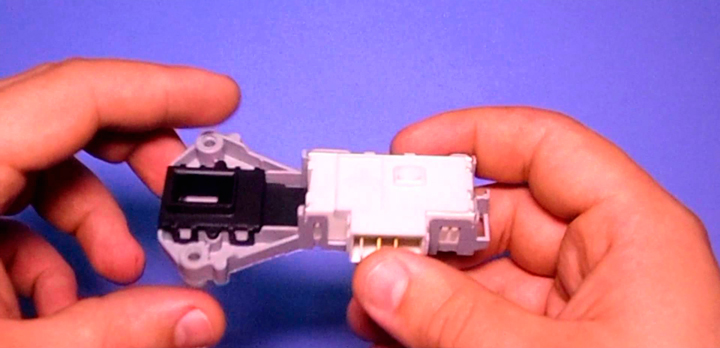
If the inspection does not find a fault, but the problem is clearly present, then the cause may not be electrical, but mechanical.
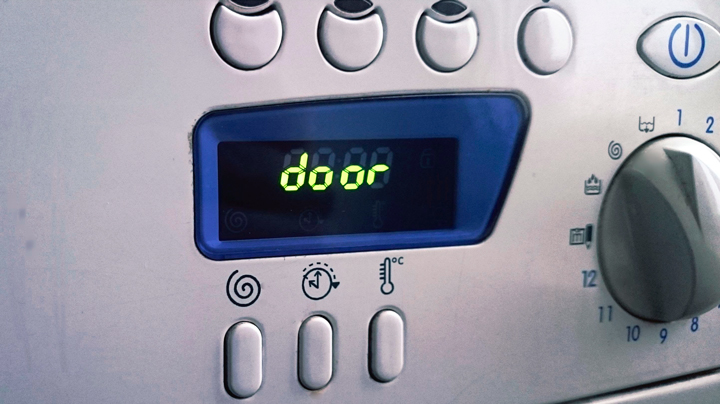 If the problem is mechanical, the washing machine door may remain locked for many hours after the power is cut off. When the display shows error code If there's a problem with the door locking device during washing, the problem is obvious. Also, if the washing machine refuses to lock the door, either the lock itself or the control module is broken. You can find out with a multimeter or by replacing the device with a new one.
You can check more precisely and in detail in service centerUnfortunately, this is where checking and repairing the washing machine lock at home ends.


