
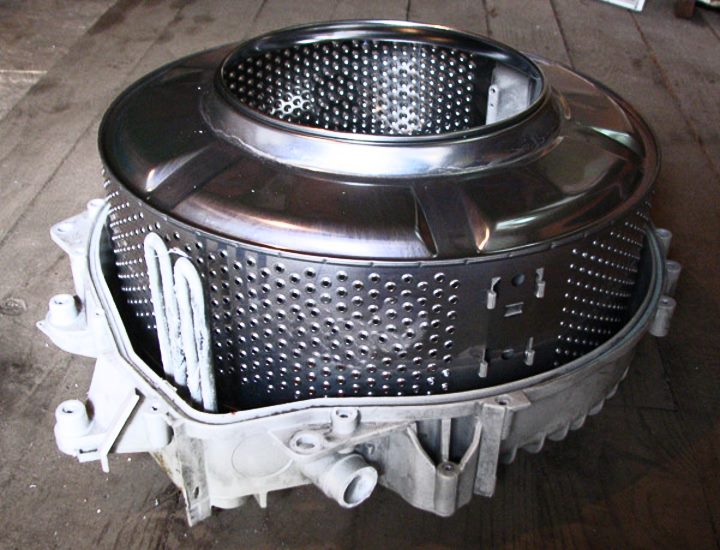
 A washing machine is a complex mechanism with its own advantages, disadvantages, and, unfortunately, breakdowns, like all equipment.
Imagine that a situation has arisen where, while working, the machine rumbles, growls, and makes strange sounds.
If you spin the drum with your hands, you can hear these sounds again. Scary.
Most likely, the assistant broke down.
We analyze the problem
There may be a problem with the bearings, seals, or shock absorbers, or perhaps something has simply gotten stuck in the wrong place. Or the drum itself may need to be replaced. What should I do?
You'll need to figure out how to remove the drum from your washing machine. You can't do it with your bare hands, but with a few tools, it's not difficult. So, what will you need?
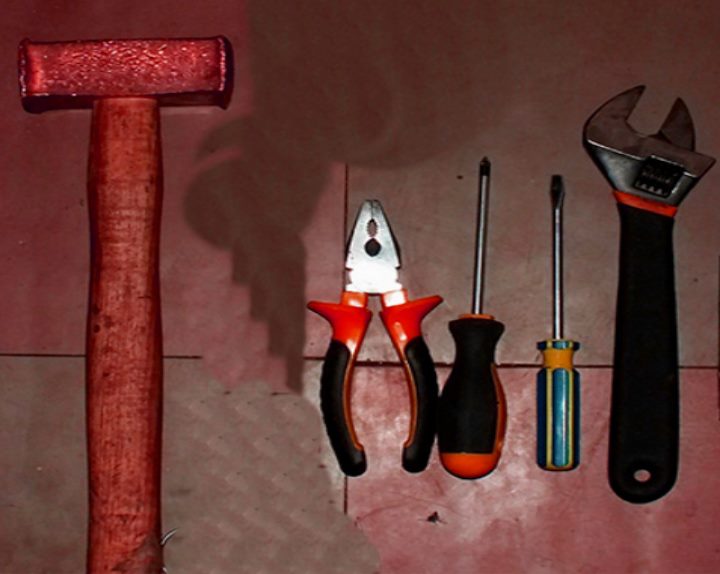
You will need the following tools:
 Screwdrivers, pliers, hammer.
- Wrenches.
- Hacksaw for metal (if necessary).
- Replaceable parts.
General safety requirements for disassembling a washing machine, regardless of the type of repair and load, include an empty drum, de-energizing and turning off the water supply, i.e., disconnecting the hose.
Removing the drum
Steps for a front-loading machine
Depending on the washing machine model and manufacturer, the disassembly process may differ slightly.
For example, you have an Indesit or any other washing machine, and you don’t know how to remove the drum.
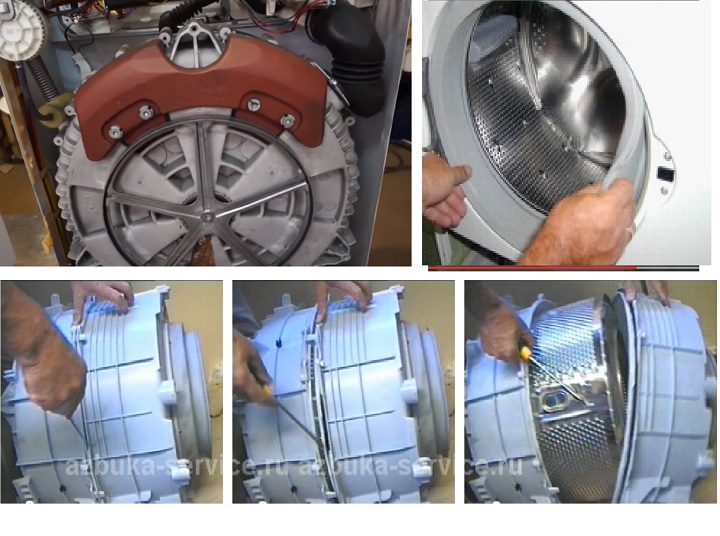
Let's figure it out. To solve the problem yourself, you'll have to:
- – unscrew all the screws on the back wall, remove it together with the control panel and the detergent compartment;
- – there is no need to disassemble the control panel, just put it aside;
- -
 remove the cuff: unscrew all the screws, remove the panel at the bottom, find the clamp spring and pull it;
 - – remove the front panel, now the tank is open and accessible;
- – remove all wires and generally remove everything that can be removed (pipes, wiring);
- – remove the head screw (it holds the tank at the back);
- – remove the tank, if possible, split the tank in half and remove the drum. Replace it with a new one;
- – assemble in reverse order.
Steps for a top-loading machine
The drum in a top-loading machine is more durable because it is attached on both sides, unlike in a front-loading machine.
What steps are needed to get it?
 Unscrew all the screws from the bottom of the machine, both on the front and back walls.
- The side panel is unscrewed and removed.
- All wires are removed and any unscrewed screws are removed.
- Similar to the first, the second side panel is removed.
- The shaft is secured with a screw, which can also be unscrewed.
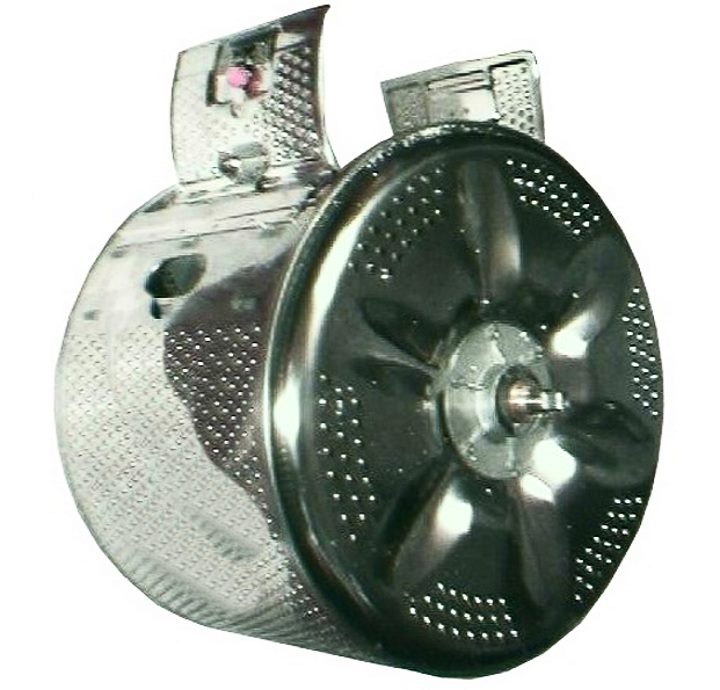
- All that remains is to remove the drum of the Ardo, Bosch, Candy, etc. washing machine.
We eliminate problems
Disassembling the drum
The washing machine's drum consists of two halves. Some drums are fastened together, while others are soldered.
To disconnect the tank, you just need to unscrew the mounting bolts.
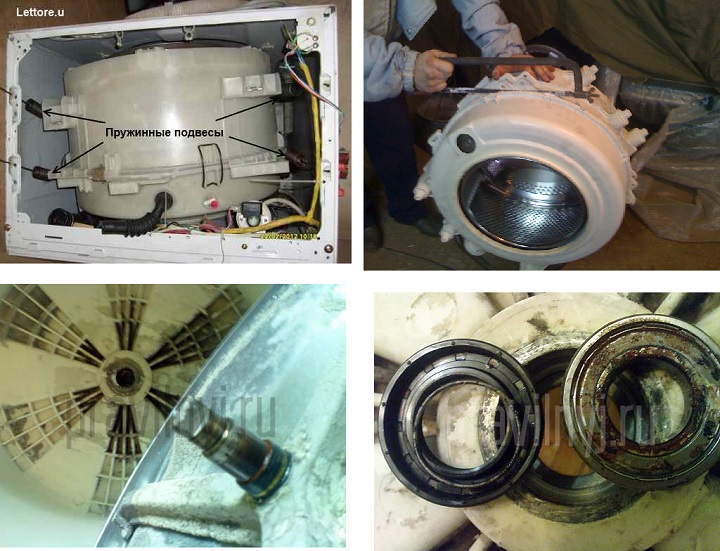
At this stage, the oil seal becomes accessible and if it needs to be replaced, you can remove it using a screwdriver or pliers.
The bearing is more complicated. You'll have to knock it out with a metal pipe and a hammer. I don't think there's any point in talking about being careful; it's obvious.
You can also replace the crosspiece, again, if necessary.
Important! Before replacing a new part with an old one, the installation area must be treated with lubricant.
If the tank is not disassemblable, it is more difficult to carry out repairs on your own; you may need the help of a professional.
Changing the bearing
When is it necessary to replace a part, and how do you remove a bearing from a washing machine drum?
For example, if a puddle has formed under the machine and there's a loud hum and vibration during operation, what's causing this? It's highly likely that water has gotten onto the bearing and damaged it. This part typically has a long service life of 7 to 11 years, but sometimes problems occur and replacement is required early.
We fix shock absorber problems
Shock absorbers ensure the drum operates smoothly during washing and spinning. There should be no rattling noise.
How to check if they are working properly?
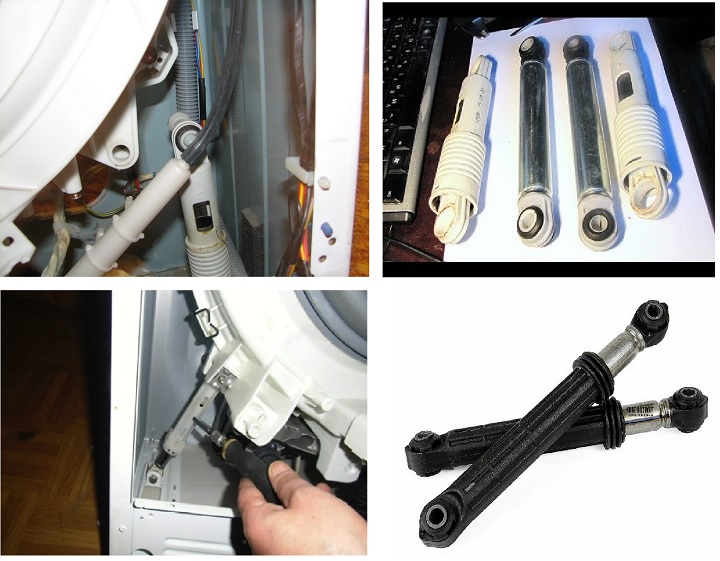 Simple. Open the car hatch and pull the drum toward you. Now let go. What happened?
If the drum wobbles back and forth like a seesaw and won't lock into place, it's a sure sign the part needs replacing. Shock absorbers should be replaced in pairs.
This doesn't require disassembling the machine, as with bearings, but only applies to LG, Beko, and Ardo models. Simply unscrew the fasteners from the bottom and replace the parts. Other models require a bit more work.
- – The top cover is removed and the dispenser is taken out.
- – The control unit is disconnected.
- – The sealing rubber with the clamp is removed.
- – The front part of the machine body is removed.
- – The details are changing.
Removing a foreign object
What does a foreign object mean? It could be:
 coins, even rhinestones,
- buttons and other clothing details.
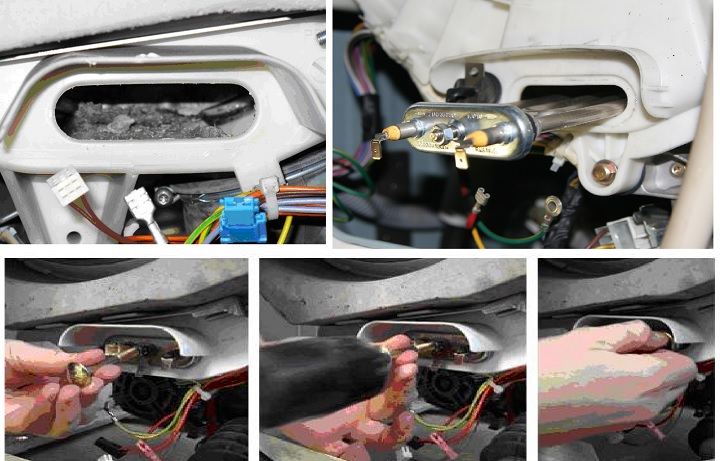
If you do not remove and free the drum from these things, the consequences can be dire, including jamming and breakage.
What other problems can you solve yourself?
Changing the cuff
There are many reasons why a seal can fail. These can include wear and tear due to long-term use, mold, cracks and tears, limescale buildup, and so on.
If water remains under the machine after washing, check the seal. This is dangerous. It could short-circuit the electrical system or completely damage the machine.
What do you need to replace the seal and how do you remove the rubber from the drum of a washing machine?
First, you need a new cuff that must be 100 percent compatible with the old one, otherwise it may not fit completely.
To replace an old rubber band with a new one, you need to:
- Remove the front panel of the machine, remove the powder compartment, remove the front of the machine.
- Detach the cuff.
In the standard version, the cuff is attached to the tank with two metal clamps. Simply lift the clamp spring and pull.  Once the first clamp is removed, you can remove the top of the rubber band, which indicates its correct location in the tank. The cuff will easily come free and can be removed after removing the second clamp.
- When installing a new rubber seal, use the marks on the rim of the hatch as a guide.
- Before installation, it is necessary to clean the rim of the hatch, at least with a simple soap solution.
- The cuff is pulled onto the hatch. If the top is pulled, the bottom is held; if the bottom is pulled, then vice versa.
- Next, all parts are assembled in reverse order.
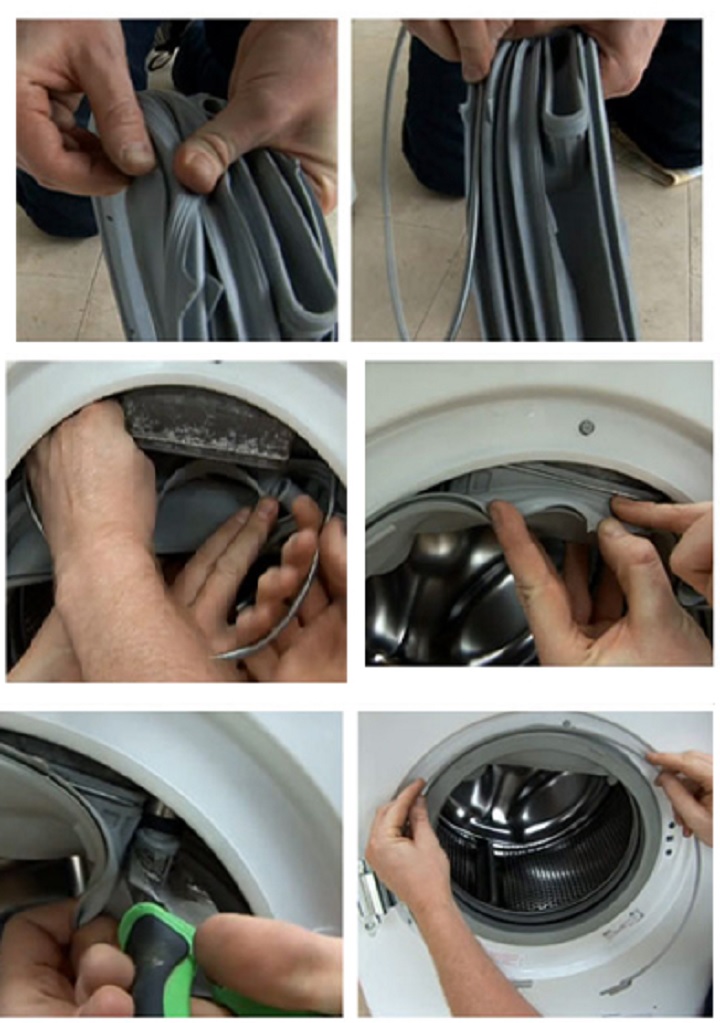
All that's left to do is test the job by running a wash cycle without any laundry. If there's no leakage, you're done!


