
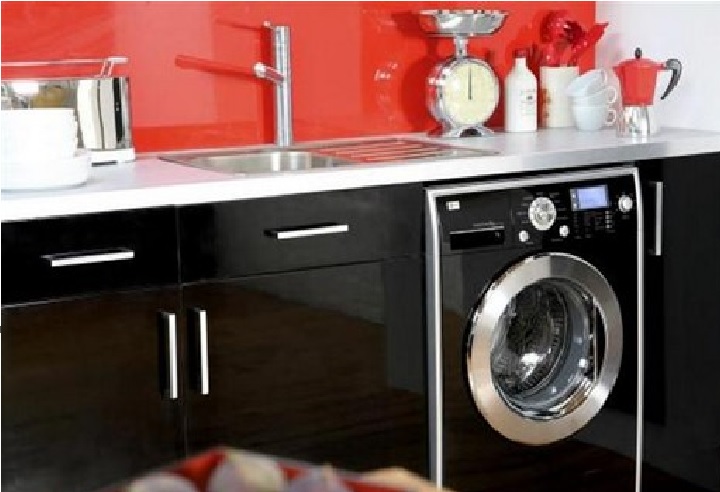
 Built-in washing machines look quite convenient and comfortable in the kitchen.
If you have a small kitchen and are planning a high-quality renovation, you will need to put in maximum effort to achieve this level of comfort.
Nowadays, no one is surprised by a washing machine built into the kitchen.
After all, household appliances of this kind are quite popular in the homes of homeowners; they save you time, space, and are quite helpful for advanced housewives.
- Kitchen. Exploring the washing machine location.
- What place should be allocated for the washing machine?
- What are the benefits of installing a washing machine in the kitchen?
- Features of the kitchen interior
- Exploring a Built-in Washing Machine
- Features of a built-in washing machine
- Features of the installation process
- The pros and cons of installing a washing machine in the kitchen
- Pros:
- Cons:
- How to make the right choice
- Installation and connection
- Assembly operations
- Connecting a washing machine in the kitchen
- Built-in washing machine in the kitchen: a feature of connecting to the water supply
Kitchen. Exploring the washing machine location.
What place should be allocated for the washing machine?
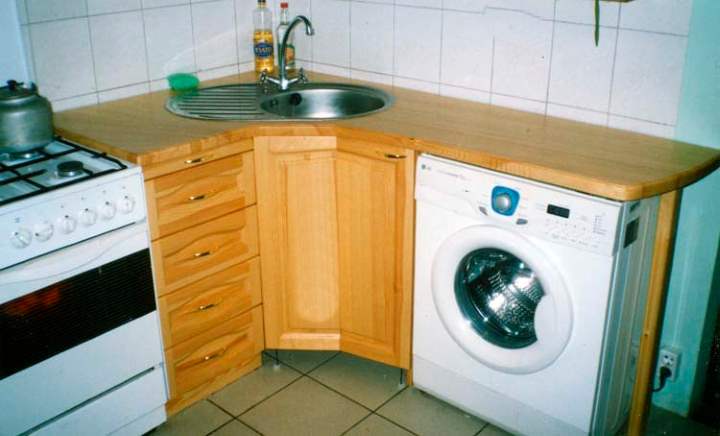 It is more convenient to place the washing machine under the counter in the same kitchen, or to place a top-loading machine somewhere in the corner.
It's even possible to install two washing machines, one on top of the other, in a niche in your built-in kitchen. Your kitchen can be divided into two or three sections (extending the kitchen), which could include a laundry room with built-in washing machines.
During your renovation, you can embrace the country style by installing a front-loading washing machine. In a fairly large and spacious kitchen, it's often possible to dedicate a cabinet in an alcove to storing washing machines and laundry detergents.
The most important thing is to place your structure correctly so that you can add a dining table, various decorations, or simply leave yourself some space.
The kitchen is the most experimental room for installing various appliances. For example, microwaves, dishwashers, and so on can be installed.
What are the benefits of installing a washing machine in the kitchen?
 Every modern housewife dreams of a modern, functional kitchen, stocked with a variety of appliances. All women want a kitchen with built-in appliances; it's both convenient and elegant.
Your bathroom is likely very limited in space. For example, if you want to install a larger unit, the best option would be to install a built-in washing machine in the kitchen. It's best to carefully consider all options before installing a washing machine in the kitchen, as you may want to conceal it with a sliding panel or door. You can even create a kitchen island yourself to house your unit.
Kitchens with built-in washing machines are convenient to use, as everything is done within a single space. This option also allows you to comply with all safety regulations, as the bathroom has relatively high humidity, making installing a washing machine there unsafe due to the risk of fire or damage from water splashing during showers. Therefore, installing a washing machine in the kitchen is a fairly cost-effective option for all purposes.
Features of the kitchen interior
There's no doubt that installing household appliances (including a washing machine) in the kitchen is stylish and quite unique. The machine can be hidden from prying eyes in a closed space or a window can be installed on the front of the unit. It's entirely possible to match the color of your washing machine to your kitchen cabinetry.
The sheer number of modern products can make it difficult to gather your thoughts and finally choose the design for your kitchen, but if you succeed, you can achieve the kitchen of your dreams.
Exploring a Built-in Washing Machine
Features of a built-in washing machine
Such built-in machines have a number of features that they must meet.
 The washing machine must be front-loading, otherwise future attempts to load items into it will be impossible.
- In most cases, housewives build their washing machines under the countertop.
- There is a huge selection of washing machine models and manufacturers, so you can choose the color and design to suit your taste and preferences.
- If you don't have any appliances that are worn out by time, you can use a home appliance refurbishment studio.
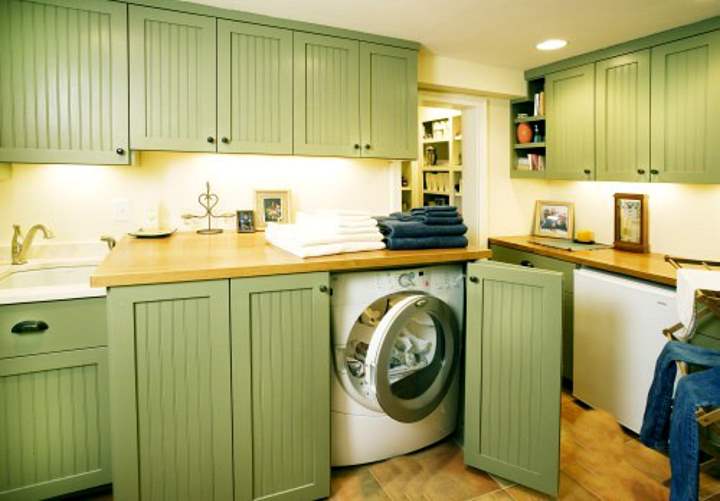
So-called "corner kitchens" with installed laundry facilities, or other rooms with this option, are a very convenient, elegant, comfortable, economical, and multifunctional option.
There's a special model of washing machine from LG that represents the future, and it's called the Twin Wash System. This compact, top-loading washing machine can be placed underneath a standard front-loading washing machine.
Features of the installation process
How to properly install a washing machine in the kitchen?
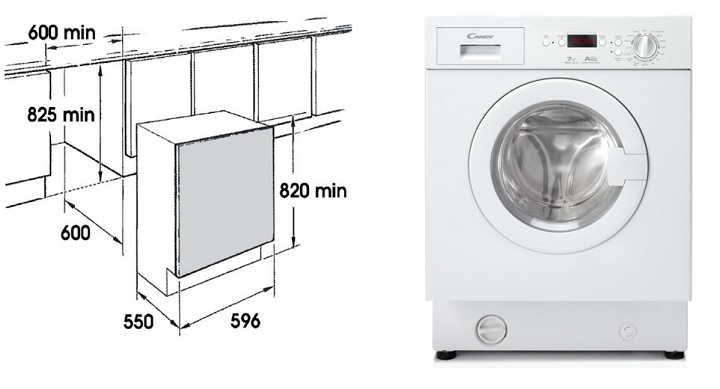 In today's appliance markets, sellers offer a huge variety of washing machines that can be combined with various furniture cabinets, even without vibration. If you already have another appliance in your kitchen (such as a dishwasher), you should install the machine close to it.
This is just a recommendation, and it's up to you to decide whether you need it or not. However, installing the washing machine next to the dishwasher will allow you to install a shared water supply, which will significantly save you time and money.
If you're unfamiliar with installing a washing machine in a kitchen, it's best to contact a specialist. This will ensure you receive high-quality assistance and guarantee the work performed by the experts. This way, if anything goes wrong during the installation or the quality is substandard, you can contact them again, and this time, you'll receive a free service.
The pros and cons of installing a washing machine in the kitchen
Let's look at reviews from owners who have already installed washing machines (and other household appliances) in their kitchens, so we can have at least the slightest idea of what it looks like from the outside.
Pros:
- Saving free space, up to 1 m2., this is quite a lot, provided that the owner of the machine lives in a small apartment (a small family apartment, a Khrushchev-era building).
- Ease of installation. The washing machine's proximity to utility lines allows for easy installation and eliminates protruding parts.
- If you have the option of installing a washing machine in your kitchen unit, you can choose any model according to your preferences.
In this scenario, washing machines built into kitchen units offer a significant amount of convenience and a fairly large number of features when used.
Cons:
 When using a washing machine in a kitchen, the door must be left open after washing, which is quite inconvenient and unsightly.
- If your washing machine is installed in the bathroom, it will serve not only as a laundry unit but also as a storage space. This is impossible in the kitchen.
- All fabric softeners and other detergents used in laundry do not mix well with food. Storing food with laundry detergents is a very bad idea.
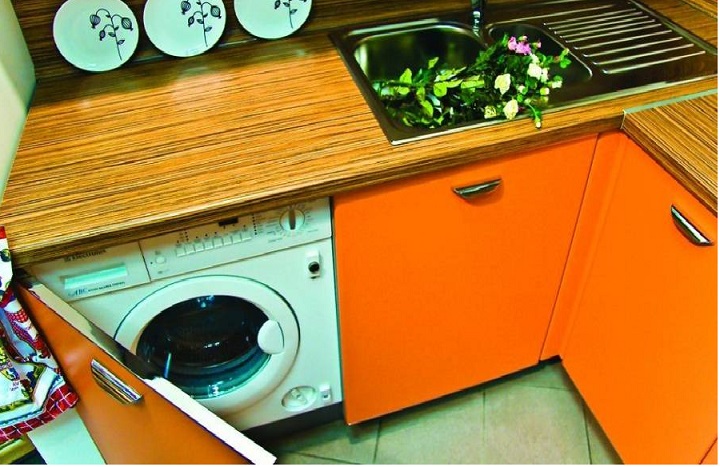
In this scenario, you can install the washing machine under the counter, but it's best to consult with your entire family first. Pay attention to reviews from owners who have already installed washing machines in their kitchens and choose the right option for you and your family.
How to make the right choice
Before choosing where to install a washing machine in the kitchen, you should initially select a sturdy and elegant unit. Appearance is not a major consideration in this matter.
Many customers are complaining about the mounting hardware on washing machines, which is located on the front panel, to the right and left of it. Typically, units with such hardware are installed under the countertop, as the doors are attached to these components. Therefore, machines installed this way won't significantly detract from the appearance of the kitchen, but rather create a comfortable environment.
When purchasing, consider details such as the size of the machine, as the model you choose may simply not fit into your kitchen cabinetry. Regular washing machines have their own basic set of parameters.
Valuable advice! The washing machine you choose should be suitable for the conditions of use in your country.
There is the following order of requirements for washing machines:
- The ability to easily withstand short circuits.
- Full adaptation to various voltage surges.
If you're looking to buy an imported unit, it's best to look for models marked "EC standards." These markings should indicate design characteristics comparable to European standards. If you pay attention to the consumer features, individual components and attachable/detachable parts will be 100% identical, but may differ in price. Designs in the first group may be cheaper.
Installation and connection
Experience has shown that built-in washing machine components (or other designs) enjoy their share of popularity, which is unsurprising, as such machines can blend into any interior while also saving space.
Washing and drying units (or those without) can easily be hidden from view under furniture. Let's take a closer look at how to install one yourself.
Assembly operations
Let's consider what tools we will need:
- Kitchen cabinet;
- Roulette;
- A sink or a table if you want to install your unit under these elements;
- Fastening parts + fittings;
- Set of screwdrivers;
- Joinery elements + jigsaw.
First, choose the type of washing machine (we've already discussed some above). If you want to hide your washing machine from prying eyes, it's best to choose a model that matches your kitchen cabinetry. These machines may be a significant hit to your budget, but it can be worth it if you want an elegant, functional kitchen.
Connecting a washing machine in the kitchen
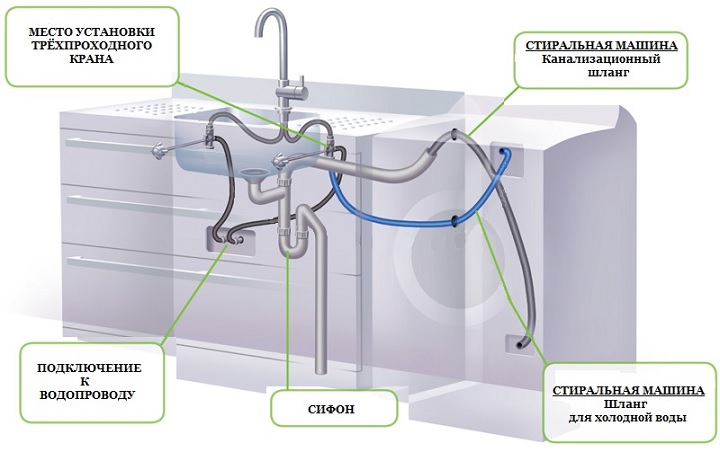 You need to connect your washing machine immediately after installation so that you can use it right away, just like any other household appliance installed in your kitchen.
It's not just plugging a power strip into a socket—this process requires the necessary (preferably pre-prepared) equipment, including a water supply system, and the machine's drainage system. There are a couple of features that are necessary for connecting the system:
- If your device does not have the necessary equipment, consisting of a couple of special valves, then the installation and assembly will be incomplete.
- A siphon is required for connection to the sewer system.
- The hose connects to the drain pipe coming from the sink. Ensure a good, high-quality, even perfect, connection, and problems like leaks and similar breakdowns will never affect you.
- The drain pipe is attached to one side (edge) of the sink, which is a fairly convenient solution.
Valuable advice! If you want to install and connect the structure very easily, and most importantly, quickly, then simply focus on installing the drain.
After installing the structure, you should check the straightening of the pipe, which should be firmly attached without any defects (kinks) and along its entire length.
If you wish to extend the hose, we recommend using special clamps, which will significantly simplify the fastening of the connections.
Built-in washing machine in the kitchen: a feature of connecting to the water supply
Once you've sorted out how to connect the pipe to the sewer system, you can move on to connecting the structure to the main water supply. This requires flexible hoses with a ¾-inch diameter. Next, install the hoses to the cold water supply through the water pipe. If you want your water to flow without any obstructions, we recommend using elbows directly from the faucet. If you follow safety precautions and the instructions, installation is quite simple.
As we mentioned earlier, installing a built-in washing machine in the kitchen is a very economical and elegant solution. There are many pros and cons to choosing the right location, but if you choose the right one, you'll never regret your decision. For homemakers, a functional, spacious kitchen is more than just a kitchen with a dining table.


