
Mounting a cabinet, shelf, window frame, or light fixture to a concrete wall is a challenging task, and specialized fasteners are essential. Concrete screws come in a variety of sizes, so it's important to understand in advance which hardware is required for a specific task.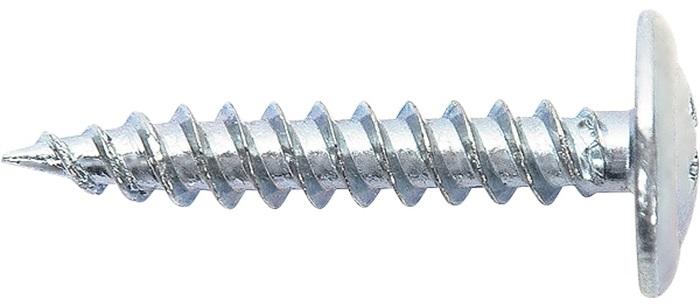
What do self-tapping screws look like?
Self-tapping screws are fasteners consisting of a sharply threaded shank and a head. They vary in length, thickness, material, shape, and purpose. Each specific type of job requires a specific type of fastener; general-purpose screws are less reliable.
Self-tapping screws differ from wood screws in their threads. The shaft is completely covered with threads or may have a small smooth section. The tip is sharper than that of a wood screw. Self-tapping screws are made only from hardened steel.
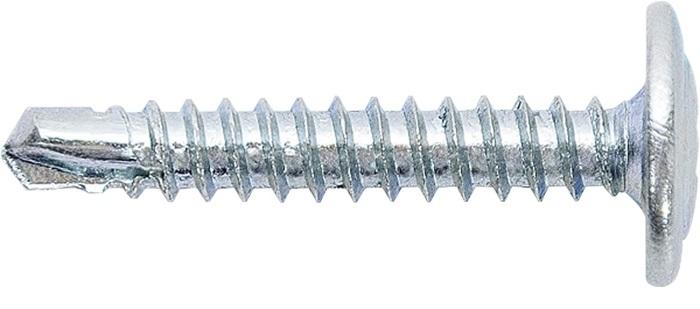
Depending on the area of application, self-tapping screws are:
- for wood, plastic, plasterboard - have rare threads, countersunk heads,
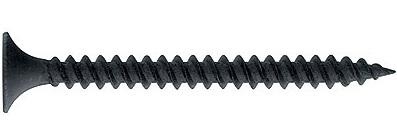
- metal - most often made of black metal with a phosphate coating, countersunk head, cross-shaped slot, frequent threads;
- sandwich panels - hexagonal head, a washer or rubber gasket is included for waterproofing;
- for window profiles - sharp tip, countersunk head;
- Self-tapping screws "bug" - small, sharp, used for fastening profiles when working with plasterboard, semi-cylindrical head, universal thread;
- Self-tapping screws "bug" with a drill tip are used for working with metal no more than 2 mm thick;
- roofing - necessary for fastening corrugated sheets, metal tiles to a roofing base with a thickness of more than 6 mm, hexagon-shaped head, washer or gasket for waterproofing;
- for furniture assembly - rare, high thread, blunt tip, flat head.
Thick wood screws are used for fastening heavy structures, plumbing fixtures, and water heaters. They have a hexagonal head and are threaded along the entire length.
What do you use to tighten screws?
To tighten screws, use a screwdriver or a drill, or a cordless drill.
A screwdriver is suitable for driving multiple fasteners into soft materials. For larger jobs, where screws need to be driven into metal or hard surfaces, a cordless screwdriver is best. A drill bit can be substituted for a bit if a pilot hole needs to be drilled.
When choosing a screwdriver, it's important to consider the tool's power. Inexpensive, low-power models are suitable for working with plastic, wood, and drywall. Fastening to concrete and steel structures will require a more powerful, professional tool.
Is it possible to screw a screw into a concrete wall?
Concrete is a very dense, hard material, requiring specialized fasteners. These can include anchors, screws with dowels, or special self-tapping screws.
Screws for attaching structures to concrete foundations are made of brass, carbon steel, or stainless steel. Brass and stainless steel are corrosion-resistant and can be used outdoors and in damp areas.
Brass is an expensive, weak material that won't withstand heavy loads. Carbon steel fasteners are inexpensive and durable, but they can rust if exposed to water or high humidity.
Silver-colored concrete screws are zinc-coated and versatile, suitable for use in any environment. Gold-colored screws are suitable for interior use only. Black and gray fasteners are coated with an oxide or phosphate film and are used for fastening in dry interior spaces.
Which screws are suitable for installation in concrete - thread types:
- universal - have low, frequent threads and can be used with dowels or on their own;
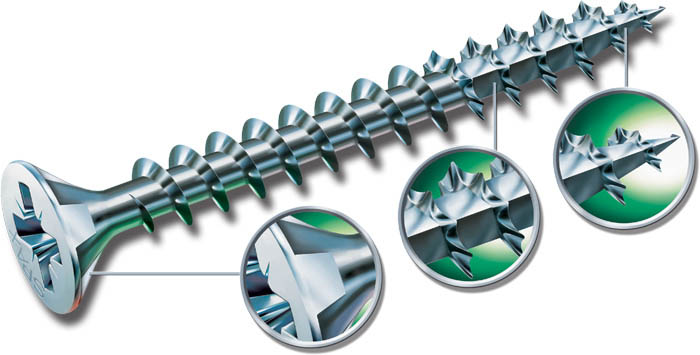
- dowels - the threads have variable height, notches on the edges, no expansion dowels are required for installation, but you must first drill a narrow hole, slightly longer than the fastener;
- "Christmas tree" - the thread is inclined, conical, and can be used without a dowel for fastening lightweight structures.
When choosing a screwdriving method for concrete, consider the head type. Hexagonal or cylindrical heads, those with external threads, or press washers are tightened with a socket or open-end wrench. The head for concrete screws cannot be straight; fasteners with Phillips, hex, or Torx heads are recommended.
How to screw a screw into concrete?
Self-tapping screws are driven into concrete with or without a plastic anchor. An anchor ensures a secure hold and is necessary when installing heavy structures or in areas with high vibration levels. Installation always begins with drilling a hole for installation using a hammer drill, screwdriver, or impact drill.
The main stages of installing concrete screws with dowels:
- Make markings.
- Drill a hole with a diameter equal to the outside diameter of the dowel. The depth should be 4-5 mm greater than the length of the dowel. Hold the tool perpendicularly, otherwise the inside diameter of the channel will increase.
- Clean the hole from dust and small fragments.
- Insert the dowel and carefully hammer it in until it hits the surface. Drive in the screw with a screwdriver or drill.
Concrete dowels are installed without anchors. The basic installation steps are identical: drill a 6 mm diameter hole 8-10 mm deeper than the length of the fastener, remove dust, and screw in the screw.


