
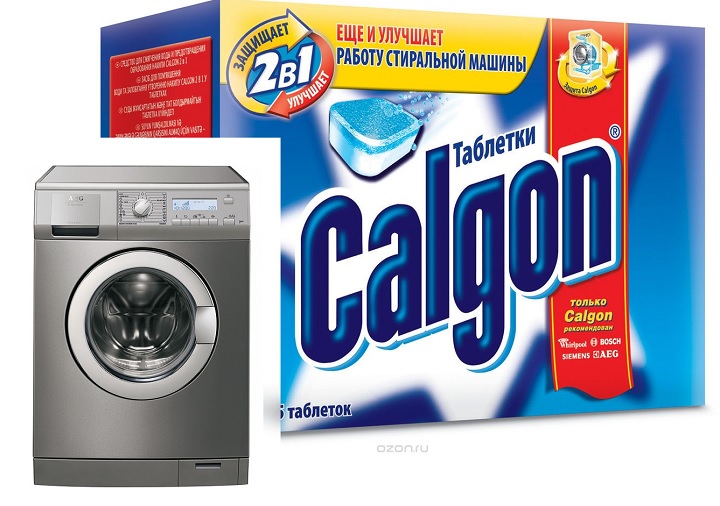
 With the advent of washing machines and the deterioration of water quality in city water systems, the question arose: How can we ensure the safety of our equipment without damaging our clothes and linens during washing?
Safe chemistry is not a myth. Of course, everything safe is relatively dangerous.
No one should ignore normal safety precautions when using special equipment care products.
It's crucial to know how to use Calgon in a washing machine to achieve the desired effect and, moreover, to avoid damaging the machine itself or ruining your laundry.
- Chemical components of Calgon
- Compound
- Application of Calgon
- The effectiveness of using Calgon for washing machines
- Directions for use
- How to determine the hardness of your water
- Proportions of use
- Possible forms of release
- Packaging
- Existing Calgon substitutes or alternatives
- How does Calgon work?
- Conclusions
Chemical components of Calgon
Calgon is an aggressive chemical compound that consists of a combination of reactive acids and binding polymers, as well as aromatic additives and polyphosphates that bind calcium and magnesium ions.
It is calcium and magnesium that form the hard deposits and scale in the washing machine drum, on the heating element, and other electromechanical parts of washing machines due to the action of highly chlorinated water during water supply filtration.
Compound
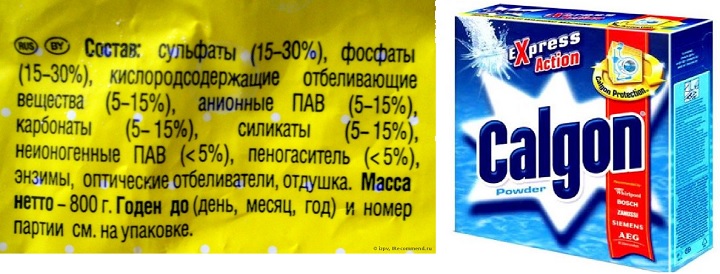
- about 30-35% of Calgon consists of polycarboxylates – a set of aggressive acids;
- from 10 to 15 percent polyethylene glycol - a substance that binds magnesium and calcium ions (plaque and scale);
- Sodium orthophosphate or polyphosphate is also a binding agent to prevent scale and plaque;
- about 20% cellulose;
- technical soda;
- fragrances, deodorants, odor eliminaters.
Important note: Calgon cannot remove existing limescale and scale deposits in your washing machine.
Removing dirt requires completely different means.
Calgon is specifically designed to prevent the formation of scale and plaque, as a strong preventative measure.
Application of Calgon
The effectiveness of using Calgon for washing machines
Some chemists' research suggests that Calgon is not effective as a preventative measure for washing machine protection.
However, the actual composition of this reagent is very powerful and, as an oxidizing agent, it really does soften the water that is heavily chlorinated at water supply stations.
Nevertheless, Calgon still enjoys considerable popularity, and this is not a consequence of widespread advertising, but the result of its active and effective use.
Directions for use
Calgon is used only and exclusively for washing machines.
The effects of using this product on other household and kitchen appliances have not been studied, so please refrain from experimenting.
The dosage of Calgon for washing machines depends on the hardness and chlorination of the home water supply.
How to determine the hardness of your water
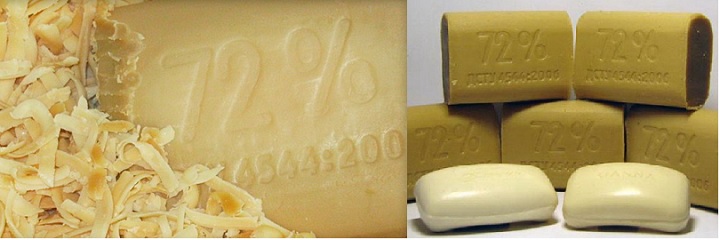
Determining the hardness of your home water and the presence of large amounts of chlorine, calcium, and magnesium is easy. Simply take a bar of laundry soap and crumble it into a glass of cold water.
If the soap crumbs do not dissolve within half an hour, then the water is extremely hard and saturated with magnesium and calcium, which will cause scale buildup when washing in a machine without Calgon.
Proportions of use
If you use powdered Calgon, you should use 1/3, 2/3, or a full measuring cup of softener depending on your hardness level.
Powdered Calgon is poured into one compartment along with washing powder.
A Calgon tablet is added directly to the washing machine drum and loaded along with the laundry and clothes.
Possible forms of release
All forms of Calgon are very easy to use. However, their use varies depending on the form.
Exists:
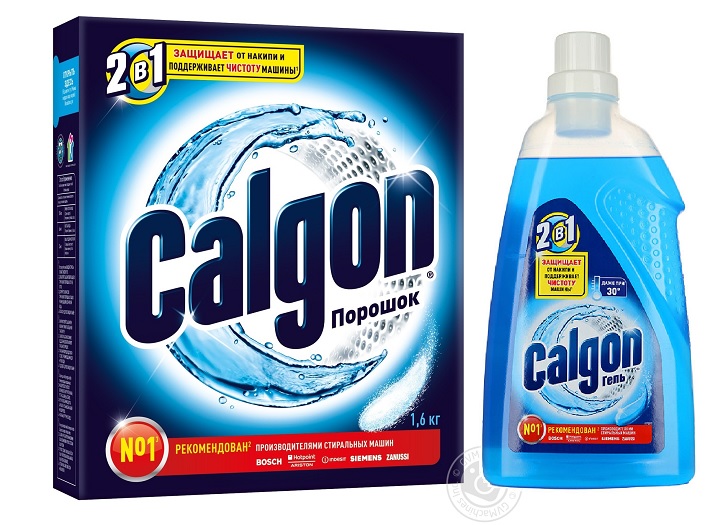
 economical powder Calgon - for adding to the tray along with washing powder;
- Calgon tablets – for particularly hard water and adding directly to the washing machine drum;
- Gel form – perfect for both very hard water and softer water.
Packaging
- Powder packaging is available in packs weighing 0.55 kg, 1 kg, and 1.6 kg.
- The tablets are packaged in quantities of 12, 15, 32, 35, 40 and 70 tablets per pack.
- The gel is poured into plastic bottles of 0.75, 1.5 and 2 liters.
Existing Calgon substitutes or alternatives
Of course, Calgon isn't a panacea for protecting your washing machine from limescale, scale, and dirt. There are other, cheaper alternatives. They may be less effective, and perhaps less well-advertised, but they do exist.
Here are some examples:
- Alfagon,
- Antiscale,
- Citric acid.
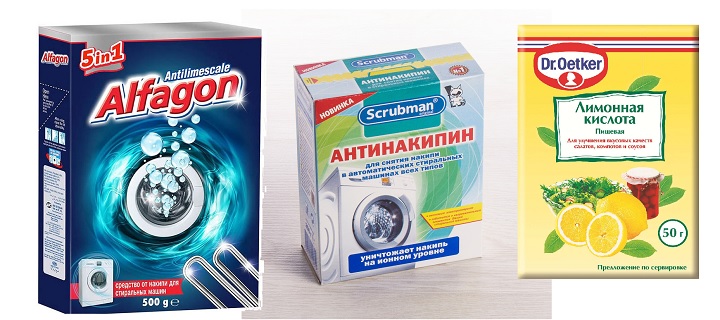
Both are quite capable of dealing with problems of dirty washing machine heating elements and drums. However, the actual effectiveness of these alternatives has been far less studied and tested than Calgon.
You can also use simple citric acid to clean the drum and heater by pouring it into the liquid compartment.
Naturally, you can't wash anything with citric acid—you can only clean it in an empty cycle. However, citric acid can easily remove moderate plaque and limescale.
How does Calgon work?
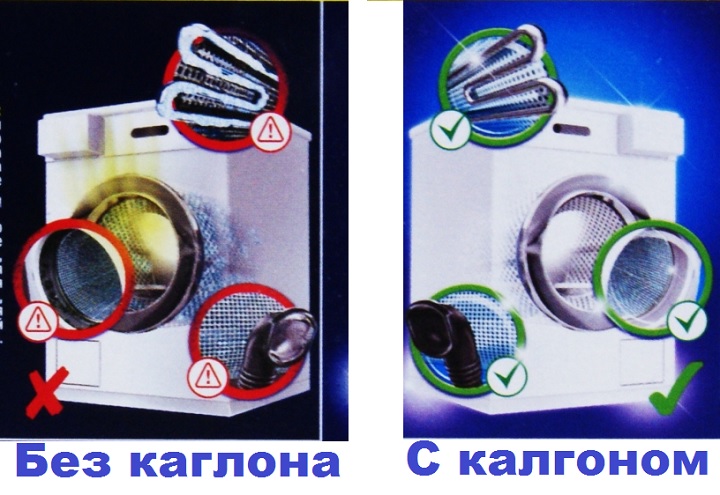 Calgon breaks down scale with its active ingredients.
If the layer of plaque in the drum and on the heating element of the washing machine is more than 1 mm, then energy consumption increases to 10% of the norm.
Calgon scale remover easily deals with these problems.
Polycarboxylic acids break down existing scale, and polyethylene glycol prevents the formation of new scale, softening hard chlorine water.
Conclusions
Any automatic washing machine simply requires constant maintenance of the mechanisms and components that are constantly in contact with water.
Washing machine users will significantly reduce wear and tear on their appliances, lower energy consumption, and improve productivity.


When I was buying my Indesit, they even suggested using Calgon, and it really works well, so far there haven't been any problems.