
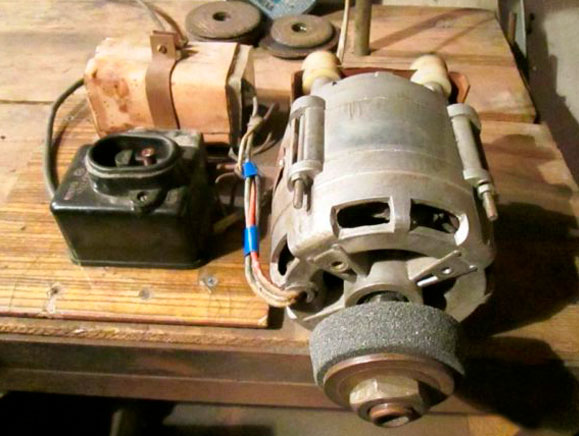
 When your washing machine breaks down and it's no longer worth repairing, you need to buy a new one. Don't rush to throw out your old washing machine. If the motor is still in good working order, why waste it? It can be used to make many useful things around the house. Let's look at what you can make from an old washing machine motor.Electric sandpaper from a washing machine motor
One of the options for using the motor from the machine is to make an electric sander.This tool will be very useful around the house. It allows you to quickly sharpen a knife, drill, scissors, and any other cutting tool. While it's certainly not an easy task, with the right approach, it can be done fairly quickly.
The first and most important task – This involves attaching the grinding stone to the motor itself, or more precisely, to the motor shaft. The problem is that the main diameter of the grinding stone hole and the diameter of the washing machine motor shaft are completely different. This problem can be solved by preparing a special flange with two different sides. One side will have the necessary threads to securely attach the grinding wheel, and the other side will be pressed into the motor shaft. To make the flange, you will need a small piece of steel pipe with a diameter of 32 millimeters.
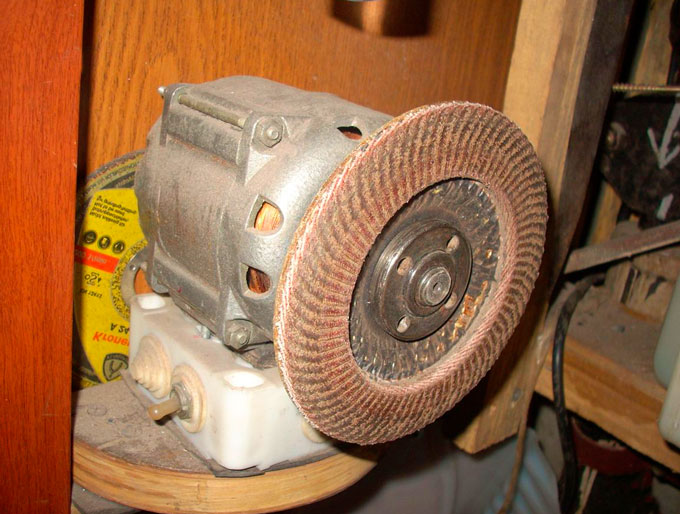
Flange manufacturing process:
- Take the required pipe (32 mm). The pipe length should not exceed 20 centimeters.
- Now you need to cut a thread on one end of the pipe. To securely fasten the flange to the shaft, the grinding wheel thickness must be half the thread length. It's crucial to consider the thread direction. It must be cut in the opposite direction to the motor shaft rotation. Otherwise, the grinding wheel will simply fly off the shaft during rotation.
- The other end of the shaft should be heated with a blowtorch and pressed onto the shaft. After cooling, the tube will be securely attached to the shaft. For a more secure connection, you can weld the tube to the shaft. If welding is not available, simply drill a hole and connect with a bolt and nut.
- Now you need to select three nuts and two washers of the required size. Screw one nut onto the threaded end of the pipe until it stops, then attach the corresponding washer, then an abrasive wheel, then another washer, and tighten it all down with a second nut. Make sure to tighten everything tightly, and finally secure it with a third nut.
The main task is completed, now we need to securely fasten the engine. The mounting stand is made depending on the availability of mounting holes on the engineAfter making the stand, we mount the motor on the workbench. The motor brackets on some washing machines are perfect for mounting on a workbench.
Connecting to the power grid
After the motor and sandpaper are secured to the workbench, you need to connect it to the power supply.
- Using a special multimeter, find the working terminal. To do this, check the resistance of each terminal. The resistance at the working terminal should be around 12 ohms.

- We connect the working output to the power grid.
- To start the sander, you need a special starting device. If you don't have one, you can start the sander by hand, by vigorously twisting the sanding stone in the direction of rotation.
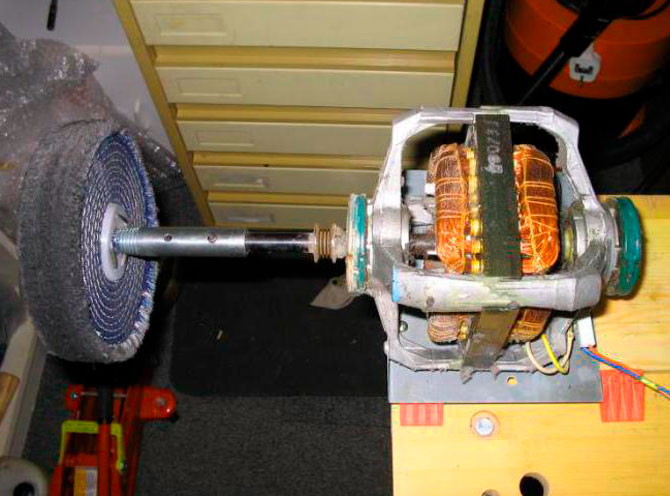
This completes the process of making the electric sander. The device is ready for use.
Making a lawn mower from a washing machine engine
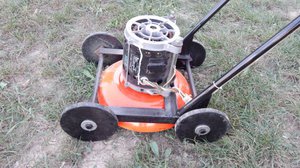 Building a lawn mower is another clever way to use a washing machine motor. This device is very useful for those with garden plots and small yard areas. Building a lawn mower doesn't require a lot of materials; all the components can be found in a shed or garage.
Manufacturing process
- The first thing you need to do is find a chassis to move it around on. Wheels from any cart or stroller will do.
- A specially prepared metal platform must be installed on the chassis. This platform can be made from either sheet metal and a square angle section. A special frame is made from the angle section. The wheel mounts are then welded to this frame.
- A moderately sized pipe can be used as a handle. The handle's height is adjusted to the height of the person who will be operating it. The handle is welded to the frame using gas or arc welding.
- Now you need to prepare a hole in the platform so that the motor shaft can pass through it freely.
- Next, you need to place the grate in the front section. The grate is attached with bolts. The grate should have gaps of 2 centimeters at the top and 1 centimeter at the bottom.
- The engine is mounted on the platform so that the shaft fits into a specially prepared hole. A cutting tool (knives) is attached to the end of the shaft using welding or pressing.
- To protect the engine from grass, cover it with a protective cover. However, keep in mind that the engine can get hot and needs cooling. Therefore, the protective cover should have small openings.
- Now we connect the power cable. As with the sandpaper, you need to find the working terminal using a multimeter. The cable is connected to it. The end with the plug and a special switch should be connected to the lawn mower handle.
At this point, the lawn mower's manufacturing process is complete. To prevent accidental electric shock, it's best to rubberize the handles. Now the device is ready for use.
Making a forage cutter from a washing machine motor
A washing machine motor can also be used to make a food chopper. This device is great for cutting various large fruits and vegetables into small pieces. A very useful household item.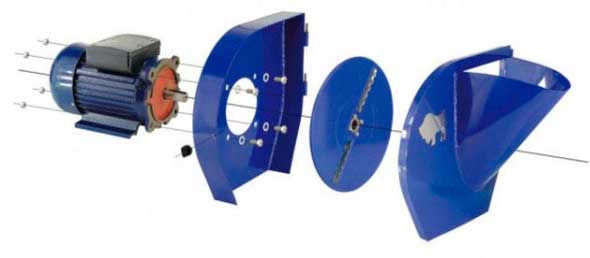
Manufacturing technology of a forage cutter
- To make a forage cutter, you'll also need a washing machine drum. A hole will need to be drilled in the back of it to match the diameter of the motor shaft.
- Four holes need to be made along the edges of the drum. Bolts will be attached to these holes. A larger hole is made in one wall. This is where the finished product will fall out.
- The cutting element must be installed on the end of the motor shaft using several bolts. The cutting element should consist of two blades. The lower blade should have slightly curved ends.
- The entire resulting structure must be installed on a support, which is made in the form of a stool with four legs.
- The drum must be covered with a lid on top, otherwise materials will fly out of the drum during grinding.
- As for the power supply, everything is the same as with the previous modifications. We find a working terminal and connect the power cable to it.

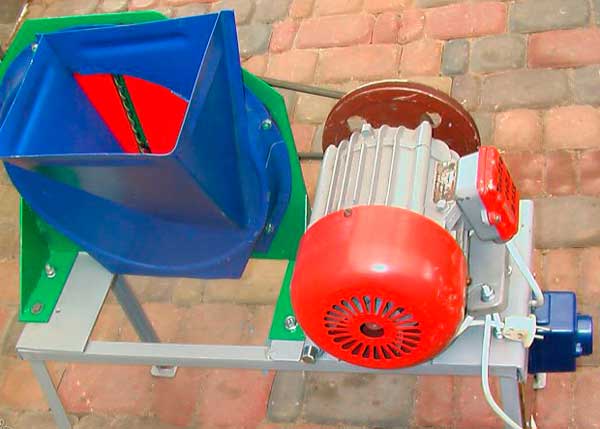
The forage cutter is ready for use. This device allows you to process up to 100 kilograms of raw material from various cities in just one hour.
Making a concrete mixer from a washing machine motor
If you're planning a construction project, don't rush to throw out your old washing machine. You can turn it into a fully functional concrete mixer, which will make the construction process much easier.
The process of manufacturing a concrete mixer
- First, you need to create a stable base to support the unit. It can be made from 150 x 150 cm wooden beams. The beams are fastened together with screws. The base can also be made from metal channels or angles. A metal base is more stable and reliable.
- The engine shaft and the tank shaft must be aligned. To accommodate this, special engine mounting brackets must be fabricated on the frame.
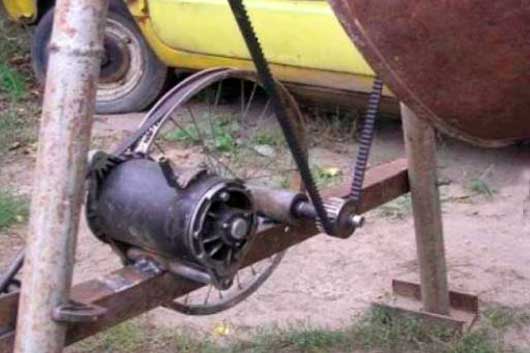
- Next, we install the gearbox. The gearbox pulley and the motor pulley must be aligned. If this condition is not met, the motor will experience significant overload and will soon stop working.

- You can use the same washing machine tub as the mixing container. Place the shaft in the container and attach special mixing paddles to it. It's crucial to maintain symmetry in the paddle placement. They should be precisely aligned with each other.
- Now we connect the electrical wiring, make the start and stop buttons, and tighten the belts onto the pulleys.
- To protect the gearbox and engine from concrete mixture, it is better to cover them with protective covers.
Making a generator from a washing machine motor
The car's engine can be used to make a 12V generator. Making it doesn't require a lot of work or extra materials. All you need are 32 specially sized magnets (20 x 10 x 5 millimeters).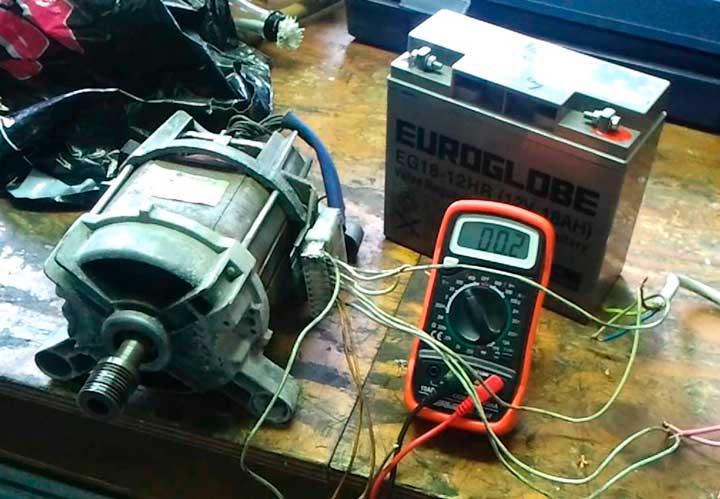
The entire conversion process involves removing a layer of the core and installing special magnets. The rotor has four poles, with eight magnets installed per pole. Using a lathe, remove a small layer of the core and install the magnets in these recesses. Then, the poles must be filled with epoxy resin, after being wrapped in paper. Now install the new bearings. Find the working winding and cut off the old wires. The generator is ready to operate.
With imagination, a working hand, and the necessary knowledge, you can build other devices and gadgets for various purposes based on the examples above. All the fundamental principles are outlined in the examples above. The production process will be the same in most cases, with the exception of some specific nuances.


