
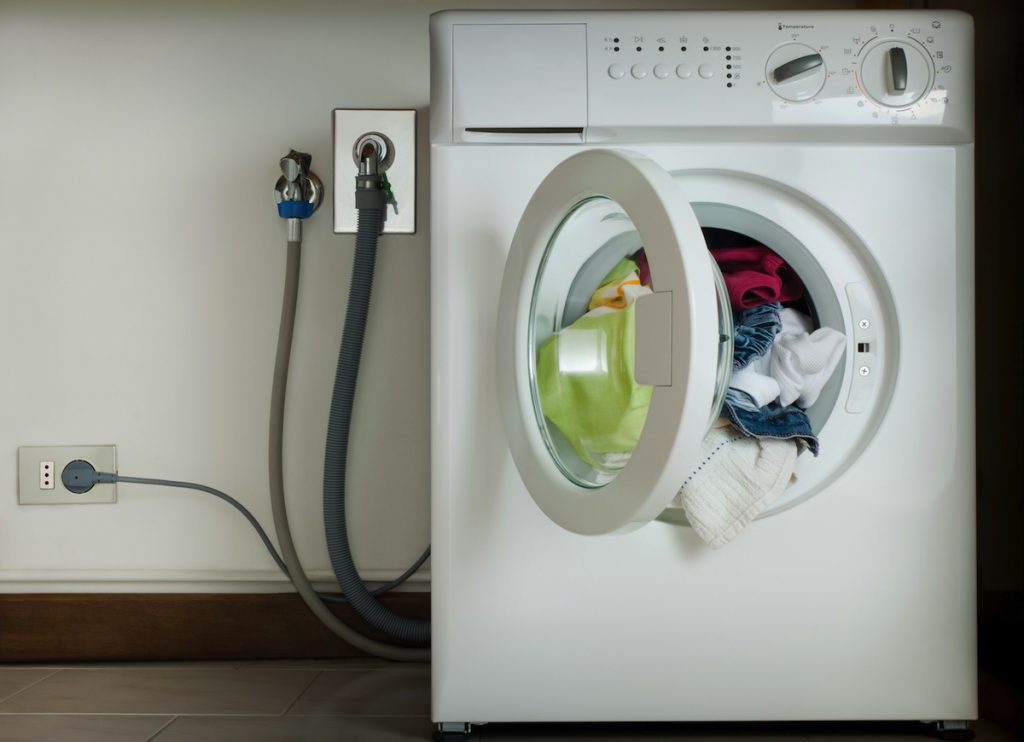
 To start the washing machine, it needs to fill with water. Water is drawn in through the inlet hose, which is connected to the water supply. To ensure the amount of water meets the required standard for washing, the machine has a built-in pressure switchIt's also called a level switch or level sensor. Some smart machines automatically detect the load and dispense the exact amount of liquid needed for washing.
How water moves during washing
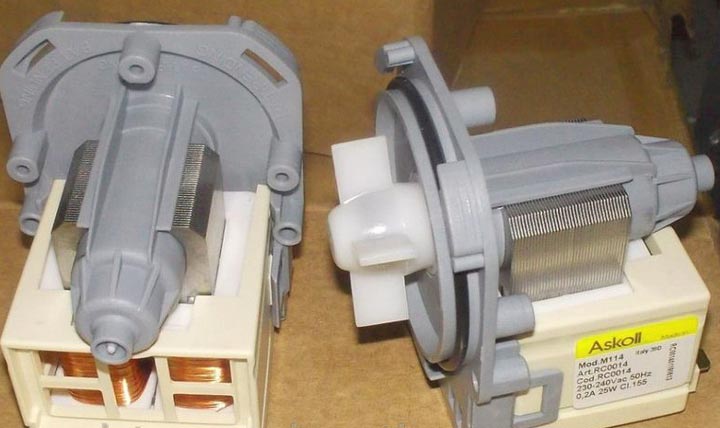 During washing, water is not only added when needed, but also drained. The drain valve is responsible for this. pump (pump). It's located at the very bottom of the washing machine. To prevent unwanted objects from getting into the pump, a filter is installed in front of it. It protects the pump from small objects, such as:
- Button;
- Paper clips;
- Coins;
- Pins;
- And so on.
These small items very often end up in the middle of the machine along with the items to be washed.
It is necessary to clean the drain pump filter at least once every six months.
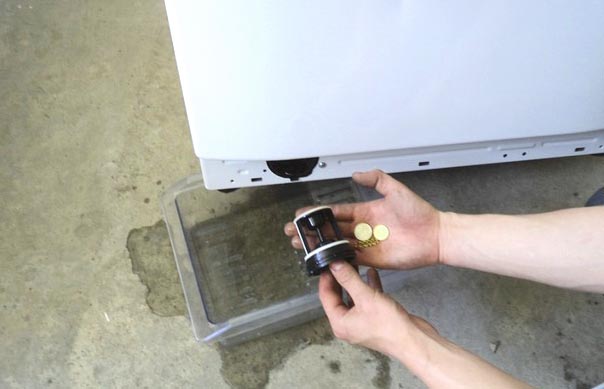 This is quite easy to do because filter is located on the front side of the washing machine, at the bottom.
To access it, remove the bottom panel and pull out the filter. Then clean it and replace it. Be prepared for water to spill out when you remove the filter, so have a rag or small container ready.
To help you visualize the entire cleaning process, we've decided to show you a video of the washing machine's operation.
The drain pump can also play a role in the washing process in other ways. For example, it can direct water circulation toward the dispenser or the top of the drum. Some models use an additional pump for this purpose.
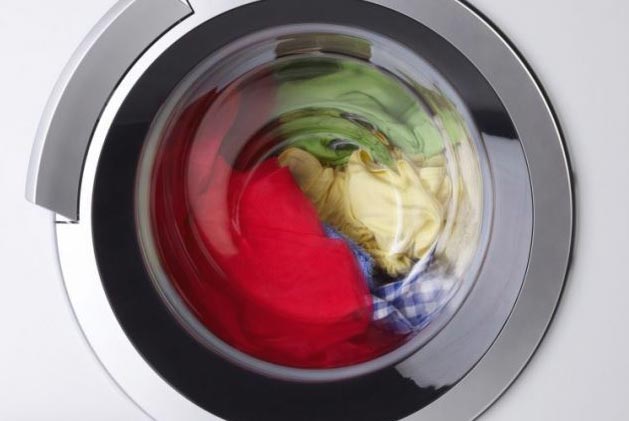 As water moves through the bottom of the washing machine's drum, your detergent is completely dissolved. This improves wash quality and allows you to save on detergent.
A solution of detergent and water flows from the fins inside the drum onto the laundry. These fins exert mechanical force on the laundry. As the drum operates, the laundry is first lifted and then falls. In many models, the fins also treat the laundry with a soapy solution.
When the required amount of water is collected in the tank, it’s time to start working. 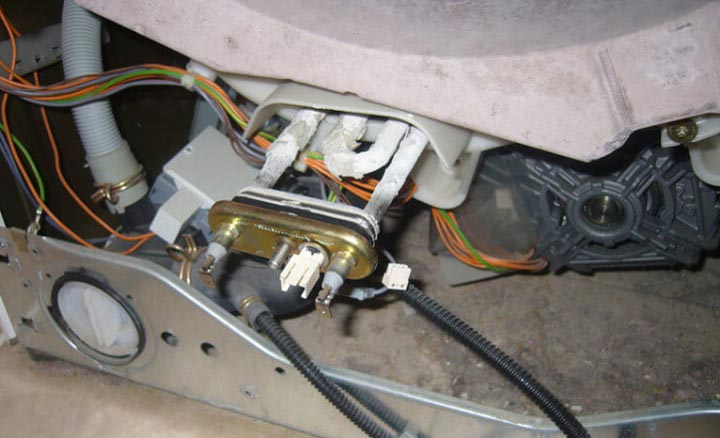 the heating element is connected (heating element). In the car, it is located under the gas tank. In some models, it is in the back, and in others, in the front.
A special sensor controls the water heating temperature, which allows the water to be heated to the required temperature, which is set in the washing program.
Rotation of the drum and heating of water in the washing machine
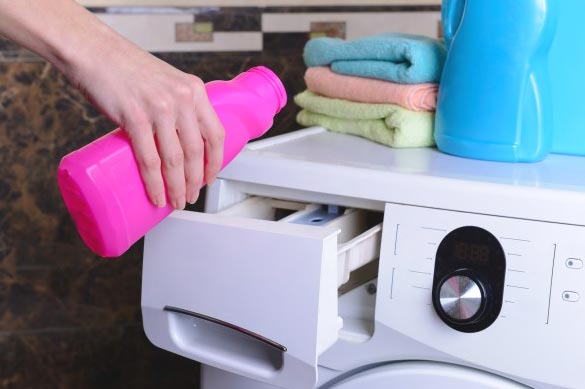 For washing to go well, we need detergent, hot or warm water and mechanical action.
A washing powder or gel detergent is used as a detergent, a heating element is used to heat the water, and mechanical action is used to rotate the drum. The washing machine's motor drives the washing machine. drumIt is located under the tank at the bottom of the machine.
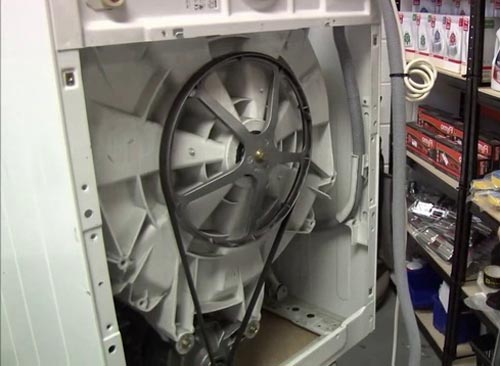 The pulley is located on the rear side of the tank. Drive belt Connects the motor to the pulley. The motor drives the belt, which transmits rotation to the drum inside the tank. This design is considered standard, but it has its drawbacks, as the belt is constantly in contact with moving parts, creating friction. Therefore, it wears out over time. Another disadvantage of this design is machine vibration.
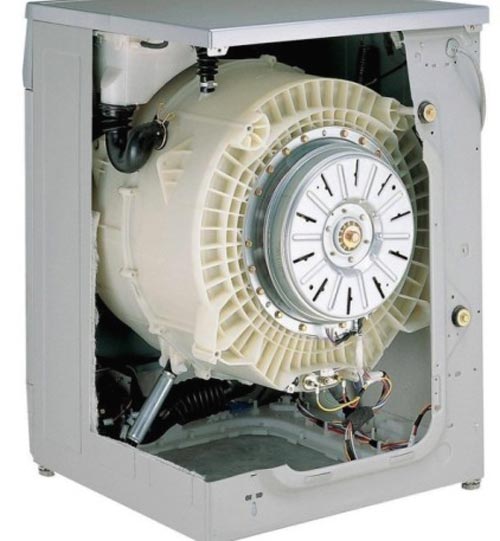 More advanced washing machine models do not use a belt drive. It is replaced by a direct drive. This is widely used in LG washing machines. In these models, the motor is attached directly to the drum. This design uses less energy to rotate the drum, reduces vibration, and saves space inside the machine.
This motor produces less noise, and the direct drive allows the machine to be made more compact.
Washing and spinning
During the wash cycle, the drum rotates first in one direction and then in the other at a relatively low speed. During the spin cycle, the rotation speed reaches its maximum.
To get things as dry as possible, a high number of revolutions is required.
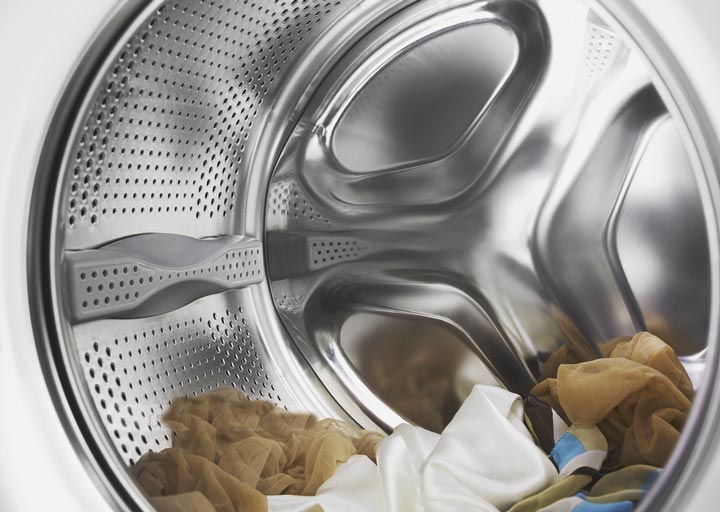 Thanks to centrifugal force, liquid from the spin-dried laundry is released through small holes in the drum. The drain pump then removes it.
During the spin cycle, the spin speed increases gradually. This ensures that the items are evenly distributed across the drum surface. This also helps prevent strong vibrations.
If the balance inside the tank is disturbed, the machine's rotation speed decreases again and then redistributes within the machine. After that, it picks up speed again and wringing continues. As you can see, the design of an automatic washing machine is quite intricate.
Control module
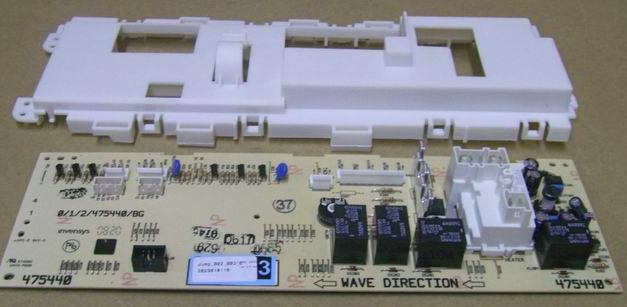 All processes that occur during washing are controlled by the control module.
It controls when the heating element is turned on or off and turns on the drain pump when the tank needs to be drained. It also determines when the drum should rotate and at what speed.
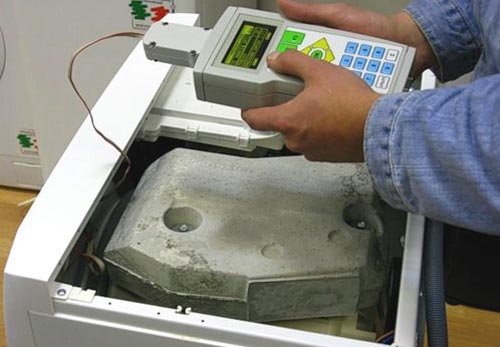 It also monitors readings from various sensors during the wash cycle. No modern washing machine can function without this control system.
The control module is the most expensive part of the washing machine. It's very expensive due to its complex design. Therefore, if this part is damaged, we do not recommend replacing it yourself.
It would be much better if you contact a specialist in this field. They will replace the faulty part.
Drum and tank
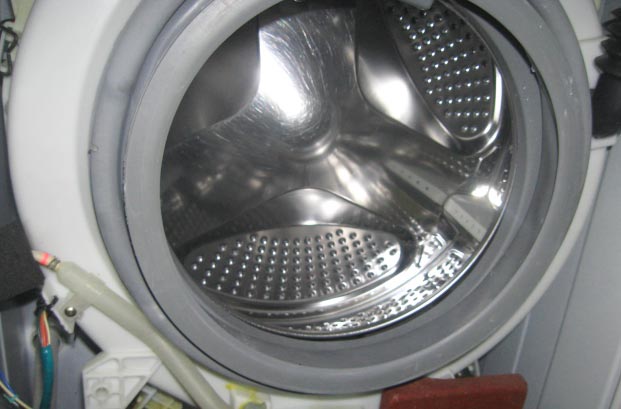 Inside the washing machine's tub is the drum. This is where we place our dirty laundry. Water and detergent are automatically poured into the tub. Because the tub has many small holes, the detergent and water mix with the laundry and clean it.
Manufacturers make the drum out of stainless steel, and the tank can be either stainless steel or plastic. Most often, it consists of two parts, but sometimes you'll find tanks made of one piece. Some people, in dire straits, can cut the non-separable tank into two halves and then join them together with bolts and waterproof sealant.
Plastic tanks are lighter and cheaper, but they also have their drawbacks. They're not as durable as metal ones.
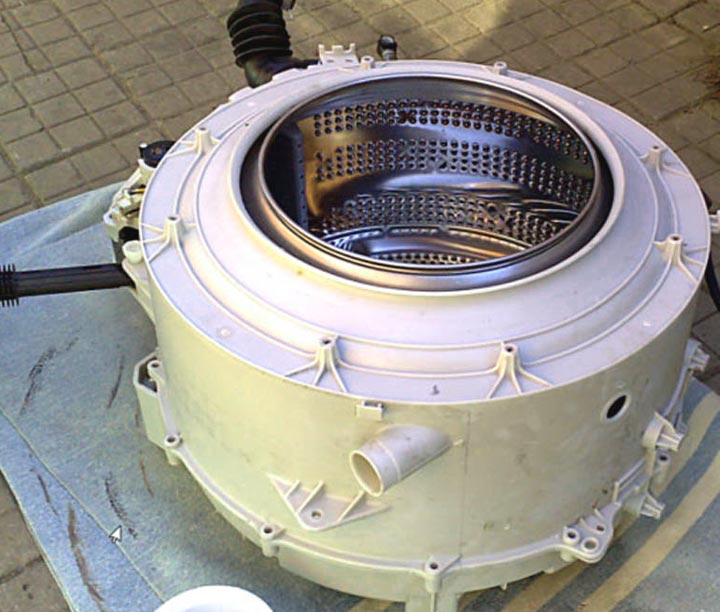 In some models of washing machines, the tanks are installed at an angle. However, most often they are installed horizontally.
If you are one of those people who prefer to see something once than hear about it a hundred times, we offer a video.
In this video, you can see not only what a washing machine consists of, but also its brief history. Enjoy watching and good luck in learning about washing machines.


