
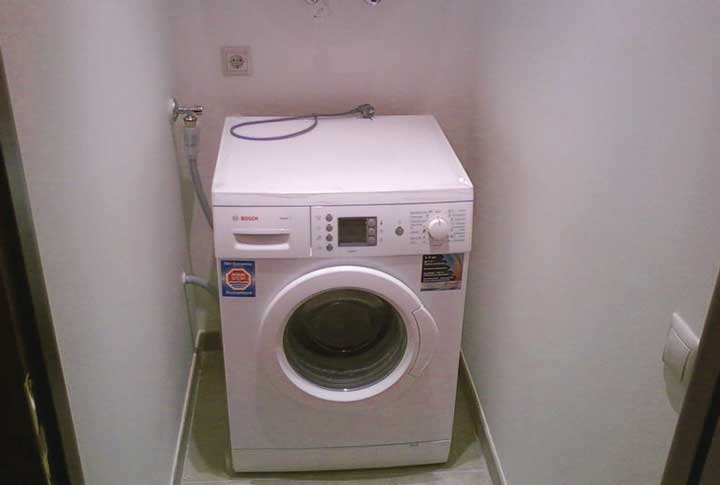
 Buying a high-quality, durable washing machine is only half the battle. Most people call a service center technician, but we encourage you to do it yourself. Follow a specific step-by-step procedure that will guide you step-by-step through how to properly ground an ungrounded washing machine in your apartment.
A bit of theory
Most consumers do not anticipate the existence of such a problem as the lack of grounding and use the device for its intended purpose, not realizing that they may be exposing their loved ones to danger. electric shockOnly after experiencing an electric shock of n volts will you understand that grounding your washing machine will save you from many troubles.
Prerequisites for installing grounding:
 There is a high chance of getting injured - at first you will experience slight trembling and tingling throughout your body, but this is a warning signal.
- There is an opinion, which is confirmed by professional electricians with considerable experience, that in the absence of grounding, all household appliances may fail before their stated service life, as a result of which you will either have to pay for expensive repair, or even buy a new washing machine.
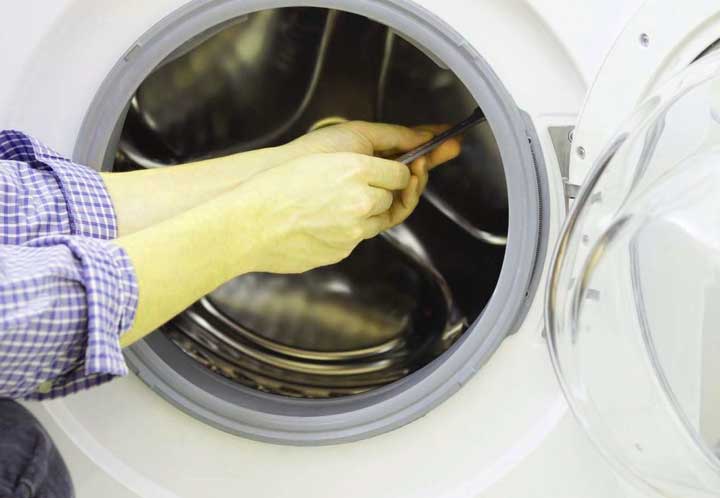
Don't wait until the last minute to prevent something from burning or someone close to you from getting electrocuted – prevent it in advance and do it in time.
If you suddenly notice that light bulbs in your apartment are burning out more often than usual after purchasing a washing machine, then know that this is the first warning sign that you need to install grounding.
But before you decide to ground your washing machine in your apartment yourself, 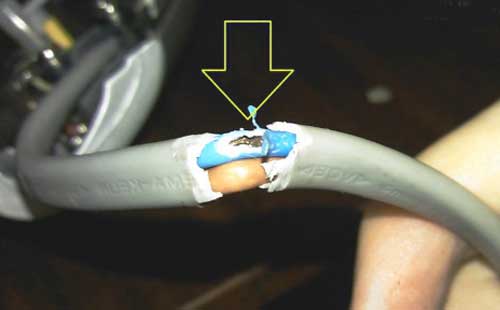 There have been frequent cases where electric shocks have occurred due to damage to the insulation of wires, so in such cases, grounding won't solve all the problems at once.
If you have connected electric stoves in your home, you're 100% grounded, as the existing third drive is responsible for this. In this case, you're incredibly lucky, and you won't have to do anything.
Home method
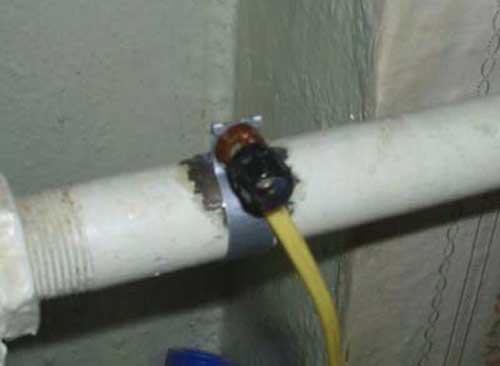 When there were times when all houses had only metal pipes for heating and water supply, our grandfathers (and for some, great-grandfathers) came up with a very interesting, but effective method: install grounding in the apartment, connecting all electrical appliances to the battery.
The method enjoyed wild popularity and was widespread almost everywhere in the mid-20th century.
True, there were some shortcomings here too:
 The legality of this method is highly questionable, because carrying out such operations was contrary to the work rules specified in GOST.
- Problems with pipes and radiators can arise when used for long-term grounding. Some users of this system have reported that their pipes began to leak over time.
- Low reliability percentage and a fairly high risk of injury from electric shock.
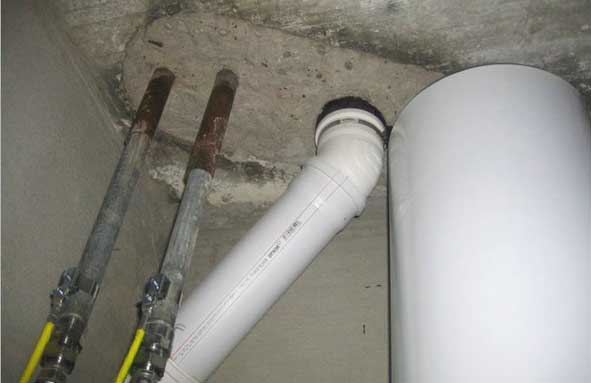
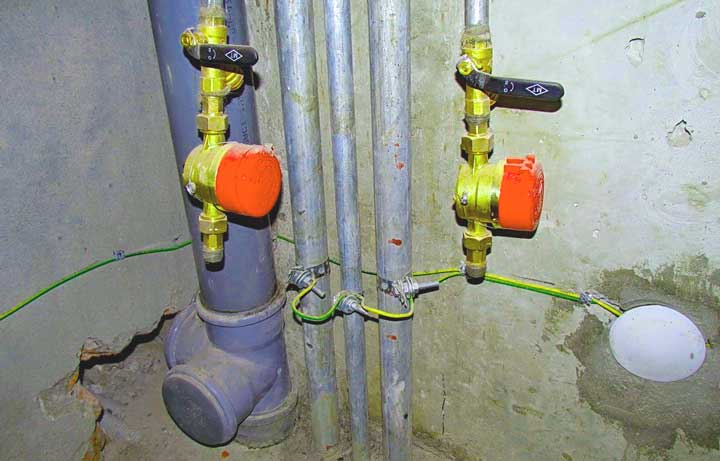 But, oddly enough, some people aren't at all intimidated by this: the most important thing for them is that everything is convenient and inexpensive, so they buy single-core copper wire, strip it on both ends, and make a connection that is still illegal in our area.
To do this, you will need to install an additional socket with the required shape for the machine, and a three-wire cable will be connected to your panel.
Thus, many people are signing their own death warrants for sudden flooding of their neighbors due to a ruptured heating system that is being used for the wrong purposes.
As you can see, connecting a washing machine without grounding can end badly.
Grounding through the electrical panel
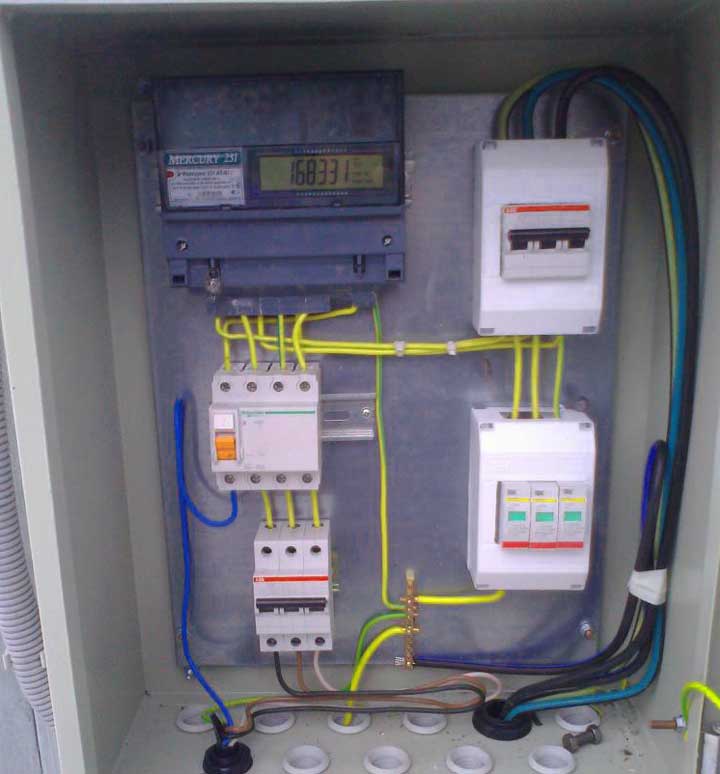 It is best to ground the washing machine through a stationary electrical panel - this will be the most effective and quite civilized.
To do this, you will need to install an additional socket with the required shape for the machine, and a three-wire wire will be connected to your panel, where the grounding will be installed.
To carry out this type of work we will need only a few tools:
- Dielectric screwdriver.
- Pliers with insulated handles.
- A sharp utility knife or wire stripper.
- Insulating tape.
All wires should be connected only to specific places - two buses and a specific switch that operates in automatic mode.
The safety precautions described for electrical installation work are based on real-life incidents that sometimes resulted in death, so we strongly recommend not neglecting them.
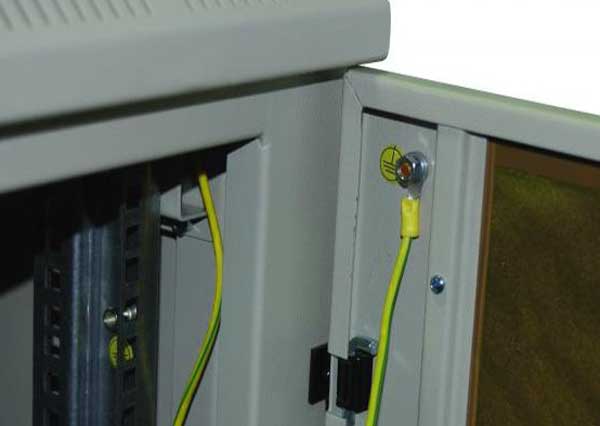 Otherwise, you should seek help from a highly qualified electrician.
The financial costs won't be that high (and importantly, they'll be one-time, as the saying goes, "a miser pays twice"), and the safety guarantee for your life and the service life of your household appliances will be 100%.
When doing the work yourself, remember:
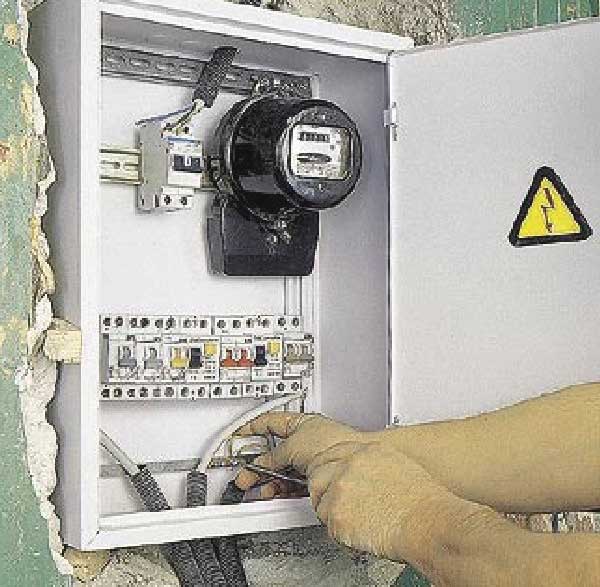
- Every standard electrical panel has two busbars: neutral (N) and ground (PE). These are the only busbars used for wiring.
- Once the necessary wiring has been completed, connect the wire as follows: connect the blue wire to the neutral busbar (N), the red wire through the residual current device to the phase of your meter, and the green-yellow wire to the PE busbar.
Grounding in your home
If you own a private home, resolving the issue of grounding your washing machine is quite simple. A private home is, first and foremost, a fortress where the owner can do whatever they please (without violating state standards, of course).
Before starting work, it would be a good idea to consult with an electrician you know/neighbor or a local housing office employee.
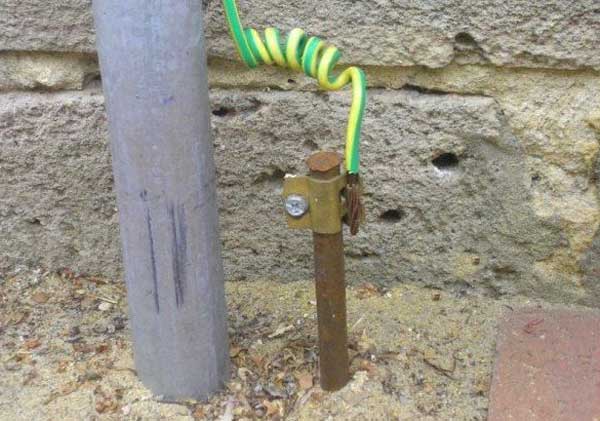 Internal wiring is done in a similar manner to the procedure described above, and the connection is made through a working electrical panel. Installing grounding yourself has numerous advantages in your own home, as the property around your home is yours alone, and no one will object to the installation.
A step-by-step guide to grounding your apartment yourself:
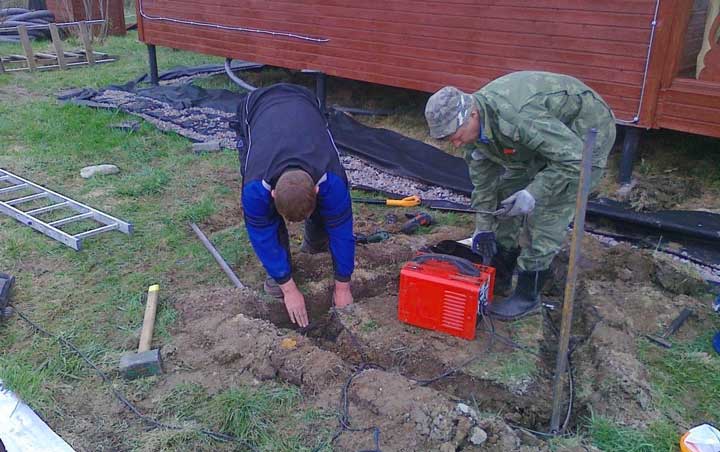
- Prepare 3 pieces of water pipe (you can use an old one) about 1.5 meters long - the lengthmaxshould be no less than the depth to which the ground freezes in winter.
- You should sharpen one end so that you get a conical cut, and then drill holes that will reach 0.5-1 cm in diameter at a height of 1/3 from the end at the bottom.
- Prepare a hole up to 0.6 meters deep and 1.5 x 1.5 meters wide.
- Drive the pipes into the ground at a distance of 1-2 meters from each other, forming a triangle so that the top corner is 0.15 meters higher than the bottom of the hole.
- Next, take the rebar (or corner), cut it into three pieces, measure it at the ends of our pipes already driven into the ground and connect everything into one whole.
- A grounding wire, which comes from the electrical panel located in the house, must be welded to the top part.
- This wire, which must be made of metal wire with a large cross-section (at least 5 mm), is connected to the PE bus.
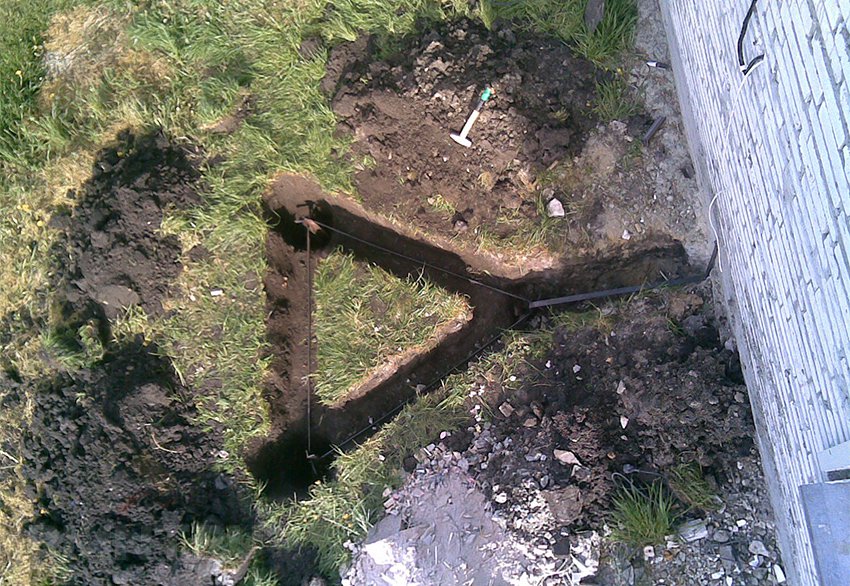 Now that the entire network is grounded, you need to fill the hole and lay turf in the designated area, marking the dimensions of your structure in any way you find convenient.
During the summer, when the weather gets hot, water your hole at least once a week with a salt solution (approximately 0.5 kg per large bucket of water). If the air temperature is below 30 degrees Celsius, water once a month. This will ensure uniform distribution of stress in the soil.
And in conclusion, one more small but important piece of advice: It's better to do it once, but reliably, than to manage quickly and do it haphazardly, but then regret that you couldn't protect expensive equipment from breakdowns.
Should household appliances be grounded?
 Most consumers have some doubts about the practicality of grounding, but we hasten to assure you that for safe use, all appliances in the home should be grounded – from electric kettles to washing machines, refrigerators, and expensive televisions.
Modern homes or trendy new buildings have permanent grounding – its presence is easily identified by special three-phase sockets.
Early houses weren't equipped with grounding, so wiring had to be installed manually. Therefore, grounding a washing machine, and the best way to do it, will always be a pressing question.
Here are a few examples for those who are still in doubt:
- A machine with a built-in surge protector, when plugged into a power outlet without power, will accumulate 110 V voltage on the body, and when you touch it, you will feel a noticeable tingling sensation.
- If the wire insulation is damaged, 220V will accumulate on the body. So, touching the kettle will give you a terrible shock. If the appliance is installed in a place where water will spill on the floor (you will act as a conductor), it could be fatal.
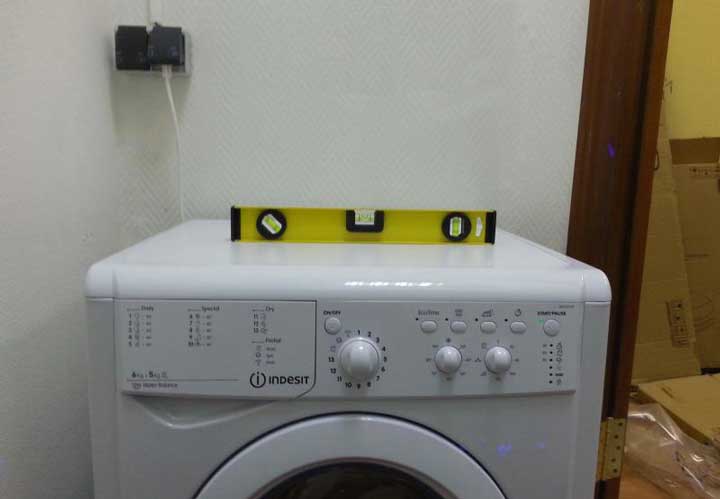
This is why it's essential to properly ground all electrical appliances and other equipment in your home—it's all for the safety of both residents and your appliances.
 And if you live in such a house on the third floor, then running a wire to yourself is practically unprofitable.
Here, a system of potential equations will come to your rescue. It's quite straightforward and is based on the fact that all objects that operate on electric current or can conduct it are connected into a single system using metal wires.
So if you touch at the same time body washing machine, and, say, a mixer, then the current will not pass through the body.
It is advisable to install a separate circuit breaker on your machine so that in the event of any unexpected failure, it immediately disconnects from the network.


