
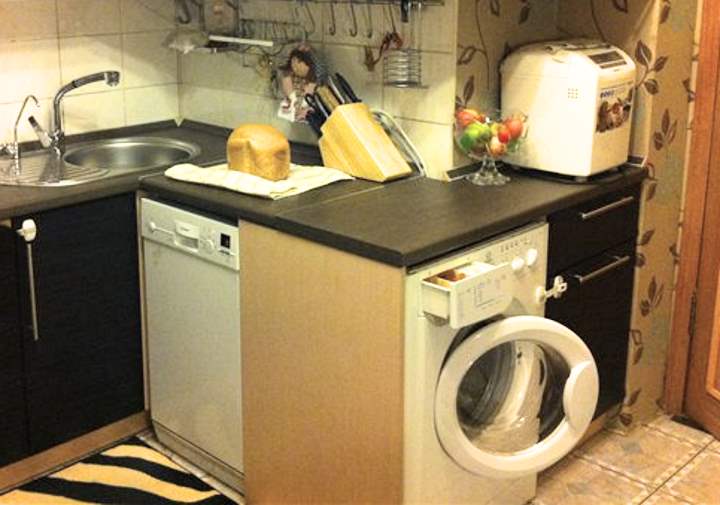
 Before purchasing a washing machine, buyers always pay attention to the drum capacity, the number of programs and washing modes, the presence of a spin cycle, and the temperature settings.
If you need cardboard boxes for cosmetics at a reasonable price, we recommend purchasing from the brand "A-format" printing house at a competitive price.
And when all these necessary functions are included in one washing machine model, you may be let down by the width of the machine, since it may not fit into the space prepared for it.
It would be extremely foolish to refuse a machine that contains all the programs and features you need just because of its width.
Washing machine manufacturers strive to meet all the needs of the home appliance market, and therefore offer a variety of devices of all sizes and combinations of many useful functions.
- What you need to know when choosing the dimensions of a washing machine
- Types of washing machines and their sizes
- Front-loading automatic washing machines
- Top-loading automatic washing machines
- Weight of washing machines
- Disadvantages of compact and narrow designs
- What you need to know when placing a washing machine
- In asymmetrical spaces and new buildings
- Standard bathrooms are 4 square meters in size.
- The best option for installing a washing machine in the kitchen
What you need to know when choosing the dimensions of a washing machine
Nowadays, washing machine specifications are the primary criteria when choosing your new washing machine. It's important to know that even with acceptable and effective spin and wash cycles, you still have a choice between models of different sizes. Machine dimensions—height and width—are secondary factors that will determine whether you can fit the washing machine into the space allocated for it. The only factor that doesn't influence your purchase is weight.
To find a washing machine that meets your criteria, you need to:
 Prepare a place for future household appliances, measure the width, height and depth of the niche;
- Decide on the type of washing machine (vertical or horizontal (frontal) opening). Your decision will depend on the room (bathroom, kitchen, or other space) in which the washing machine will be located and the available space around it;
- Write down the dimensions of the washing machine and all the functions you require for your home on paper or wherever you like, and then head to the appliance store.
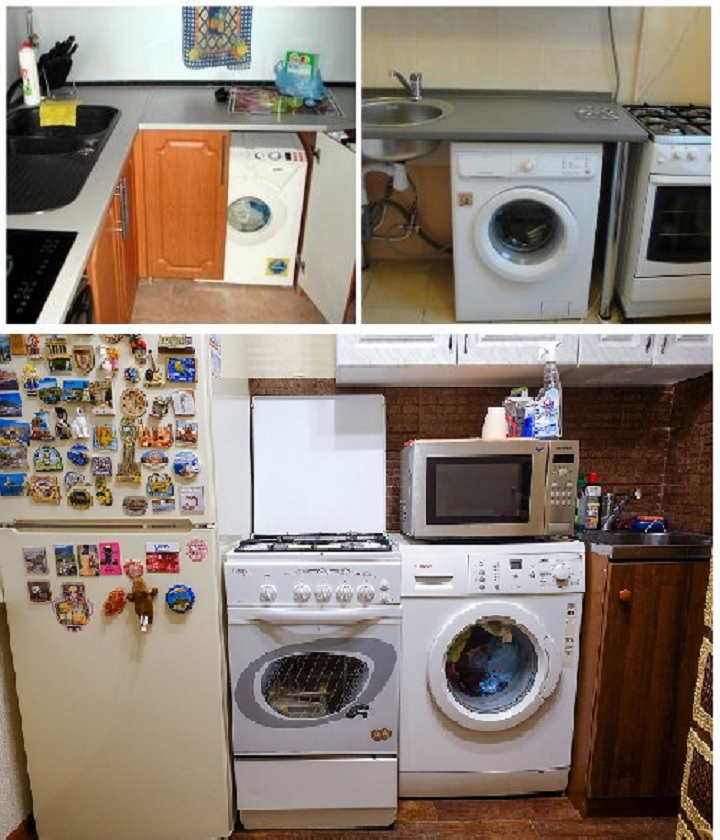
Sales consultants at any store will immediately suggest the right machines for your needs, equipped with all the necessary features.
Types of washing machines and their sizes
Front-loading automatic washing machines
The dimensions and classification of existing structures today are as follows:
- Full-sizeTheir height ranges from 0.85 to 0.9 meters, width from 0.6 to 0.85 meters, depth 0.6 meters, and the load capacity in kilograms is from 5 to 7;
- Narrow. The height is 0.85 meters, the width is 0.6 meters, the depth is from 0.35 to 0.45 meters, and the loading capacity is from 3.5 to 5 kg;
- MiniThe height is also 0.85 meters, the width is 0.6 meters, the depth is from 0.32 to 0.35 meters, the loading capacity is from 3.5 to 4 kg;
- Compact. Height from 0.68 to 0.7 meters, width from 0.47 to 0.6 meters, depth from 0.43 to 0.45 meters, loading capacity from 3 to 3.5 kg;
- Built-inHeight from 0.82 to 0.85 meters, width 0.6 meters, depth from 0.54 to 0.6 meters, loading capacity from 4.5 to 5 kg.
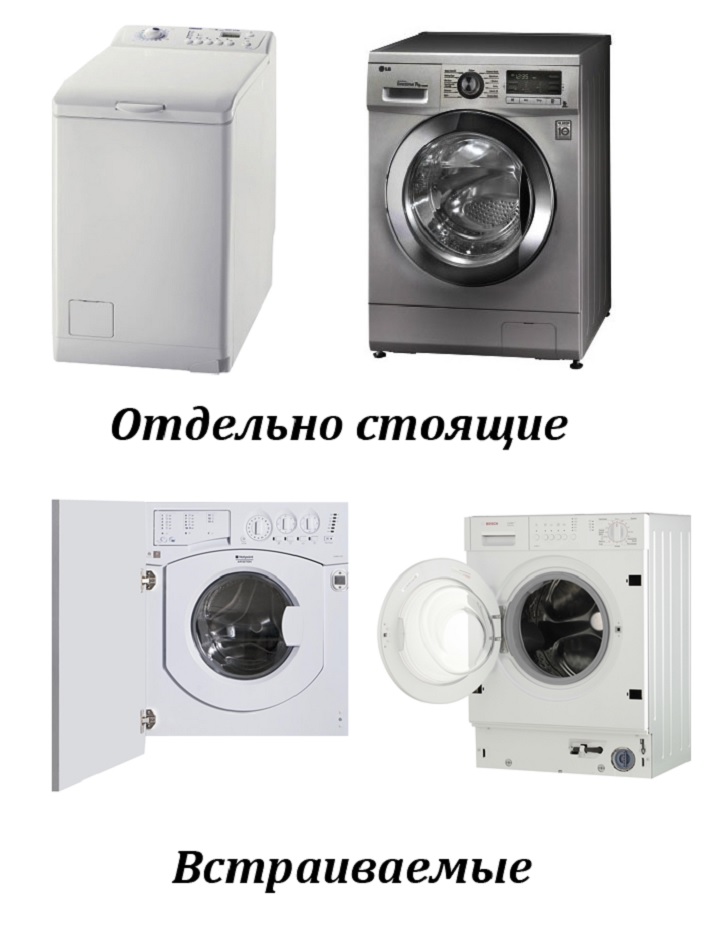 The drum of the narrowest washing machines can hold up to 3.5 kilograms of items, while the depth is only 0.32 m.
Many modern models are available with a depth of 0.6 m. They can hold 5 to 5.5 kilograms of dry items. This option is suitable for large families of four or more people.
If the drum width is 0.6 meters, it can hold up to 6 kilograms of things.
However, you need to consider whether you'll be able to completely fill it for every wash. Do you really need such a large, capacious washing machine just for winter down jackets, coats, and blankets?
Mini washing machines, despite their small size, have almost the same technical characteristics as regular automatic machines, but they are subject to high levels of vibration during the spin cycle due to their small base area.
We think you should consider the built-in counterweights in these machines. Thanks to these counterweights, the machine's weight will be approximately the same as that of larger counterparts.
 Washing machines with a depth of 0.4 to 0.5 m, a height of up to 0.8 m, and a capacity of up to 5.5 kg are considered popular. Washing machines with a width and depth of 0.8 m are equipped with a drying function.
For your washing machine to dry efficiently, it requires a larger drum than the washing machine itself. This may require you to choose a larger machine.
When you choose a washing machine with a width of 0.6 meters, you should pay attention to your doorways, because they also need to be at least 0.6 meters.
After all, if the machine is wider than your doorway, you will have to resort to removing the side panels from the washing machine and the trim from the door frame.
When relying on the width of the space allocated for the washing machine, it is important to remember that the loading hatch on the front panel must be fully opened.
Top-loading automatic washing machines
Classification and characteristics of these machines:
- Large-sizedThey have a height of 0.85 to 1 meter, a width of 0.4 meters, a depth of 0.6 meters, and a laundry load capacity of 5.5 to 7 kilograms of dry items;
- Regular (standard)). Height from 0.6 to 0.85 meters, width 0.4 meters, depth 0.6 meters, loading from 4.5 to 6 kg.
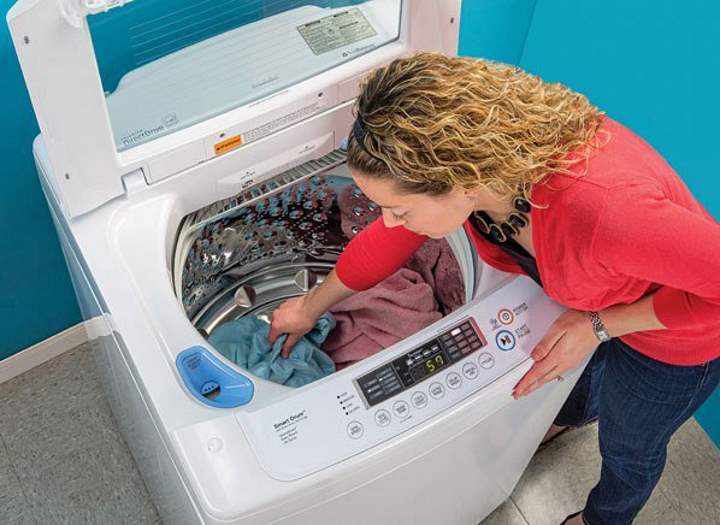 Top-loading washing machines are produced in batches of 100 units per period, unlike conventional side-loading washing machines, which are produced in batches of 1,000 units. This is due to the conventional overall appearance and dimensions of automatic machines.
When comparing washing machines by size and capacity, it's immediately obvious that top-loading machines save space, specifically width. These models are a full 20 centimeters narrower than front-loading machines. This is all due to the drum, or more specifically, the way it rotates.
In vertical-loading washing machines, the drum is mounted on two (lateral) bearings and positioned longitudinally. Some experts believe that the dual-bearing design is a technological advantage that top-loading machines lack.
Weight of washing machines
Absolutely all technical specifications of automatic washing machines will inevitably impact another parameter: weight. The question arises: how much does a typical standard washing machine weigh? The average machine weighs between 50 and 60 kilograms. And there's virtually no difference between models of different sizes. This is because the weight of the motor, counterweight, and drum are essentially the same. The smaller the washing machine, the larger the counterweight, which will even out the weight.
Important! The heavier the washing machine, the less noise and vibration it produces during the wash and spin cycles.
Disadvantages of compact and narrow designs
Compact or small-sized washing machines are typically found in apartments and homes where space is at a premium. However, this is an advantage, as they offer significant savings in space, but still come at a cost.
Disadvantages of small washing machines:
 The cost of compact models is slightly higher than that of regular cars;
- The washing quality is low, depending on the class declared by the manufacturer;
- The spin quality is low due to the small size of the drum;
- The drum can hold between 3 and 3.5 kilograms. For example, you'd struggle to fit a double bed linen set into such a drum, as it weighs approximately 3.5 kg;
- High level of vibration during the spinning process;
- High level of hum (noise) during washing;
- Due to such strong vibration, the components of compact washing machines wear out quickly.
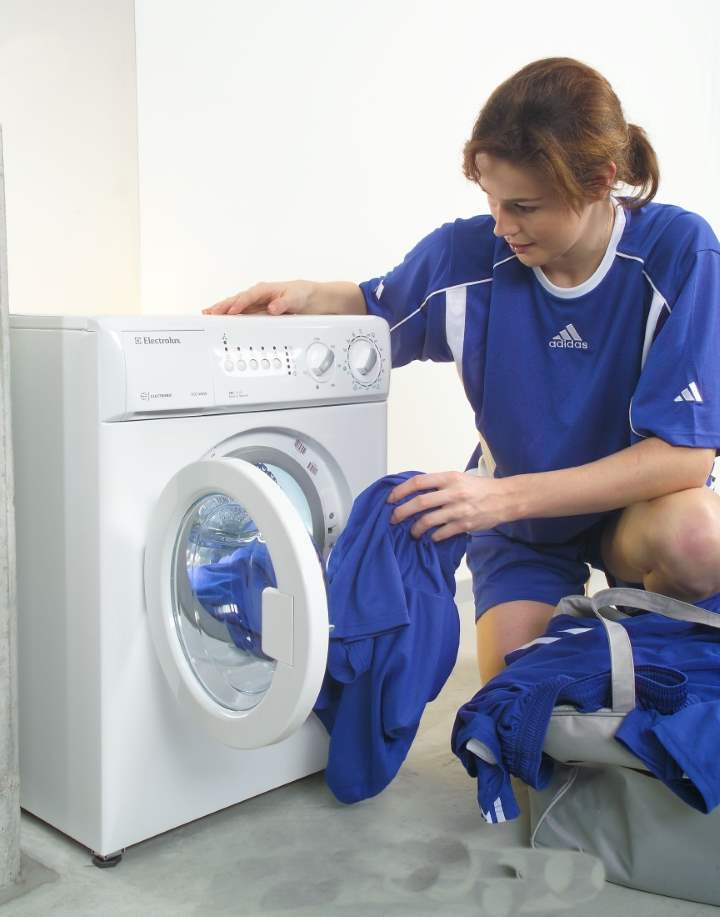
If you're wondering how long a small washing machine can last, it depends on how often you wash and how many items you put in it.
What you need to know when placing a washing machine
Machine size requirements should depend on the room you want to place it in.
In asymmetrical spaces and new buildings
If you're looking for a washing machine for a new apartment, or if yours is undergoing a major renovation, your only concern is the plumbing and drainage. Size doesn't matter.
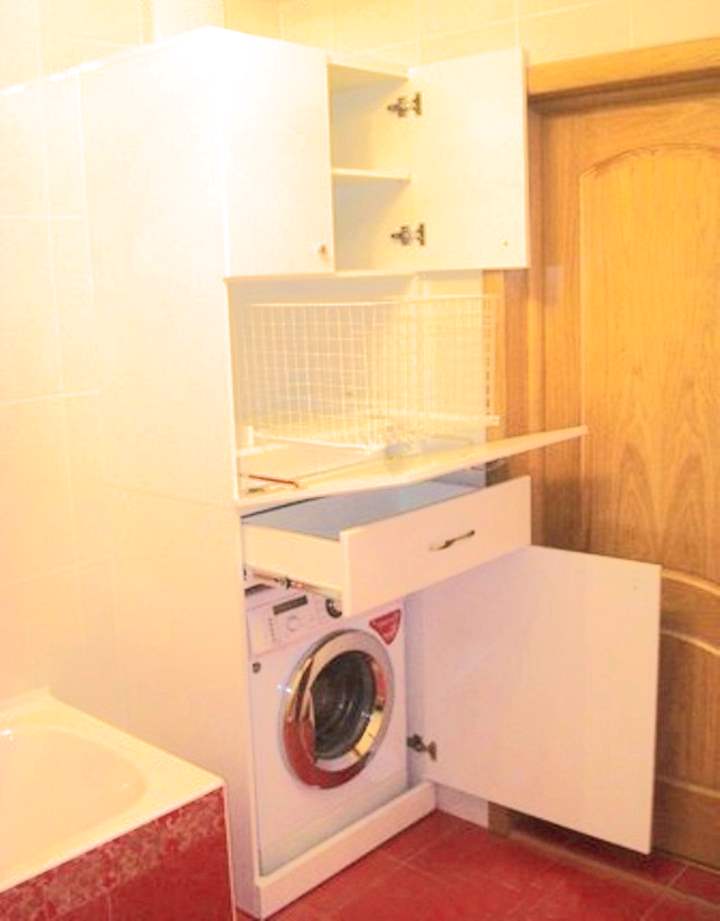
 Next, you can let your thoughts and creative imagination run wild to create a convenient and comfortable combination. For example, you could install a front-loading washing machine and a hanging cabinet above it.
In this cabinet, you can store various laundry products such as powders, bleaches, detergents, and disinfectants, as well as other goodies you will need during the washing process.
As pediatricians recommend, store all household chemicals in top cabinets to prevent children from getting their hands on them. It's best to lock these cabinets.
Modern designers are currently designing asymmetrical bathrooms, in which the angles are not 45˚, but rather approximately 50˚ to 70˚.
If your new apartment has these kinds of corners, you should ask yourself whether your new washing machine can be installed in the chosen corner, and whether other pieces of furniture that match your interior will fit.
Modern architects can create an additional room specifically for a washing machine—it will fit inside it without any problem, precisely to the dimensions, and such a small space can also be used for a dryer or ironing board, etc.
Standard bathrooms are 4 square meters in size.
In ordinary bathrooms the area is from two to three square meters; in such bathrooms, as they say, “every centimeter counts.”
The best and most comfortable option would be to install the washing machine in a corner, of course, if the width of the free space in the corner is more than 60 centimeters.
 Why more? Because additional space is required for the hoses and drain. Space for electrical outlets (2 to 5 cm) is also necessary, as the machine won't be able to be pressed tightly against the wall due to the convex plugs. And don't forget to take into account the width of the baseboards.
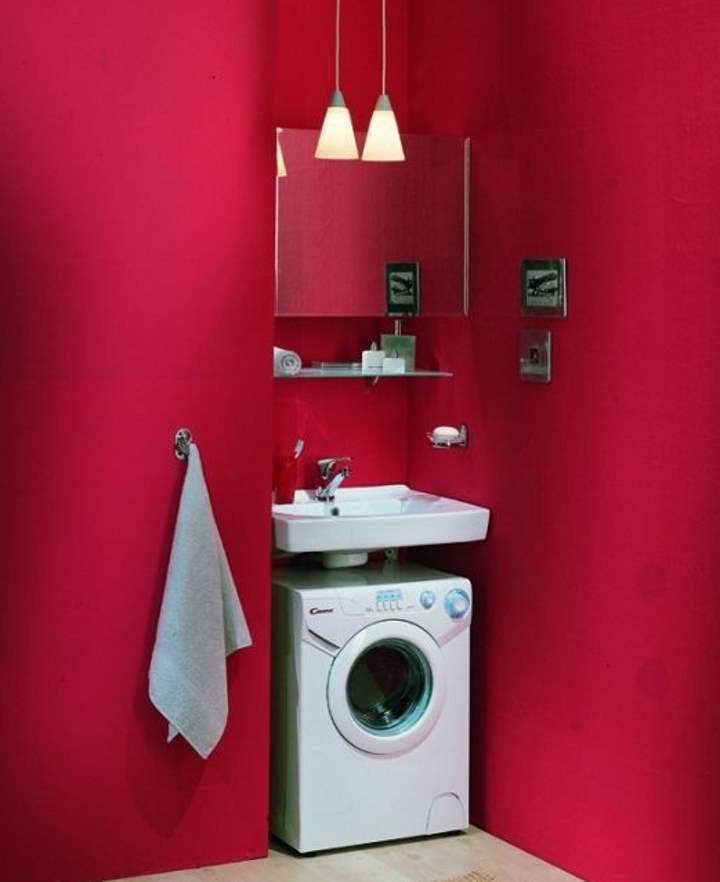
In such standard bathrooms, the optimal solution is to install a front-loading washing machine under a flat sink equipped with a special drain and trap. The drain hole should be located on the side wall of the flat sink.
The width of this front-loading machine should be up to 0.6 meters, as flat-mounted sinks are also available in widths ranging from 0.6 to 0.62 meters. A mirror and a shelf for toiletries, or a cabinet, can be placed slightly above the sink.
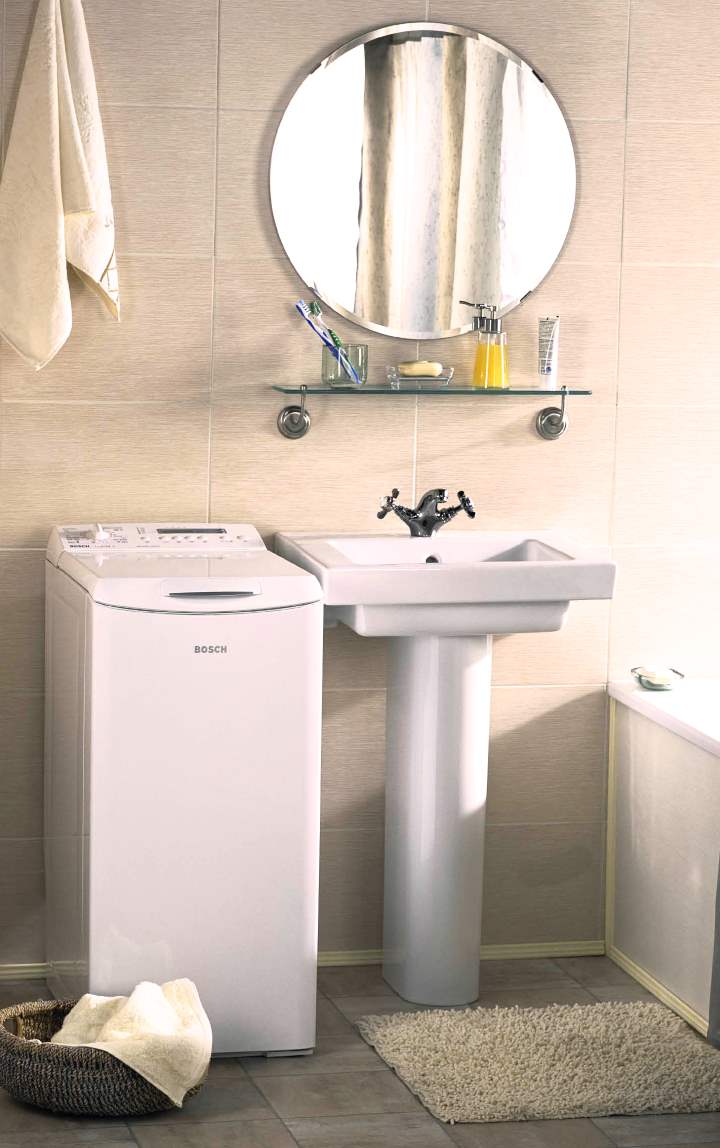
If your bathroom can't accommodate even 60 cm, your only option is to consider top-loading washing machines. These machines are only 40 cm wide, allowing them to fit in any convenient corner of your bathroom. You can hang a cabinet or shelves above these machines, but this will only be possible if you position the shelves slightly higher than the open door.
The best option for installing a washing machine in the kitchen
If your bathroom does not have the space or opportunity install a washing machine, then consider other rooms. For example, the kitchen is often used for washing machines, as it also has all the necessary utilities for connection.
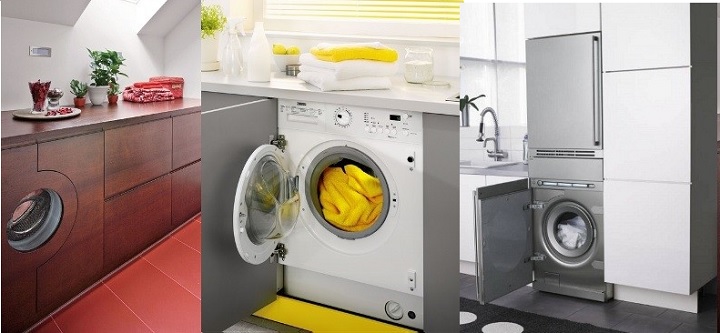 In the kitchen, the depth and width of the washing machine are even more important than in the bathroom. After all, the width of the washing machine is quite critical when compared to the kitchen cabinets. If your kitchen has a continuous countertop (cabinets, baseboards), then you need a washing machine with a depth and width that matches the dimensions of your kitchen cabinets. Incidentally, the height is also important: it should be slightly lower than the countertop, 7 to 10 cm from the floor.
Even if your washing machine is very quiet, it will still produce a noise level of 55 to 75 decibels. This level is comparable to daytime urban noise. Therefore, we recommend avoiding installing your washing machine next to walls parallel to bedrooms.


We bought an Indesit vertical heater about 6 years ago. It still works like new, no problems.
We bought a HotPoint vertical, a narrow one, 40 cm, but it only weighs 7 kg, so there was no loss in usefulness.