
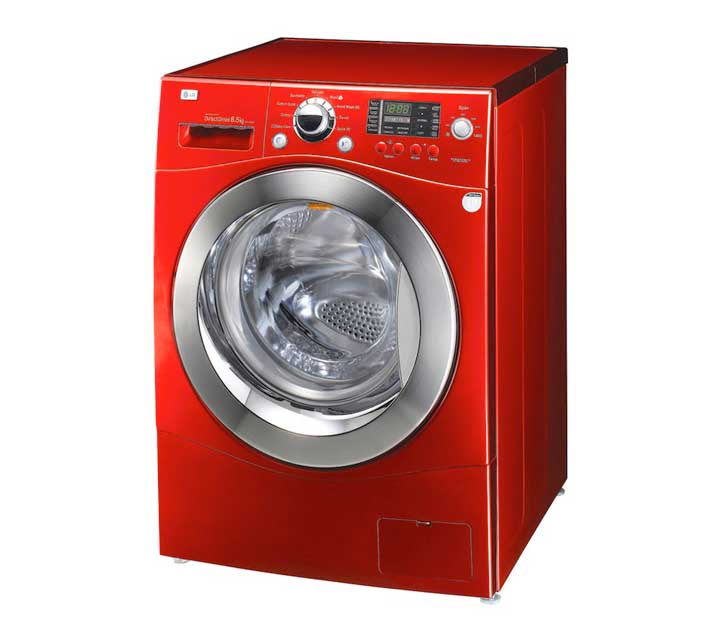
 Choosing a washing machine is a huge responsibility for buyers. It's not like a cheap electric kettle that can be replaced every year, nor a blender that only gets pulled out of the kitchen once a month when needed.
Many housewives use their washing machines every day, especially if they have a large family or a small child. Consumers choose a washing machine for a long period of use, during which time it should perform at its best.
- Spin classes for automatic washing machines. Choosing a washing machine
- Washing class
- Spin class
- Energy efficiency class
- Top or front loading
- Loading rate and dimensions
- Functionality of washing machines
- Drying function
- Quick wash function
- Delayed start
- Pre-wash
- Bio-wash
- Special protection against machine leaks
Spin classes for automatic washing machines. Choosing a washing machine
In most cases, owners of future units choose a machine solely based on its appearance, but there are also smarter buyers who will definitely pay attention to the washing machine's spin class, its wash class, and the programs the model is equipped with before purchasing.
There are three main parameters that can be used to understand the operation of a washing machine:
- Washing class;
- Spin class;
- Energy efficiency class.
Washing class
This indicator is indicated by the Latin letters A, B, C, D, F and G. The letter indicates the washing class.
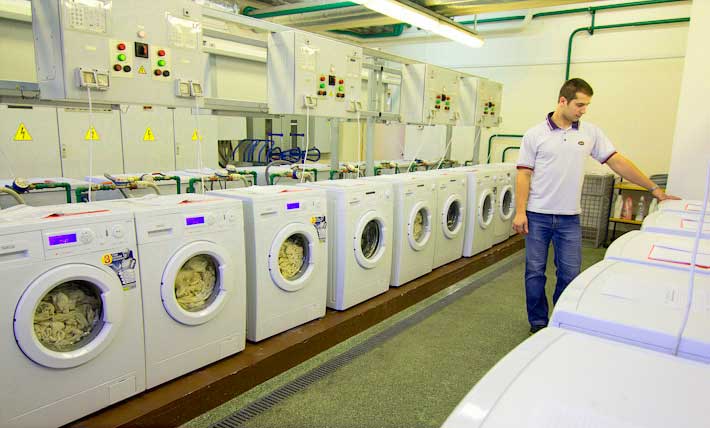 A washing machine receives a letter rating only after a series of tests, during which a specially sized piece of fabric with various stains is placed in the drum. Then, detergent is added (the same detergent is used for all tested washing machines to ensure the integrity of the experiment) and the standard wash cycle is started at a water temperature of exactly 60 degrees Celsius.
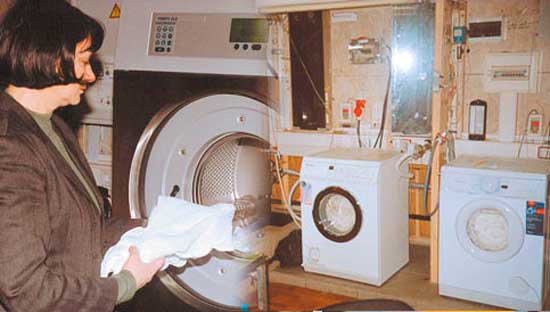 If any stains remain on a piece of fabric after washing, the class is assessed by comparing the fabric with the washing results of a reference machine. If the tested washing machine washes the fabric significantly better than the reference machine, it is awarded the most effective washing class—A—or, in some cases, class B.
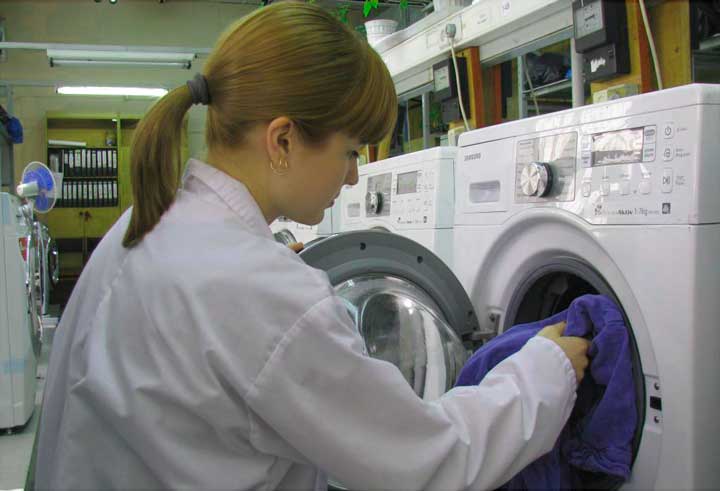 If the test result is slightly worse, the unit receives the following classes - C, D, F and G, which depends on the number of remaining stains on the piece of fabric.
The benchmark machine was installed and launched in 1995, and over the past ten years, it has raised its standards for wash quality. However, the manufacturers haven't been idle either.
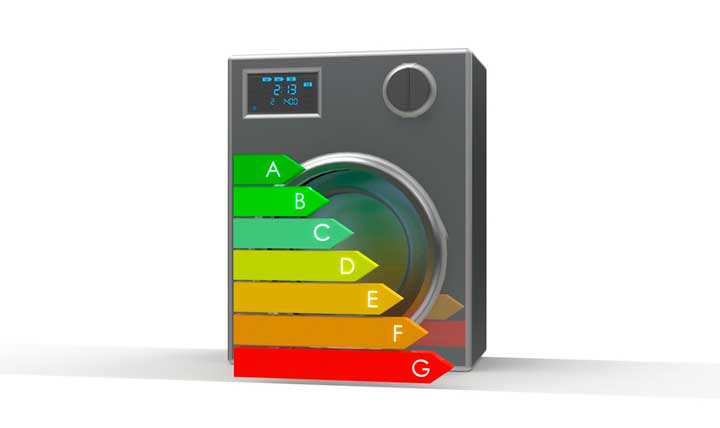 In 2000, you might have seen washing machines with F and G wash ratings, but not today, as such designs are now very difficult to find among the vast number of A-rated washing machines (up to 99% of products) that flood the home appliance market.
However, nowadays it's possible to find washing machines with low performance characteristics and washing classes. For example, the Candy CR 81 is the only machine of its kind with a washing class D. Several older models from Daewoo are classified as class C. Before purchasing this device, make sure the washing machine you choose has a washing class C. not lower than category B.
Spin class
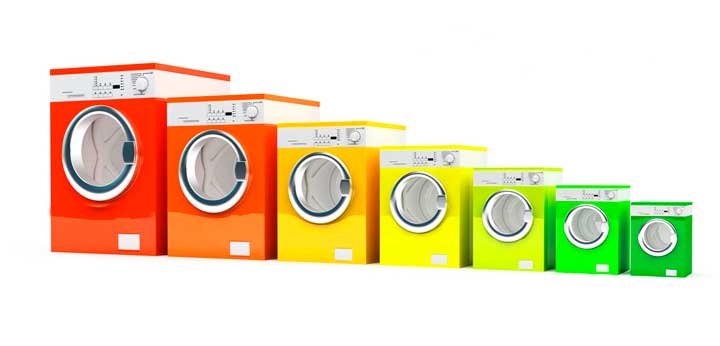 The spin class in an automatic washing machine is also of great importance.
And really, who likes to take out wet clothes after washing, which will first only drain for a day, and then take another day to dry?
The spin efficiency class is determined by approximately the same algorithm as the washing class and is designated by the same English letters. A, B, C, D, F, G.
As we know, A - This is the most efficient class, and models with this designation spin things better. 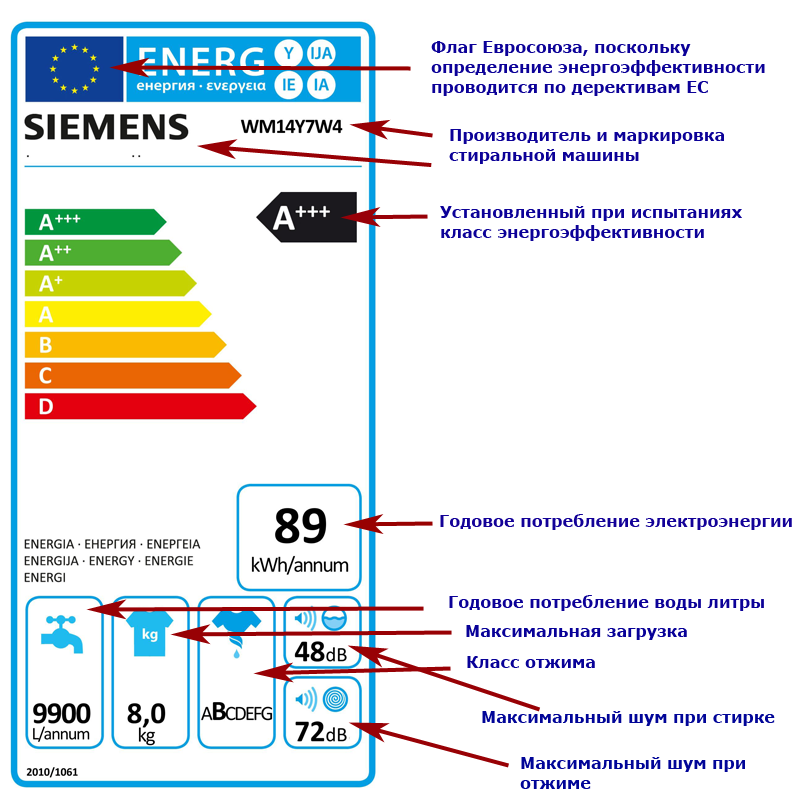 everyone, class IN - a little worse, but WITH – worse than class B. However, there is still a difference in the spin class assigned to a particular model. It all depends on the residual moisture in the laundry after unloading.
Minimum humidity 40%, maximum – 90%.
Let's say spin class C will be assigned to a model in which the humidity of the laundry has dropped to 55%, and class F - if the humidity does not exceed 80%.
When choosing washing efficiency, things are much simpler and more straightforward: it's best to choose a machine with a category A rating for the best stain removal. However, the spin class isn't so straightforward.
Firstly, efficiency A is very rare.
Secondly, the higher the spin class, the more expensive the equipment will be.
Thirdly, not every fabric can be wrung out almost completely, such as silk, wool and other delicate fabrics.
And here a logical question arises: is it worth paying more if the fabric will still have to be dried on a line? Probably not.
But for most users, spin class C is perfectly adequate. The laundry coming out of a machine with spin class C is damp, but it doesn't drip off and dries within a few hours.
Of course, manufacturers are working to improve their performance and keep moving forward, but buyers still run the risk of buying a machine with a low spin rating.
Each person must decide for themselves which is best, but it's best to avoid the lowest ratings. Incidentally, most buyers think that the spin class is directly related to the RPM, and there's some truth to that.
Yes, models with 500 rpm will not spin clothes to 40% moisture, but devices with a rotation speed that reaches 1000 can be of both class C and B.
Energy efficiency class
Another important characteristic is the energy efficiency class, especially when utility rates are rising by leaps and bounds.
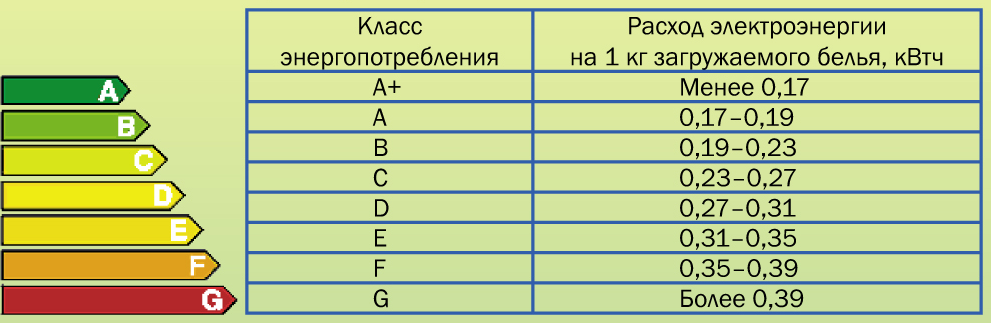 Initially, the models, just like in the first two indicators mentioned above, were assigned classes A, B, C, and so on, depending on how much kW was spent on a washing cycle at 60 degrees Celsius.
But over time, the wasteful F and G categories have become obsolete and have been abandoned by all washing machine manufacturers.
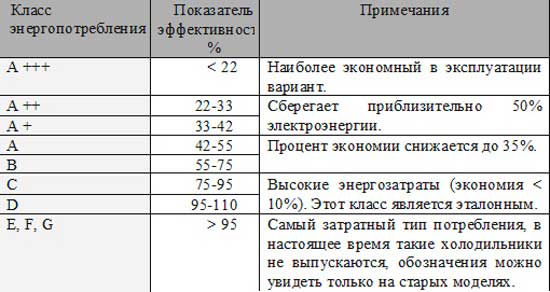 But instead, new classes have emerged, such as A+, A++, and, believe it or not, even A+++! No one is ruling out the possibility that new models with four pluses will soon appear.
However, before purchasing, keep in mind the fact that with each wash cycle, a class A+++ machine will save mere pennies compared to a class A++ machine, although the initial price of the former will be several thousand rubles higher.
So, saving money doesn't always pay off, and you risk wasting money you need. As the saying goes, the game isn't worth the candle.
Top or front loading
Before you choose an automatic washing machine, pay attention to the loading type: frontal or vertical.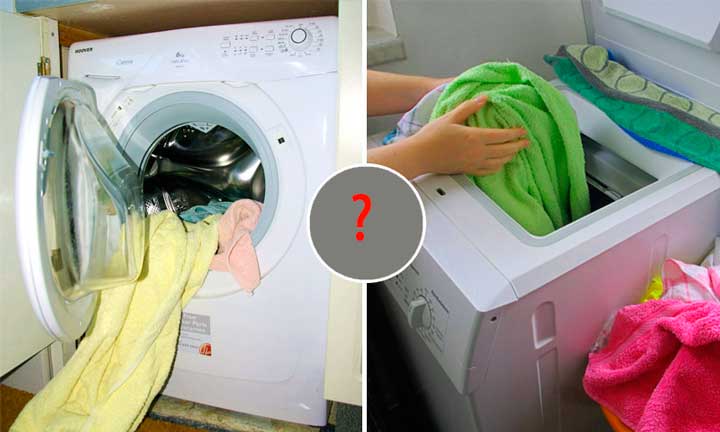
The first ones became very popular due to their price, variety of designs and ergonomics, since they can even be placed under a kitchen cabinet if desired.
Vertical units are a bit more expensive, mostly in European assembly, but their place is only in the bathroom.
Loading rate and dimensions
Potential buyers often use these factors to determine the right washing machine for them. Often, buyers have limited space in their homes and can only fit a specific model size.
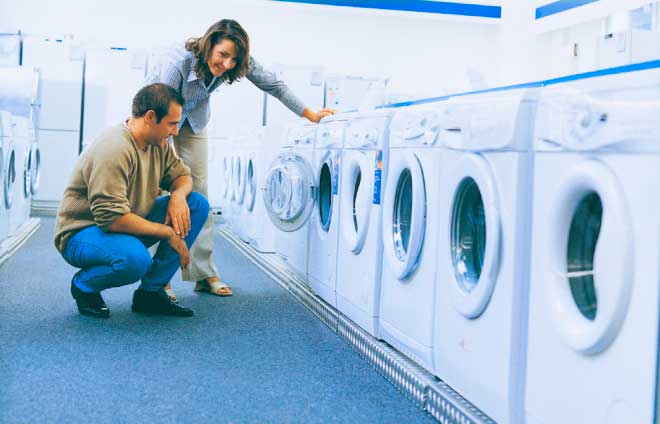 There are narrow automatic washing machines with a width of 0.32-0.35 m and a load capacity of 3-4 kilograms. Such a machine won't hold much laundry, usually just one set of bedding. Large items also won't fit in the drum of such a machine, so winter blankets and down jackets will have to be washed by hand.
Models with a width of 0.4-0.45 m can hold 5 or even 6 kilograms of laundry. Such a machine can easily wash a couple of sets of bed linen or a blanket. Machines with these dimensions are suitable for families with 3-4 people.
It makes sense to choose a larger washing machine if you have enough space to accommodate a bulky unit. They are suitable for large families who do laundry regularly.
Functionality of washing machines
Drying function
This feature isn't widely available, but those who have purchased a machine with this feature are quite pleased. After all, who wants clotheslines strung around the entire room when they can dry in the machine and then take them out ready to iron and hang on a hanger?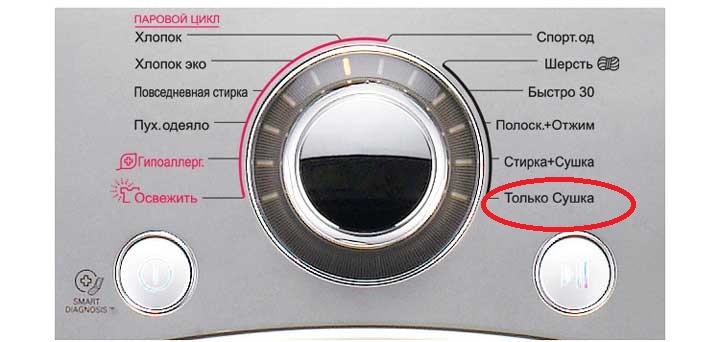
But there are also a couple of downsides.
Firstly, this is a fairly high price, because similar models without drying will cost you ten times less.
Secondly, there is a risk of overdrying the laundry so much that it will be difficult to iron.
Quick wash function
Now that we've covered the spin and wash class ratings, let's talk about the quick wash cycle.
This mode is designed to refresh laundry, removing light dust, fresh stains, and sweat. It usually takes about 30-40 minutes.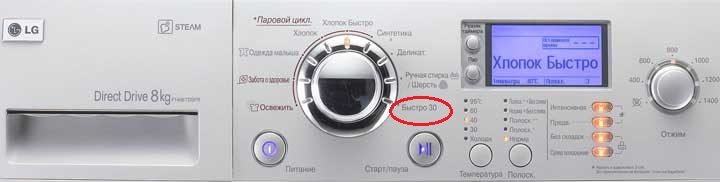
During this time, the machine performs a wash cycle at 30 degrees Celsius, with two rinses and a spin cycle. In advanced models, this cycle takes 15 minutes. Naturally, this program is not suitable for worn items or those with marker or grass stains.
Delayed start
A washing machine's energy efficiency class is not affected by the presence of a delayed start, as it does not affect the cost of electricity in any way, but only takes into account the kWh consumed during washing.
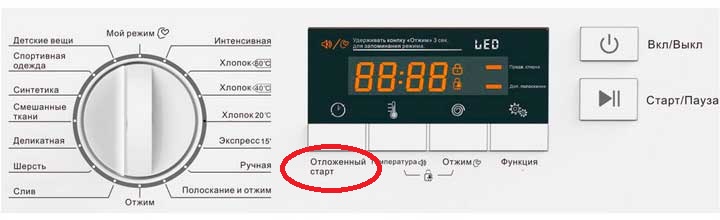
But for consumers, this feature will be a boon if they have a dual-tariff meter. The deferral can be fixed or hourly.
A fixed delay is typically found in budget mid-range models: the machine delays the start of the wash cycle by 3, 6, or 9 hours. Hourly delays can be set from 1 to 24 hours. For example, a user could delay the start by 2 hours and go to bed at 11:00 PM. The machine will automatically start washing clothes at 1:00 AM, when electricity bills are lower.
Pre-wash
This is a very useful feature in a washing machine, especially if you need to remove stains from old, stale laundry.
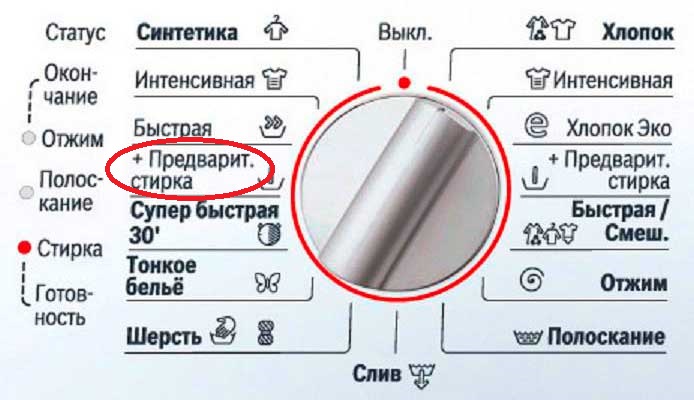 When you turn on the machine, it will first wash your items at 30 degrees Celsius, then drain the water and switch to the main wash cycle. It's worth noting that sometimes this function is displayed as a separate button on the control panel, while other times it's part of the program algorithm, such as "prewash + synthetics at 30 degrees Celsius."
Of course, the first option is much more convenient than the second, because the button will not be tied to anything, and you can turn on an additional wash with any type of soiled fabric.
Bio-wash
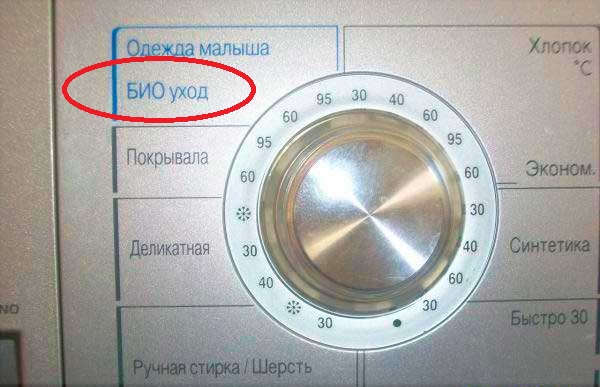 This option may be called differently by different manufacturers, but the essence is always the same. The machine will not heat the water for a certain period of time, but will only maintain a temperature of 30-40 degrees.
During this allotted period of time, the enzymes added to modern powders have time to begin interacting and dissolving biological stains.
Special protection against machine leaks
There are several types of them.
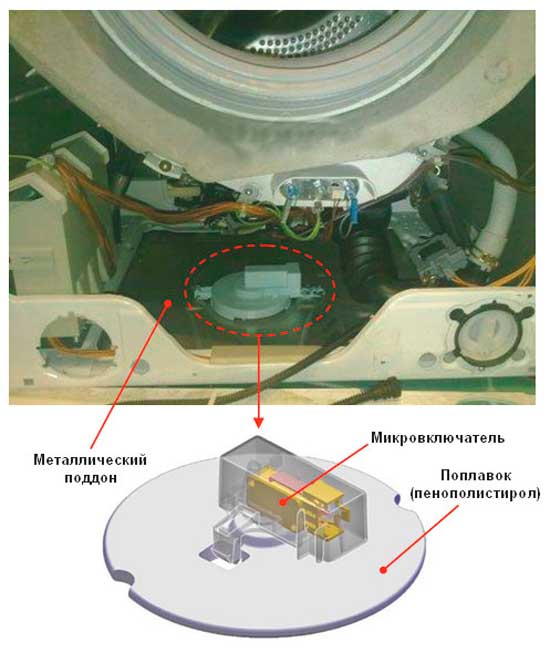 The simplest one is tray with a floatWhen water appears on the bottom due to leaks the float rises and shuts off the water supply.
Full and multi-stage leak protection is usually found in more expensive models and in addition to the float there is double hose.
In the event of an unexpected rupture of the inner layer, the substance located between the layers at the inlet will begin to swell and also block the water supply.


Our Indesit has a spin class A, but we bought the one with a drying function. So I can confidently say it spins very well.
Carolina, frankly, I can't figure out who would prefer a separate dryer over a combined one, which is cheaper, and if it's Indesit, it's absolutely fantastic. Especially since they have all the necessary functionality.
In our Hotpoint B, this is more than enough for a good spin and the clothes don't look chewed up.