
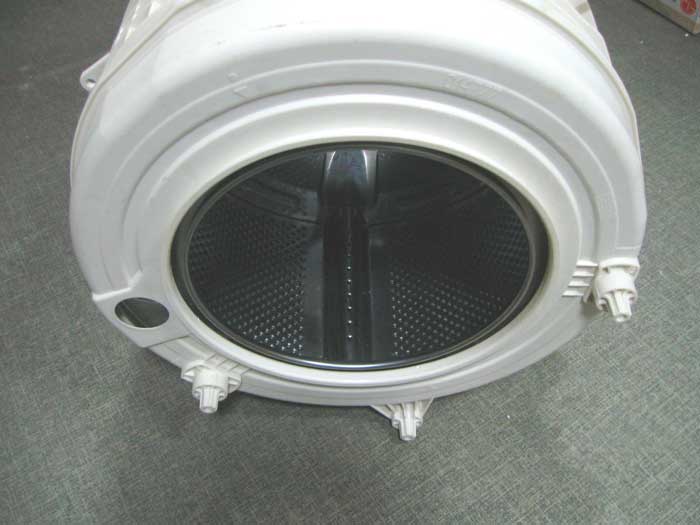
 The drum is one of the key components when assembling a washing machine. Before choosing your unit, it's best to review the various materials it's made of.
Let's look at what material is best for a washing machine drum, and why it will perform its duties better than others.
Washing machine tank manufacturing technology
A sufficiently durable and long-lasting material is essential for the efficient operation of the washing machine, as the washing process involves stress and temperature fluctuations. Items accidentally inserted into the drum can block or damage the system.
To produce the drum (its insides), the manufacturers use 3 materials:
- stainless steel;
- plastic;
- metal.
Stainless steel
Stainless steel is the best choice because it can handle water reliably and is also durable. Steel is quite common in washing machine tubs. 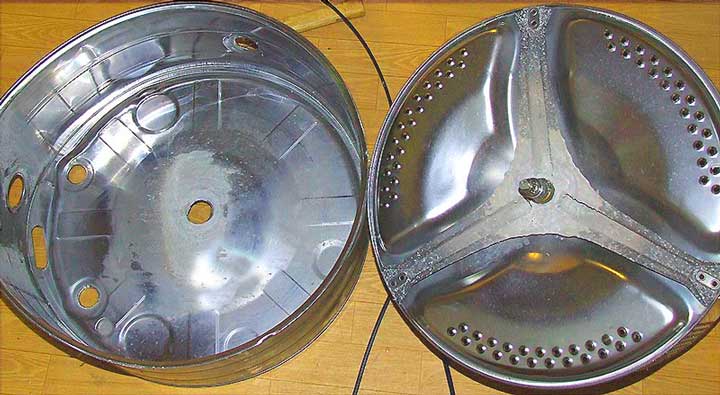 Advantages of steel:
- The steel tank is very reliable;
- Durable;
- Quite durable;
- The stainless steel tank will work continuously.
Besides the advantages, there are also flaws:
- Very high hum levelIn stainless steel tanks there is no possibility of lowering vibration and noise, produced during the washing process. This causes consumer dissatisfaction.
- High price. A washing machine with a high-quality stainless steel tank is not a cheap pleasure.
- High power consumption. Drums They consume a lot of energy because steel has poor thermal insulation.
Plastic
Plastic is a fairly common material used for washing machines, and the components present can also be made from materials similar to plastic.
There are a large number pros:
 Price near plastic low;
- No noiseIf you look at the advertisement, your laundry will spin in the drum without any noise, because a material like plastic perfectly absorbs noise and vibration;
- Low power consumption. This is achieved thanks to excellent thermal insulation. heating water less energy is used;
- Plastic Not May be subject to corrosion, or any exposure to chemicals;
- Enough light weight The material and the machine itself are not suitable. If it breaks, repairs are necessary, and removing a plastic panel is much easier than a metal one.
- Strength (relative). Compared to stainless steel, a plastic product will definitely be inferior due to its brittleness. However, various developments are currently underway in this area, and new materials are emerging for use in washing machines, which are consistently distinguished by their strength and reliability. The service life of such machines is up to thirty years or more, which is shorter than that of stainless steel. However, this is sufficient time, as the washing machine itself will wear out by then.
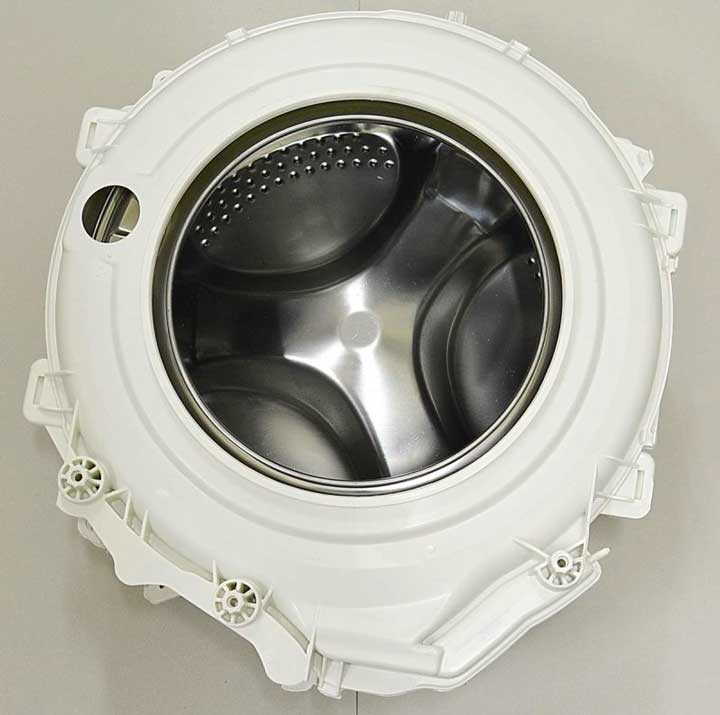
There are also a minus that might outweigh all the pluses:
- Fragility of the material.
 Major damage may occur during transportation of a plastic washing machine, or if any kind of leak appears between the drum and the tank. foreign object, which can cause damage. Such damage can be quite serious, and if it occurs, you will no longer be able to use the device.
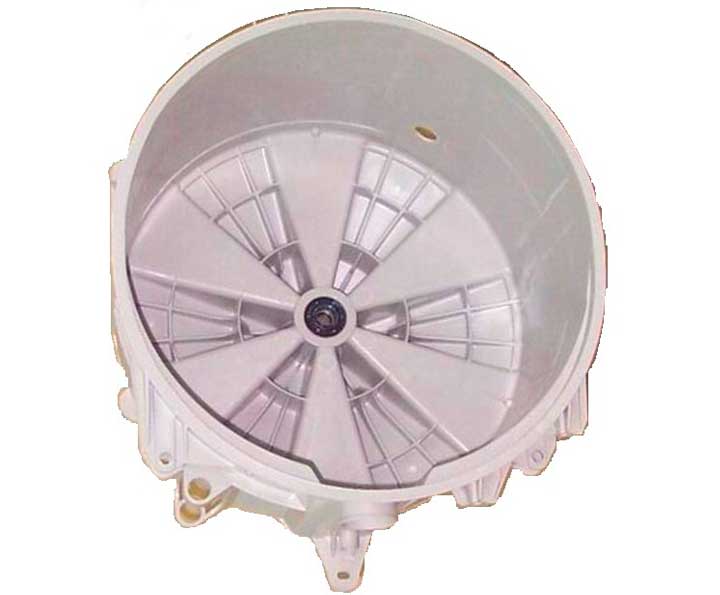
Each manufacturing company uses its own technology for producing household appliances from plastic.
Plastic has very different basic characteristics than other polymers: it's inexpensive and highly brittle. Combining plastic with various other additives increases its durability and strength. Some plastic products are often as durable as steel and resist cleaning agents well.
Metal
Washing machines with metal tanks have long been discontinued. However, if you have one, you're incredibly lucky, as they are highly reliable. These enamel tanks are also corrosion-resistant, despite their relatively heavy weight. Their high strength prevents the machine from splitting in half at high temperatures or during transportation, unlike plastic.
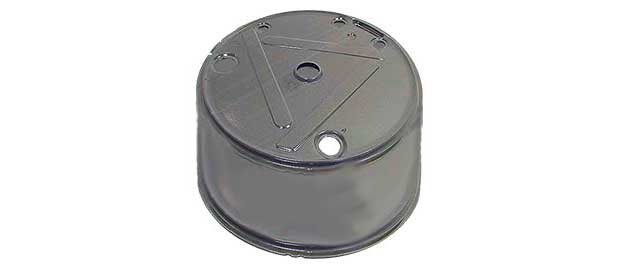 If you use such a machine for a long time, various dents may appear in the drum from objects accidentally dropped inside. With such dents, the enamel will no longer protect you; it will begin to crumble, corrode (rust), and eventually break. If the drum leaks, it means it's susceptible to metal corrosion. In this case, either the drum or the entire machine will need to be replaced.
As mentioned earlier, washing machines with enameled metal tanks are no longer produced. If you experience a problem with one of these machines, we recommend replacing it with a more modern model.
Conclusion
Before choosing a washing machine, you need to pay attention to the tank and the device itself, and what materials it is made of.
Quality affects longevity. In our article, we introduced you to materials used for tank construction, including stainless steel, plastic (and other polymers), and metal. The latter type is no longer in production, but we included it in the list because many people still have it installed. Manufacturers have discontinued these units in favor of modern models.
Stainless steel offers reliability and a long service life, but it's very expensive. It also produces noise and vibration.
Plastic is a very good choice because it's lightweight, absorbs noise and vibration, is corrosion-resistant, and impervious to chemical reactions, all while being affordable. Experts are still working to improve this polymer or create a similar one that will be increasingly reliable and durable. However, fragility is the only drawback that hasn't yet been addressed.
Choose washing machines with plastic or metal drums very carefully, paying attention to the material of the component or the machine itself. Focus on quality, as only reliable components will ensure long-lasting and trouble-free operation of the entire washing machine.


