
 The first company to develop washing machines was the well-known LG company, which, in addition to many interesting washing programs and additional features, patented a direct drive.
But sometimes even such high-quality equipment can fail.
Direct drive washing machine
The importance of the mechanism
A direct drive is an electrical device that can convert electromagnetic energy into linear or rotary motion.
The design of such an engine transfers power to the rotor through an air gap, which completely eliminates the possibility of wear of moving parts.
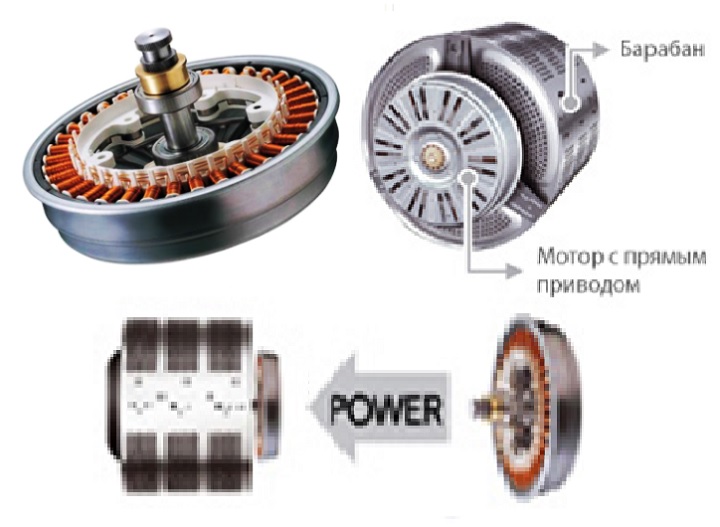
Direct drive is recognized as the most reliable electric motor.
The drive is the core design element of any washing machine. Currently, manufacturers such as LG, Whirlpool, Sears, and many others use direct drives and their components in their washing machine models.
Differences between direct drive and other converters
Less noise
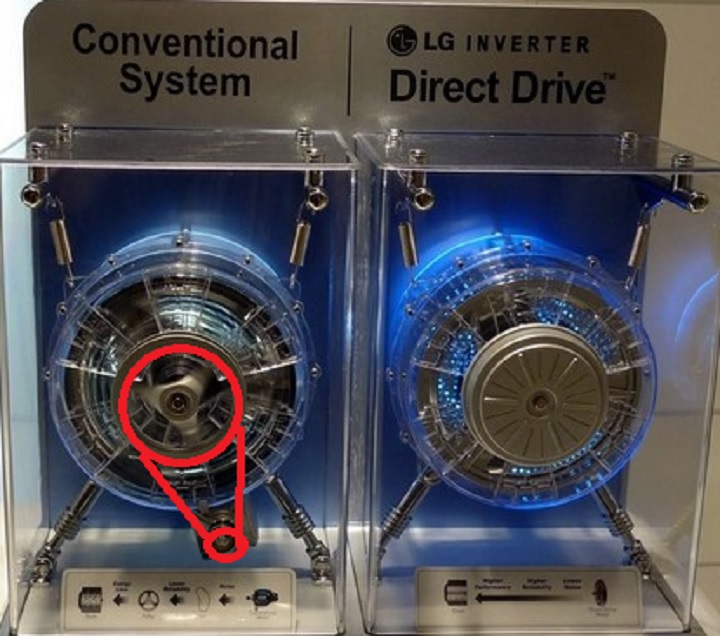
Belt-type drum transmission is common in conventional washing machines. In these machines, the drum is secured to belts, which transmit torque from the shaft.
The most vulnerable part of this system are the belts, which wear out from time to time and require complete replacement. Furthermore, the washing and spinning cycles themselves in belt-driven washing machines are accompanied by high levels of noise and vibration.
The main distinguishing feature of machines equipped with a direct drive is the complete absence of any brushes or belts in the motor, which are called contact units.
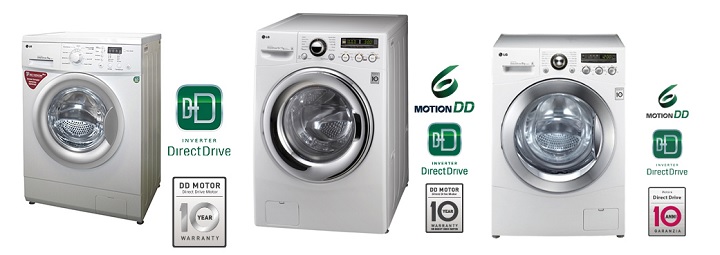
To find out if your washing machine has a direct drive, inspect the housing - if it does, you will see a "Direct Drive" sticker on the front.
More things
Due to the fact that there will be more free space in the housing and the washing machine's electric motor is more powerful, direct-drive models are distinguished by the fact that they can be loaded with more items than analog machines without a direct drive.
Uniform cleaning of things
In conventional washing machines, the washing process is concentrated on the items located at the bottom of the drum, whereas in direct drive washing machines, dirt is removed by rotating the drum back and forth.
Design features of the device
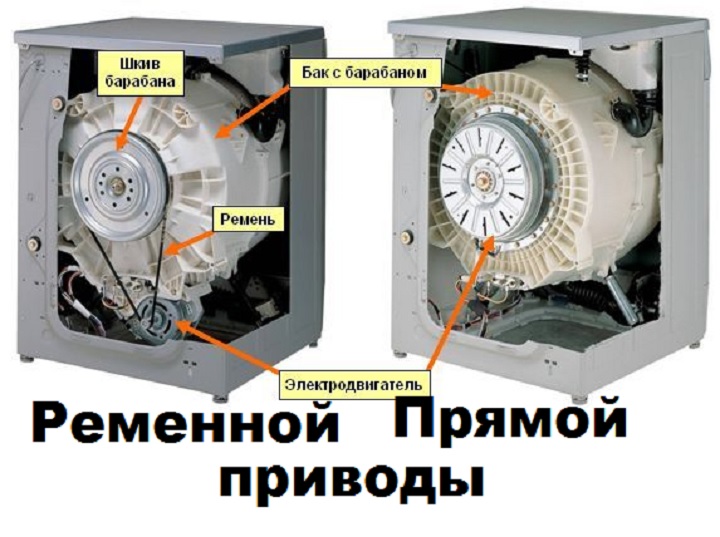
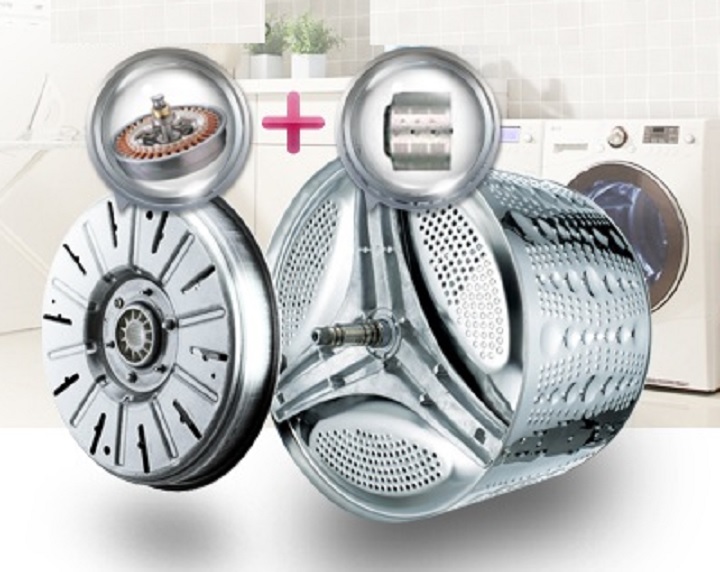
In direct drive washing machines, the motor is attached to the drum without a belt or pulleys, and instead a special clutch is used, which acts as the electromotive device of the gearbox.
The absence of unnecessary transmission elements in such models makes it more compact.
In many cases, direct-drive washing machines are equipped with a three-phase brushless motor. Its components include a rotor (a permanent magnet) and a stator equipped with 36 induction coils.
The rotor is attached to the drum shaft, and the permanent magnet shaft also serves as the washing machine's drum shaft. The motor is controlled by sending meander waves from the electronic module.
Direct Drive: Advantages and Disadvantages
Advantages of direct drive
- A washing machine with a direct drive has far fewer fragile and quickly wearing parts than a belt-driven model. That's why LG is so confident in the quality of its appliances that it offers a 10-year warranty on this motor.
- Of the sounds we are all accustomed to from Direct Drive washing machines, you will hear only the measured rustling of laundry in the drum.
- Due to the fact that belt drive technology is not used, the stability of the device is significantly increased. Thanks to the use of a direct drive in washing machines, the operation of the drum is maximally balanced.
- Such engines do not require constant maintenance and regular lubrication.
- Direct-drive machines can automatically detect the drum load and laundry weight, allowing them to select the optimal power level and avoid excessive water and energy consumption. This technology can sometimes deliver savings of up to 30%.
Disadvantages of direct drive
The high cost of the machine
One of the downsides of direct-drive washing machines is their high price. In this price range, there are many simple and reliable models from many other manufacturers that have proven themselves in the home appliance market.
The high cost of such models is due to the very complex design of the module, which is necessary to control the operation of the electric motor.
Another disadvantage is the high price of components – if you have to repair such a machine, you will have to spend a tidy sum of money.
Dependence on good electricity
 Direct drive in washing machines makes the device more vulnerable to power surges.
In this case, to protect yourself from expensive repairs, we recommend installing a voltage stabilizer right away.
Liquid in the seal
Leaks can be avoided by regularly replacing the seal.
In direct drive washing machines, there is a small chance of liquid getting into the seal.
This situation is not considered a warranty case and the engine cannot be repaired.
Noise
Some users complain about loud noise when draining and taking in water during washing.
Rapid wear of bearings
The relatively close proximity of the bearings and the complete absence of a pulley increases the load. This will cause them to wear out faster, requiring periodic replacement, which, as we've already mentioned, is quite expensive.


