
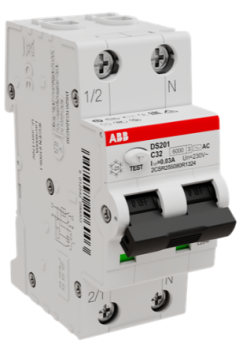
In the world of electrical engineering, residual-current circuit breakers (RCCBs) play a vital role in ensuring the safety of electrical systems. However, to correctly select and install a RCB, it's essential to know how to calculate the current. In this article, we'll look at how to perform this calculation, using an example for a 32A RCB, and explore why this is essential for ensuring the efficient operation of electrical systems.
Why do you need to know the current strength?
Current is the primary parameter that determines how much electrical energy an electrical device or circuit consumes. Knowing the current allows you to select the correct residual-current circuit breaker (RCCB) to ensure safe operation and protection against overloads and short circuits.
How to calculate current?
To calculate the current strength, you need to know two main parameters:
- Device Power: Power is measured in watts (W) and indicates the amount of energy consumed by a device per unit of time. Power information is typically listed on the device or in its technical documentation.
- Line Voltage: Voltage is measured in volts (V) and indicates the potential difference between the wires in the line. In most countries, the standard voltage for household systems is 220-240 V.
The current strength is calculated using the following formula:
Current (I) = Power (P) / Voltage (U)
Example calculation for a 32A residual current circuit breaker
Let's assume we have a household heater with a power of 2200 W and a supply voltage of 220 V. To calculate the required current for this heater, we use the formula:
Current (I) = 2200 W / 220 V = 10 A
Therefore, to connect this heater to the electrical system, we will need a residual-current circuit breaker with a rated current of at least 10 A. It is important to note that the rated current of the residual-current circuit breaker must be equal to or greater than the calculated current to ensure its reliable operation.
Why is this important?
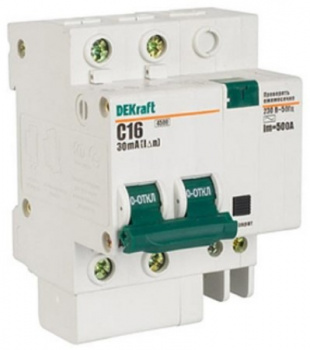
Incorrectly calculated current can overload the electrical system, which can lead to overheating of wires, fire, and equipment damage. Conversely, too low a current can trip the residual current circuit breaker during normal operation of devices, leading to inconvenience and downtime.
Industrial Applications
In industrial settings, the current rating of residual-current circuit breakers (RCCBs) must be calculated with particular care. Industrial facilities often operate with powerful equipment that consumes significant electrical energy. Calculating current in this case can involve complex input data, such as the equipment's start-up time and its operating characteristics. It is important to consult with professional electricians or engineers to accurately determine the required rated current for residual-current circuit breakers in industrial facilities.
Calculations for Business
When constructing commercial or office buildings, or during business expansion, it's essential to consider current ratings for residual-current circuit breakers. Efficient electrical equipment and its reliable protection can save money and prevent potential problems. Therefore, when designing your business's electrical infrastructure, calculate the current rating based on the power consumption.
Compliance with Technical Norms and Standards
When calculating the current for residual current circuit breakers, it's also important to consider compliance with technical regulations and standards. Different countries and regions may have their own electrical safety regulations and current calculation standards. Therefore, it's recommended to consult with local regulatory authorities or engage specialists familiar with local requirements.
Conclusion
Calculating the current for residual-current circuit breakers is an important part of ensuring the safety and efficiency of electrical systems. Knowing the device's power and line voltage helps select the appropriate residual-current circuit breaker and avoid unpleasant surprises in the operation of electrical equipment.


