
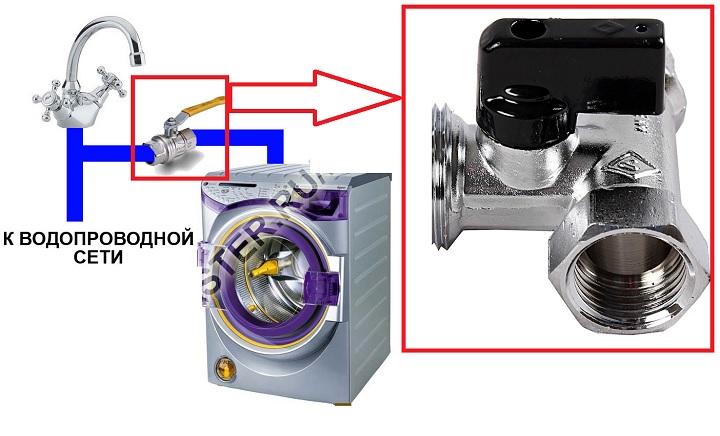
 To get your washing machine working, it's not enough to just buy it and bring it home. You also need to properly connect it to the water supply.
This action is one of the main and fundamental stages of installing an automatic washing machine.
To do this, you need to purchase a special faucet for your washing machine. This component will help reduce the likelihood of breakdowns during the first few days of operation.
We'll cover the details of taps for connecting a washing machine to the water supply in this article.
- Prepare for the process
- Choose a prominent location for the faucet
- Types of shut-off valves
- Filter for the water supply system
- Which hose is better?
- Connecting the washing machine to the system
- Dual connection
- Installation of the end valve
- Materials and tools
- Operating procedure
- Installation of a through-flow valve
- Installing taps on a mixer
Prepare for the process
The owner of an automatic washing machine needs to know the specific procedure for installing the unit to the water supply.
After all, the special tap might break and need replacing, or the machine might need to be moved to a different location in the house. Even a novice can handle this task quite well if they remember a list of important points.
Choose a prominent location for the faucet
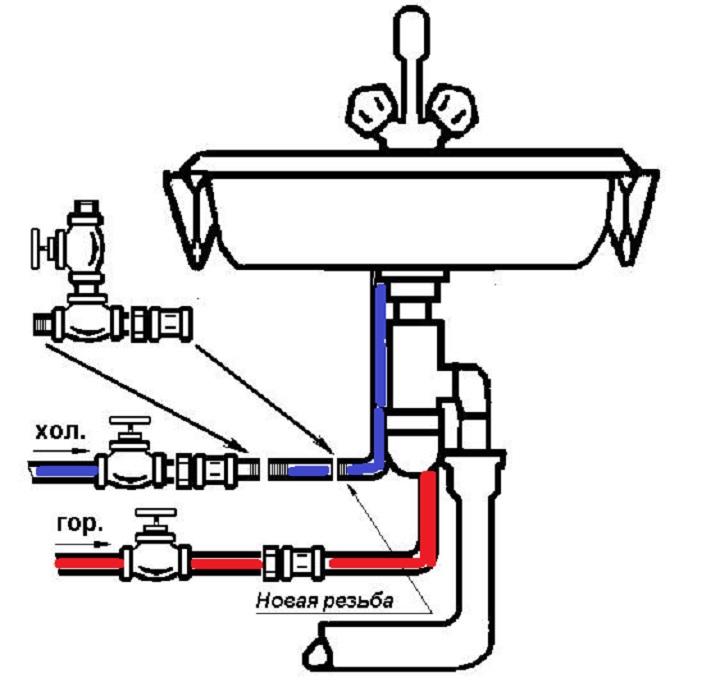 When installing an automatic washing machine, it is possible to use shut-off valves of a fairly simple design.
These taps are installed in a visible location so that owners can shut off the water flowing into the washing machine at any moment that gets out of control.
The machine automatically performs various actions, heats up water, having previously taken it from the system, at this time various kinds of breakdowns can occur, which can only be prevented if the tap is in a visible place, and then it becomes possible to turn the valve and stop the water supply.
In most cases of machine breakdown, it is necessary to shut off the water, and if this is not done, there is a risk of flooding the apartment (house) and neighbors.
Types of shut-off valves
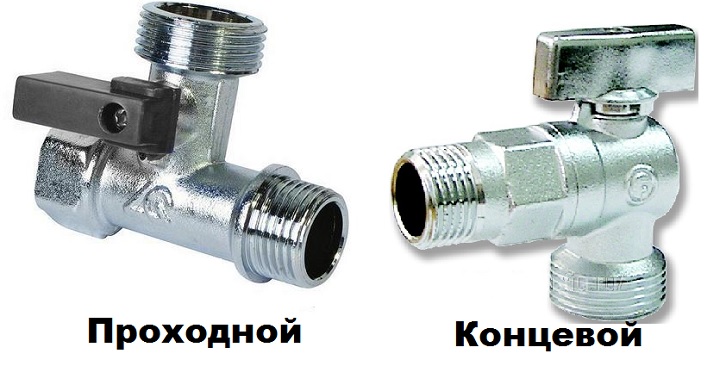
When connecting your washing machine, you can use shut-off valves, the types of which are divided into two categories:
 Straight-through taps
They are cut into an existing water supply line that goes to other objects (mixer, boiler, etc.);- End valves
They are installed on a branch of the water supply system and are specially made for automatic machines.
Filter for the water supply system
It would be better for the washing machine if it received water from the water supply line that runs throughout the house, with exactly the same cross-section.
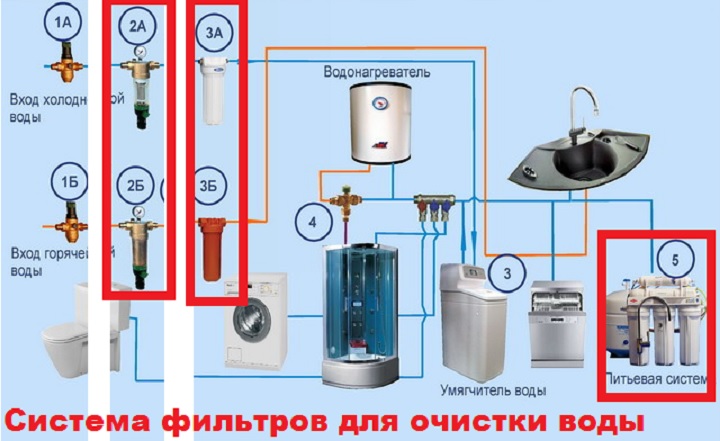
It is advisable to install a filter in the system - it will purify the water that will flow into the machine.
 Filter – This is a mesh that's very easy to install. Don't forget to clean it periodically.
We recommend turning off the water supply to the machine after washing, and turning it on only before starting it.
Or you can install a whole system of filters. But that's only if you have the financial means.
Which hose is better?
It may be that the manufacturer provides a special hose To connect to the water supply, and if one is available, it's best to install it. The provided hose may not be long enough, so don't immediately connect it from two parts, as this will quickly break it.
The most optimal option – Buy a new, longer hose from a specialty store run by your machine's manufacturer. It's best to buy the hose from a branded store, as cheap alternatives sold at regular stores tend to break very quickly.
Connecting the washing machine to the system
Dual connection
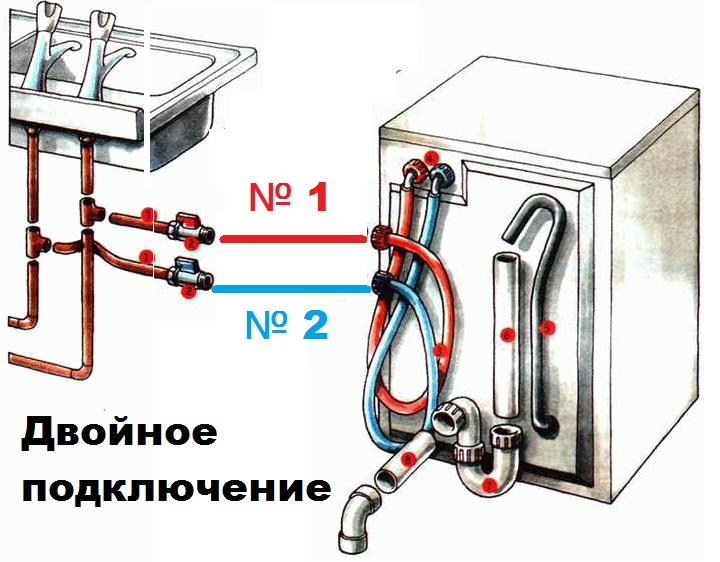 There are models of automatic washing machines that have the option of dual connection to the water supply: to both cold and hot water.
Such capabilities are available from American and Japanese washing machine manufacturers.
This was designed to save on electricity costs, as machines without dual connections use cold water heating. As experience has shown, in Russia, such machines rarely perform their job effectively.
In general, washing machines are quite demanding regarding the quality of the hot water supplied to them. Water in central heating systems is typically not considered as clean as desired, leading to contamination and clogged filters, various breakdowns, and so on. Wash quality may be subpar. In some cases, dark and rusty stains, various contaminants, and possibly even tearing of delicate fabrics may appear on laundry just removed from the machine.
As a rule, in conditions of individual water supply the water is much cleaner.
However, we still recommend that you conduct an analysis and assess the condition of the water before purchasing and installing a washing machine.
The water may not be in good condition, meaning the cleaning system needs to be improved. Failure to do so will make your washing machine highly susceptible to breakdowns.
Installation of the end valve
The end valve can only be connected to an existing water supply.
Materials and tools
For this purpose, a so-called cut-in clamp, or simply a tee, is used. A tee is quite simple and easy to use.
To install the clamp, you'll need a drill, screwdriver, and file. You'll also need to purchase the clamp itself, complete with a guide bushing and a rectangular rubber gasket. Don't forget to turn off the water supply before installing the tee.
Operating procedure
The clamp must be very carefully and accurately screwed onto the pipe, with the guide sleeve facing outward, in which the hole is located.
Next, the pipe is drilled (use a drill for this) and attached to the clamp or to the pipe section itself, on which the end valve will be mounted later.
The next steps are as follows:
 At the end of the pipe, form a thread of the same size and type as in the clamp;
- Wrap the external thread with a sealant, or FUM tape;
- Using force, screw the end valve onto the outer pipe;
- Attach a hose (included with the washing machine) to the other end of the end valve;
- Install the reverse side (end) of the hose to the washing machine;
- Check everything for leaks.
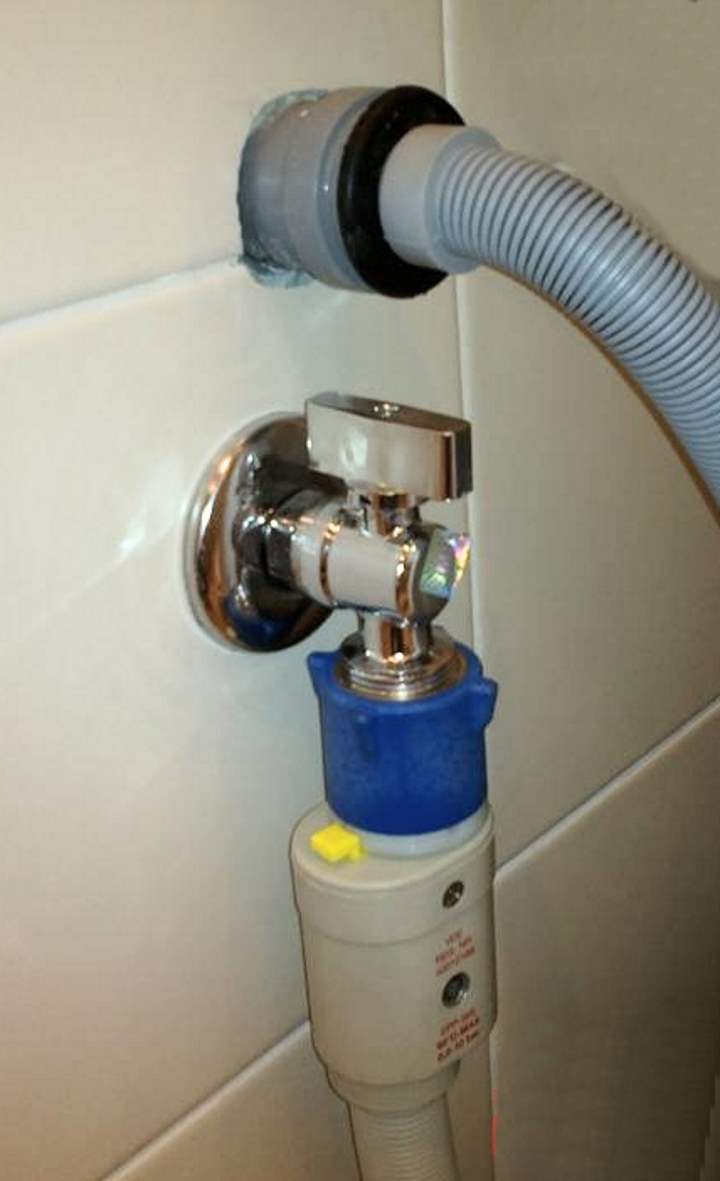
Sometimes, screwing a faucet onto an external thread with FUM tape or sealant is very easy. If this is the case, you need to remove the faucet and apply more of the sealant, as otherwise, the connection will not be completely sealed.
To both ends of the hose (which is attached to washing machine) rubber gaskets are present. These are extremely important when connecting your structure to the water supply, so we recommend that you do not lose or throw them away. In most cases, one end of the hose is angled, and the other end is straight.
As practice has shown, it is most convenient connect the angled end of the hose to the washing machine, and the straight end to the water supply, since the device is usually located closer to the wall.
Installation of a through-flow valve
There's a type called "pipe-hose." It's best to use a straight-through valve with this connection.
Here are three options for placing this crane:
 First option: You already have a tap with a branch to some object.
In this case, a tee tap can be used both before and after the installed tap.- Second option: It's possible that the hose (which is supposed to connect to your washing machine) is running to water heater.
In this case, it's necessary to install a valve for the unit upstream of the main valve that shuts off the water supply to the heater. Failure to do this will result in you having to shut off the hot water supply throughout the entire house for future loads of laundry. - Third option: If you are installing your design in the kitchen near the sink, you can install a straight-through faucet in front of the mixer.
To install the faucet, you need to remove the mixer, replace the flexible hose with a straight-through valve on the cold water pipe, and then put the mixer back.
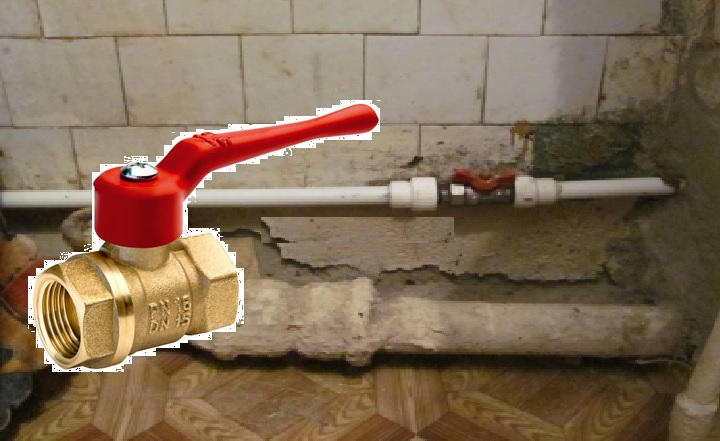
When choosing a straight-through faucet, look at its body—it has an arrow indicating the water direction, which is important—and also consider the size of the control lever and its location.
For your convenience, we recommend choosing a faucet whose handle will not hit nearby objects or a wall when open or closed.
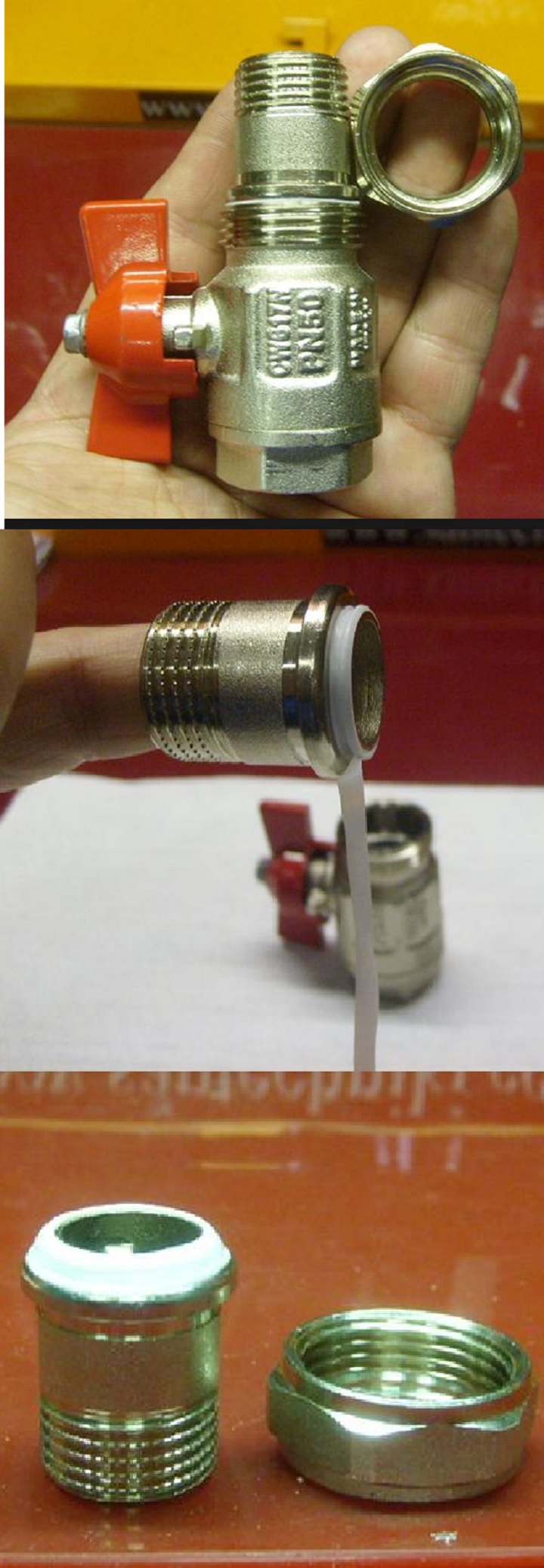 The installation of a through-flow valve is no different from the installation of a limit valve: FUM tape is wound onto the external thread and installed on top of the tap. The same is true for the reverse side, where FUM tape is wound and the other end is installed.
Perhaps your master is turned towards the carving.This means that it is necessary to wind the FUM tape (or sealant) clockwise.
Don't forget to turn off the water before installing the faucet, and check all connections for leaks after work.
You may be placing your washing machine in the toilet close to the drain outlet, and that makes sense.
There are quite a lot of interesting solutions in this regard.
For example, installing a small automatic washing machine not on the floor, but on a stand.
This has its advantages: The owner of the machine will find it more convenient to load the laundry and take it back, since he will not have to bend over.
You don't have to buy a special stand, you can make one yourself, but you should know that your structure must withstand a load of almost 150 kilograms, otherwise it will simply break under the weight of your washing machine and the laundry inside.
Installing taps on a mixer
Professional plumbers, or rather, their attitude toward installing faucets on a faucet, can be described as controversial. It doesn't look very attractive, as it's difficult to position the washing machine's inlet valve in this position.
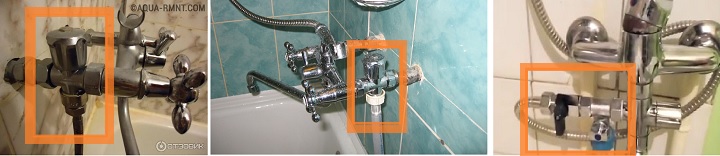
Although this idea is simple and inexpensive, it does come with some problems, such as:
- A certain load is placed on the mixer;
- The mixer will become very inconvenient to use;
- The service life of the mixer will be reduced significantly.
If the mixer is old
However, this solution is entirely feasible, for example, when a temporary connection to a washing machine is required. Washing machine owners often resort to temporary solutions, but they should be aware of the risks to their plumbing equipment and the problems they pose.
If you want to install a faucet on an old mixer tap (from the Soviet era) that is installed directly on the pipes, we recommend installing a new mixer tap along with the faucet.
This will increase the reliability of your structure, and overall, installation will be relatively easy, which isn't the case with an old faucet. If you decide to install the faucet on an old faucet, you'll have to purchase and install a flush-mounted clamp (tee), which is quite complex to install and much more expensive than a straight-through faucet.
If corrosion has damaged the pipes
Sometimes the ends of pipes are damaged by metal corrosion, making it impossible to install a faucet. There are two ways to solve this problem.
The easiest way is to file the ends to make them smooth.
In this case, the hose gasket will be pressed very tightly against the pipe. The second option is to install an extension. The ends damaged by corrosion will be hidden at one end of the extension, and the hose and gasket can be installed and secured at the other end.
Unusual placement of the tap at the spout
Some people install a through-flow faucet after the faucets, before the spout (where both warm and hot water flows), rather than, as is usual, next to the cold water pipe before the faucet. This saves on the energy required to heat the cold water, as the water now flows into the faucet already warm.
When you turn on the faucet in this location, a backflow occurs (cold water enters the hot water supply pipe). This can degrade the quality of the water supplied to your neighbors' apartments (if any). Of course, you can solve this problem by installing so-called check valves upstream of your faucet, but this has a downside. Be careful not to open the faucet valves while doing laundry.
If the car has a “stop water” system
There are washing machine models that have an "Aqua-stop" system (different manufacturers call this system by different names).
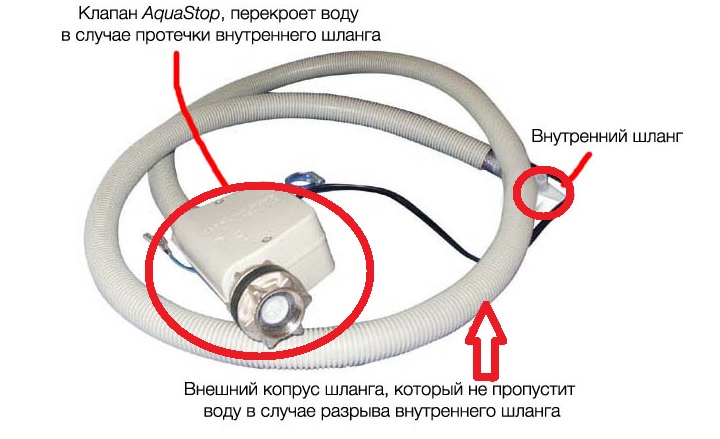 If you have a machine with such a system, then you can refuse to install a tap.
Machines with this system, or more precisely, at the end of the inlet hose, have magnetic valves that are connected by wires to the machine and are controlled by it.
In this case, the valve control system will automatically shut off the water when necessary and install the necessary “fence” through which the water will not pass.
But, unfortunately, there is no household appliance in the world that does not break down.


