
 A washing machine is an essential appliance for every homeowner and caring mother. However, this household appliance can often experience interruptions during use, resulting in clogged drainage systems.
How to unclog a washing machine drain at home, and how to proceed prevent this problem from occurring We will tell you more in our article.
Types of blockages and the reasons for their occurrence
The appearance of blockages in the drain hose is one of the most common phenomena that can cause the washing machine to fail.
Specialists in service centers for repairing the drain of a washing machine, there are two types of blockages: normal and mechanical.
Mechanical
The main reason for the formation of mechanical blockages is the entry of foreign objects into the filtration system of the structure.
Most often, the role of such “contaminants” is played by:
 Money coins and small buttons.
- Locks from clothes.
- Bra clasps and underwire.
- Toothpicks, napkins, small toys.
- Money and other contents of the pockets.
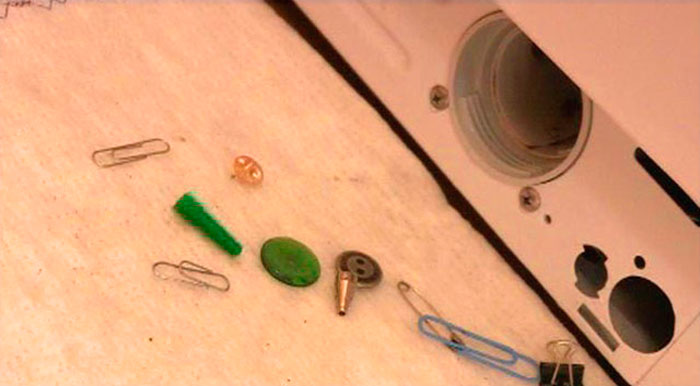
When foreign objects get into the filtration system, the drainage system becomes blocked and the washing machine simply stops working.
Ordinary
Besides the presence of foreign debris, the washing machine drainage system can become clogged in other, natural ways.
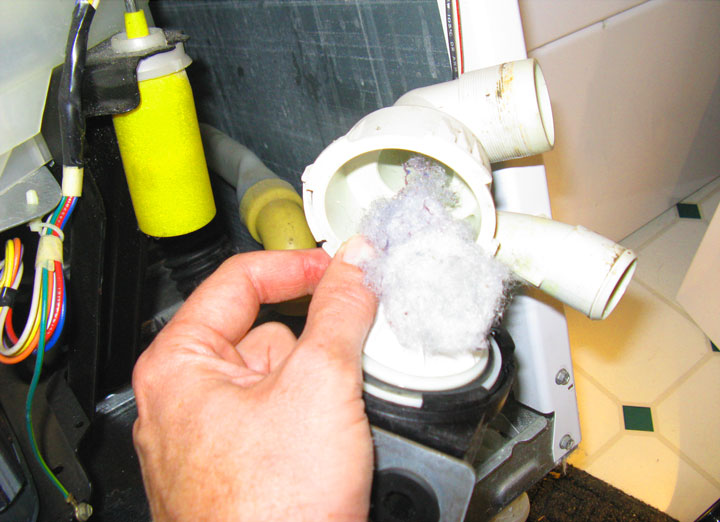
 This often happens due to the accumulation of all kinds of lint, fluff and pieces of cotton wool that were in the machine on the filter.
Pet hair also remains on everything, especially your washing machine. When you run a new wash cycle on your bedding, clothes, or anything else, the hair also ends up in the drain hose, where it remains until, after a certain amount of time, it clogs the filter.
A blocked washing machine drainage system can be identified by a number of obvious signs.:
 Decrease in drain speed used liquid (contaminated water).
- A software failure occurs when the washing machine does not automatically switch to rinse or spin mode.
- Complete blocking of the unit's operation.
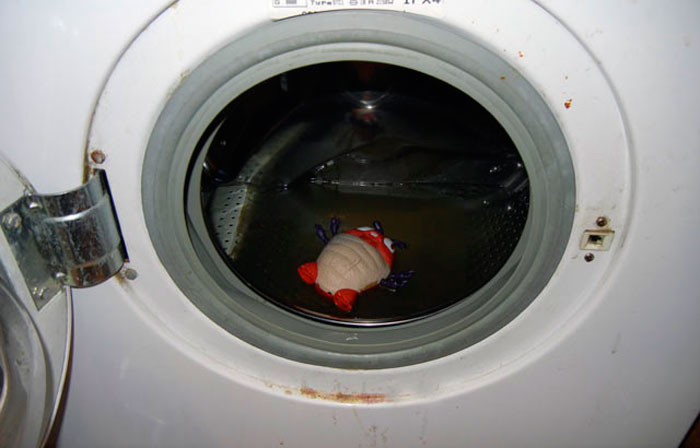
If your washing machine is still under warranty, you can easily have it repaired without any financial investment. However, if the problem persists after several years of use, you should try cleaning the system yourself. This simple cleaning procedure can be done in half an hour.
Structural features of the drainage system
Before you start troubleshooting this kind of problem, you should understand the theory behind it. drainage system devices Washing machine. Newer models are designed to drain used liquid from the drum into a special nozzle.
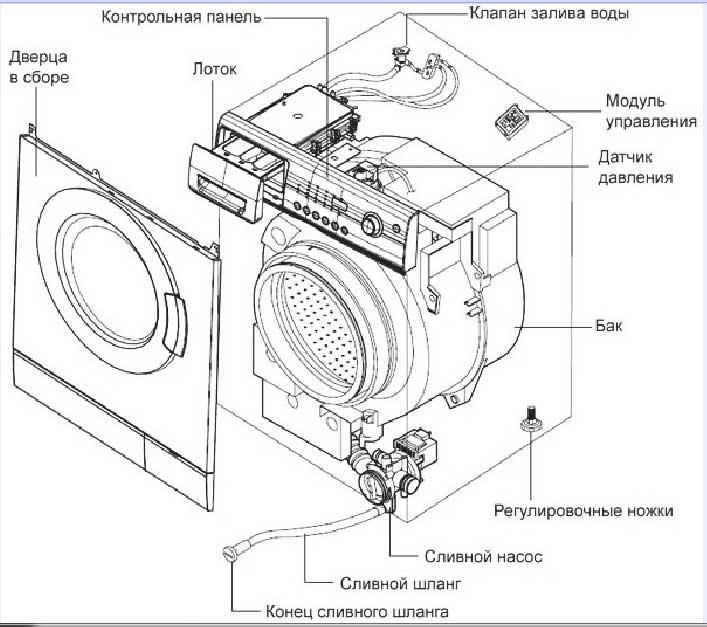 The drain pipe is connected to a cleaning filter, which collects all the dirt and fine impurities coming from the drum with the water. The used water, passing through the nozzle and filter, enters the pump. There, under the pressure generated by the constant rotation of the impeller, it flows through a hose into the sewer.
The drain hose outlet is connected either to a nearby trap or to the sewer system itself. Some people simplify the process by not connecting the hose to the sewer system, but simply lowering its end into the bathtub or sink.
But a clog is a tricky problem, and it can occur anywhere in the drainage system. What makes clearing a clogged washing machine easier is that clogs most often occur in the drain area. cleaning filter.
How to clean a drain hose yourself
If you do find a malfunction that is caused by a blockage in the washing machine's drain hose, the first step is to ensure full access to the drainage system.
Cleaning the filter
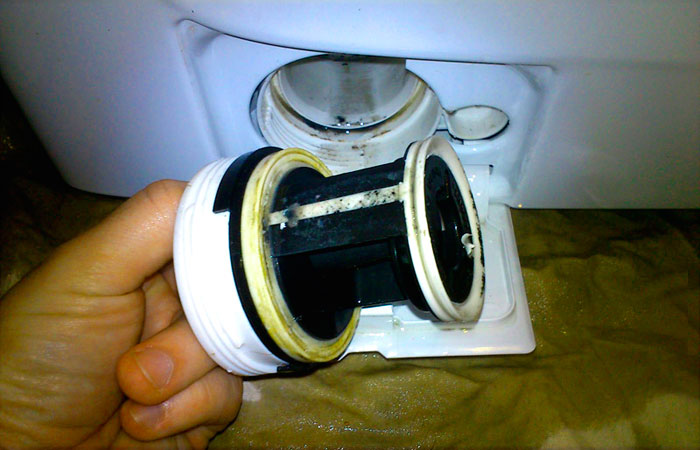
The filter system is located at the bottom of the washing machine, on the right side, behind a small door with a hatch. To open it, pry the edge of this hatch with your fingers or a flat, blunt object. On some models, the panel can be opened by pressing a latch or by bending the rotating hooks.
Clean the filter in the following sequence:
- Unscrew the screw and carefully remove the filter.

- We tilt our structure and drain all the liquid, having placed a container with low sides underneath for this purpose.
- Once the machine is drained, remove any foreign objects. If any structural components are completely encased in scale, they must be completely replaced.
- Next, once you have removed the dirt by rinsing with water and wiping with a damp sponge, inspect the area where the filtration system is located and remove any remaining dirt from the walls.
- Clean it out pump and the adjacent system, then connect your device to the power supply and enable the flush mode. If you've done everything correctly, the blades and impeller of the pump system will rotate smoothly.
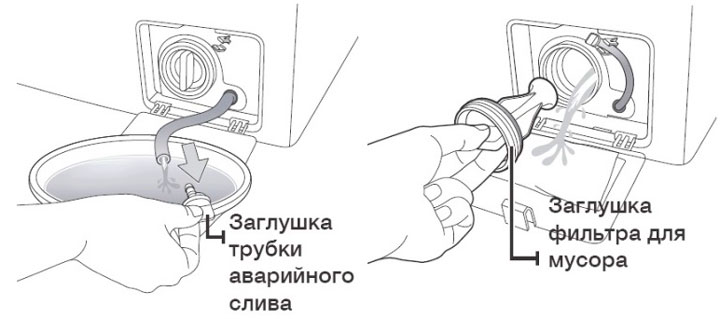
You can learn about all the details in a video review that describes the process in detail.
Attention: There are exceptional situations when the system is so dirty that it simply cannot be removed. In this case, it is recommended to remove one wall of the washing machine and carefully clean the filter from the pump side.
Dismantling the drain pipe
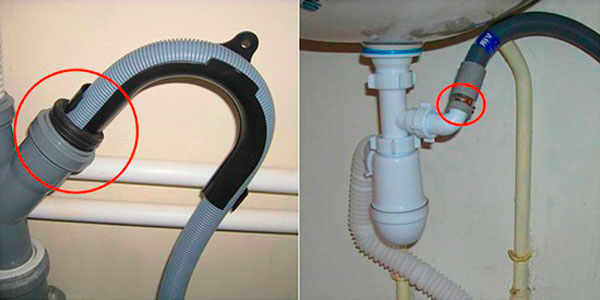 It's also possible that the drain will simply be blocked, even at the connection to the sewer pipes. In this case, you'll need to disconnect the hose to clear the drain.
Everything is carried out in several stages:
- Disconnect the washing machine from the power supply.
- Turn off the water supply valve.
- Using a flat-head screwdriver, remove the side or front bottom panel.
- Pour out the remaining used water through the drain filter.
- Using pliers, disconnect the end of the hose from the sewer pipe or trap.
In brands like VEKO, Ariston, Candy, Samsung, and Indesit, the drain hose can only be accessed through the bottom. In such cases, to make cleaning the clog easier, lay the washing machine on its side, placing a cloth underneath it. After loosening the clamp with pliers, you can safely disconnect the hose from the pump.
In Electrolux or Zanussi washing machines, the hose runs along the rear wall. To access it, remove the rear cover. Next, release the latches, detach the drain hose, and then unscrew it from the water inlet hose. To completely remove the drain hose, you need to remove the top cover completely, unscrewing all the bolts and releasing the clamp.
In machines like Bosch and Siemens, the hose can be accessed by removing the front panel. Follow these steps: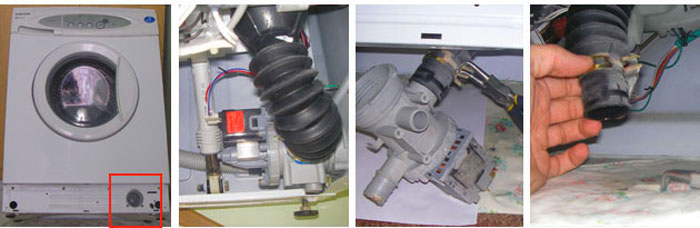
- We remove the sealing rubber from the front panel and loosen the clamp.
- We take out the bottom panel and the pull-out tray for detergents.
- We unscrew the bolts for fixing and remove the hatch door lock.
- We remove the front panel of the case.
- We loosen the clamp and pull out our hose.
Cleaning the washing machine drain hose
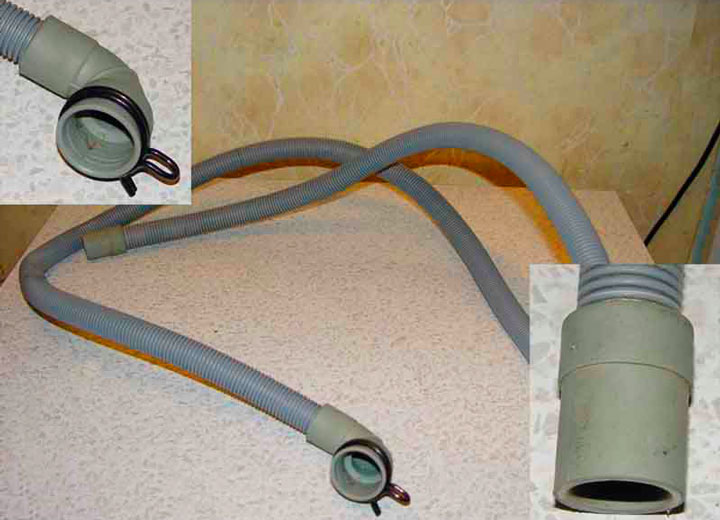 The drain hose is cleaned by rinsing and scrubbing the inside walls with special brushes. Professionals are accustomed to using synthetic brushes rather than metal ones.
To clean the inside of the walls, insert the cable into the dirty hose and move it back and forth. After this procedure, rinse the hose with water. If the dirt is not removed the first time, repeat the procedure.
Helpful tip: To achieve the best cleaning effect, use warm water with citric acid added to it.
The hose, washed from all sides, only needs to be secured in its old place, performing all the described steps in reverse order.
Preventing blockages
To avoid this problem from occurring in the future, follow these steps:
 Always check all pockets before washing.
- Use special garment covers for washing.
- If your clothes have buttons or zippers, fasten them before loading them into the machine.
- Add extra ingredients along with the powder. means for water softness.
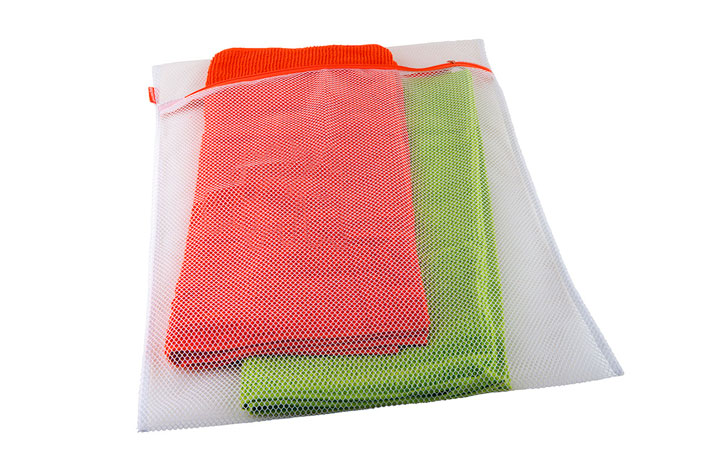
To provide yourself with complementary protection against blockages in the unit when using the machine, install an additional filter on the supply pipe.
Professionals recommend preventative maintenance every two to three months. To do this, you should periodically inspect your system, check your filters, and remove any minor clogs that have already appeared.


