
 The pump of the washing machine is jokingly called the “heart” of the machine by the mechanics.
The main function of the pump is to pump clean water into the tank before the washing process, and then pump out dirty water after the washing process.
Time will pass, for some it will take much longer, for others less, and the time will come to change the pump, because this element wears out, as it bears a lot of load.
In our article, we'll tell you how to properly check the pump, how to access it, and most importantly, how to perform repairs yourself.
Causes of drainage system pump failure
There's no need to immediately break loose and dismantle the structure at the first wheezing sound; first, you need to determine what kind of breakdown there is and where it is located.
It's also possible that the pump isn't the cause. So, here are the next steps to check:
- The pump needs to be listened to;
- Open and clean the filter (if there is such a need);
- Check drain hoseIf there is dirt, clean it;
- Check the rotation of the impeller on the pump, it may be slowing down somewhere;
- Check the contacts and sensors that go to the pump.
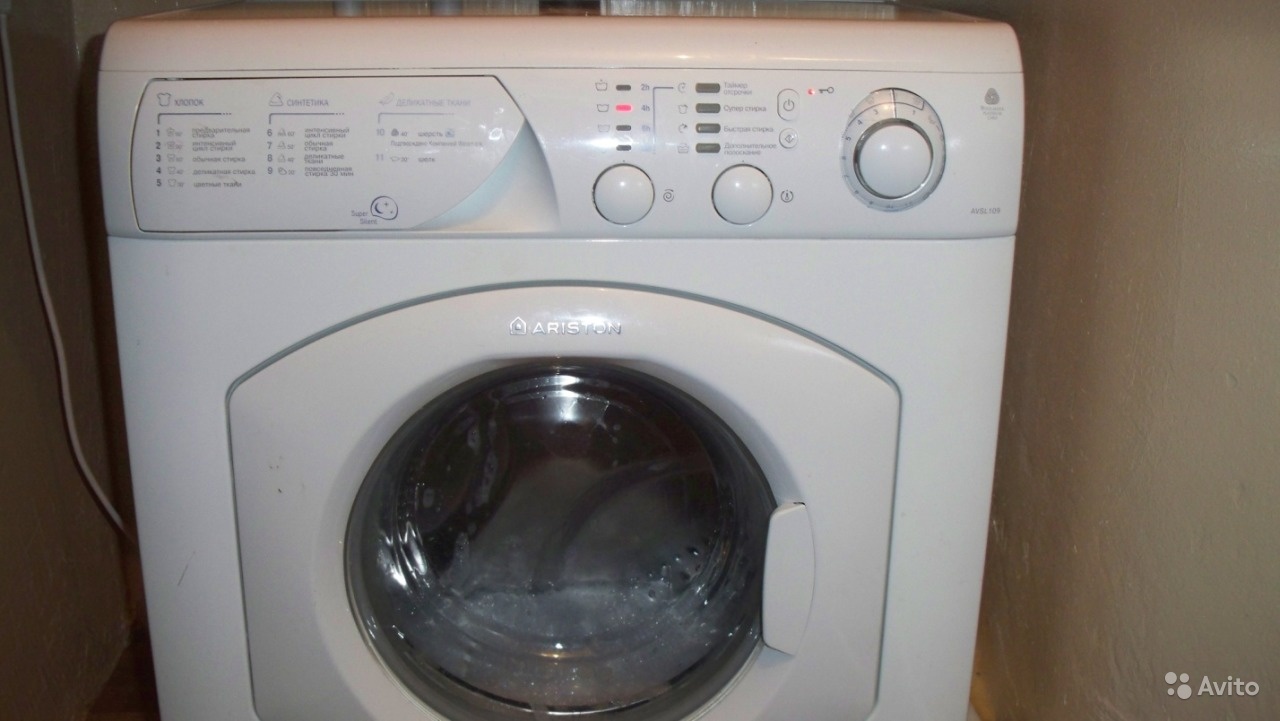 Some problems can be detected by listening; you don't need to be a master to do this. Simply approach your assistant during the washing process and listen carefully. Listen to the filling and draining of the drum according to your program.
If your pump is running hums and it works, but no water enters the tank, or not a single sound is heard from the pump - then we can say that the breakdown is localized.
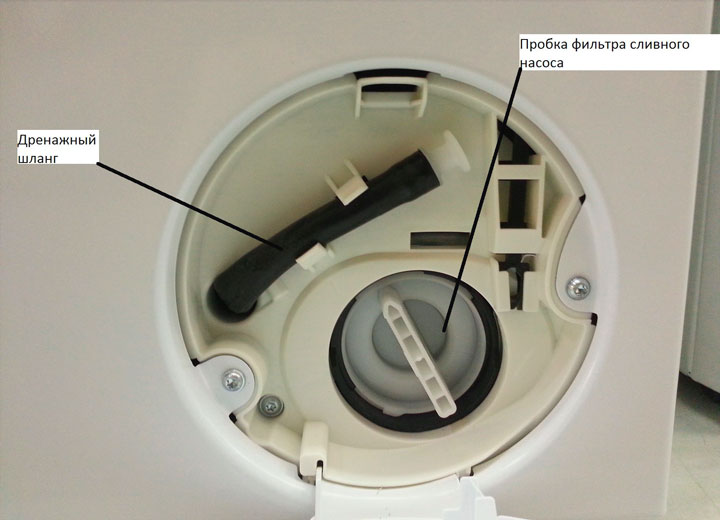 After checking, you need to determine whether the pump needs to be replaced with a new model or whether it can be replaced independently. First, remove the drain system filter, and clean it from various types of debris.
There is a possibility that the impeller on the pump is not spinning, or is spinning slowly due to a coin getting into it or bone bra. In this case, breakage is possible.
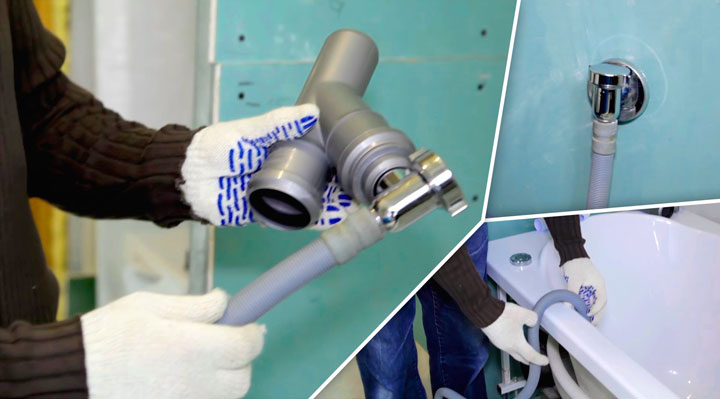 If you have cleaned the filter, but it has not helped you in any way, then you will have to take on drain hose and check for contamination And it. After you've checked and cleaned the hose, reinstall it and run a test wash. If your pump continues to make unidentifiable noises, we need to continue troubleshooting.
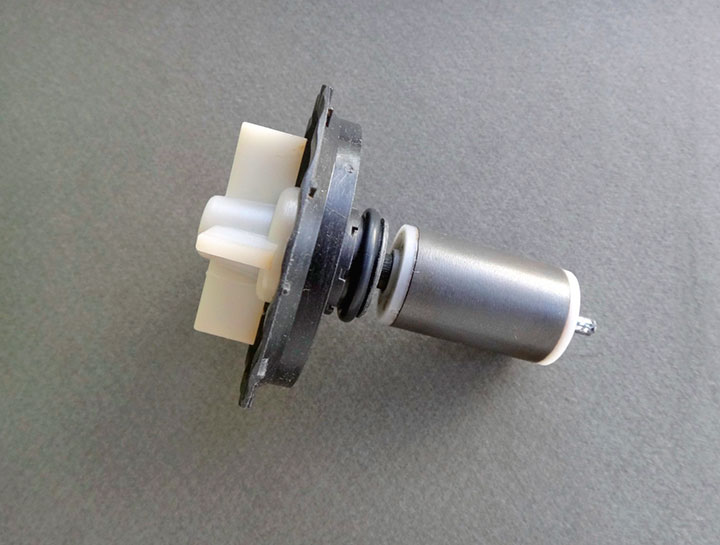 Let's Let's check the drain pump impeller, how it rotates. First, you need to access this impeller (it's possible to access it without disassembling the machine) through the drain filter, which can be unscrewed. For ease of access, get a flashlight and shine it into the hole from which you removed the plug.
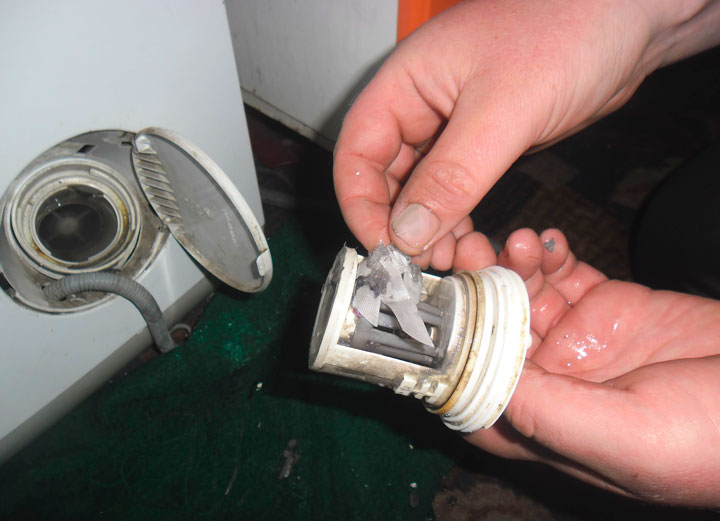 In this hole, you can see the impeller of our capricious pump. Simply insert your hand and spin the impeller, thereby checking its functionality. If the impeller is slow, it's worth checking the inner housing (where the impeller is located) for any objects that could slow it down. These are usually threads, lint, wire, etc. If your impeller rotates freely, or you simply can't find anything that could be interfering with its rotation, you'll have to disassemble the structure.
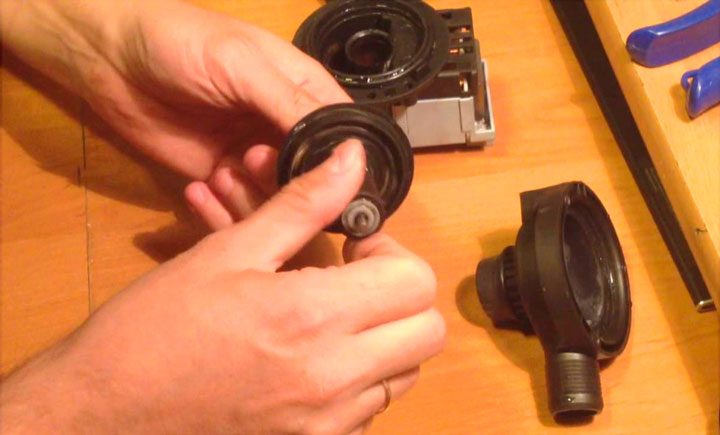 Once you've reached the pump, let's check the impeller again. If you want to check the drain pump, you can remove it and examine it up close.
If you haven't found any foreign objects, but the impeller still slows down, then the cause lies in the mechanism itself, and it will have to be disassembled down to the last screw.
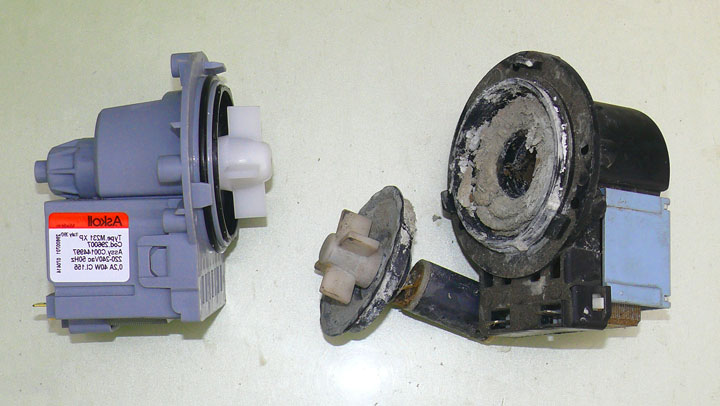 Perhaps your impeller spins normally, but occasionally slows down. If the problem is with the sensors or burnt contacts, there may also be a problem with the control unit.
If you have checked everything twice and found nothing, and the pump still does not want to work, then you should replace it.
Repair or replacement of a washing machine pump
Tools needed for repairs
The tools you need will depend on the type of malfunction, so we'll provide you with a comprehensive list of all the necessary tools. The following list will help us troubleshoot the pump:
- Drainage system pump assembly;
- New impeller;
- Pad;
- Axis;
- Pulley;
- Cuff;
- Drainage system pump sensor;
- Contacts.
It's important to purchase a new pump and parts correctly. To be on the safe side, take the old part to the store, and the sales assistants will help you find a replacement for your old pump.
It's best to do the same with other components. To avoid searching for all the parts in the corners of the shopping center, the easiest way is to bring the disassembled pump and show them which parts are missing.
 If you want to order components online, it's best to search by part number. You can find them on the old, removed pump.
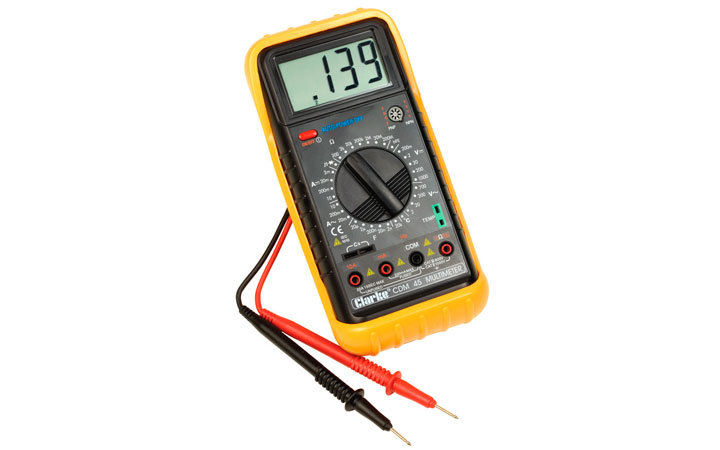
There shouldn't be any problems with tools. In particular, we don't need anything other than a Phillips-head screwdriver and a penknife. However, if you need to check the wiring, sensors, and contacts for functionality, you'll need to purchase multimeter.
How do I get to the drain pump?
You don't need to completely disassemble the machine to access the drain pump. Repairs today depend on the model and manufacturer.
Some pumps are fairly easy to access, but others aren't. Let's take a look at each one in turn.
 At firms Samsung, Ariston, Candy, Ardo, LG, Whirpool, Beko and Indesit The easiest way to access the pump is to simply turn the washing machine on its side, remove the rear panel, and the pump is right there in front of you.
- Companies Electrolux and Zanussi They produce some rather complex models. To access the pump in these models, you need to unfold the assistant and remove all the screws holding the rear panel.
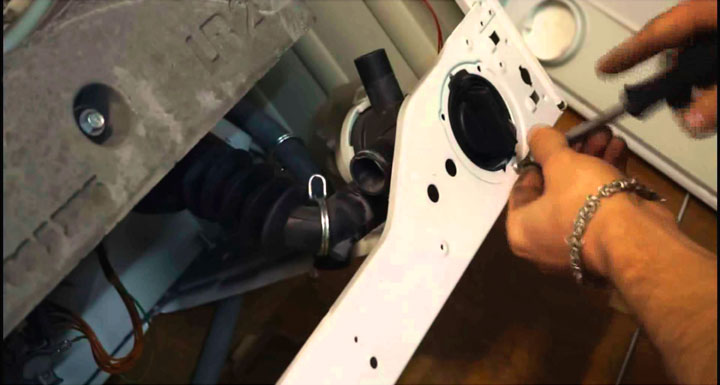
- At firms AEG, Bosch and Siemens The most complex models make accessing the pumps very difficult. This requires removing the front panel and control panel.
We fix everything ourselves
As we mentioned above, the pump is a fairly simple device and is fairly easy to repair. If no external damage is detected, it should be disassembled and the internal components examined closely.
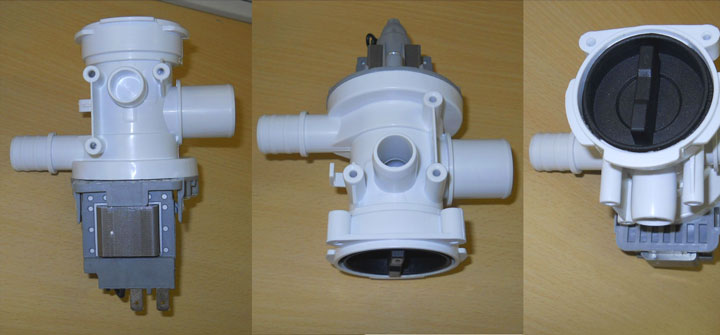 One of the most common causes of pump failure is the impeller. The impeller can fall off its axis, but the pump will still run and make a characteristic noise, but no water will be pumped. The solution to this problem is quite simple: simply buy a new impeller and install it in its place.
When disassembling the pump, we recommend paying attention to the rubber seals. If there's even the slightest sign of wear, they should be replaced.
Inspect and check all moving parts of the pump and pulley. If you find any signs of wear, everything needs to be addressed.
 Pump parts are very cheap, but don't neglect replacing them, or use genuine parts. Putting them off can lead to wasted time and ultimately replacing the entire pump.
When you are repairing an old pump, you should be aware that there is still water in it, so you should prepare in advance and bring water containers and floor rags.
So, as you already understood, the pump can be repaired myself, without calling service centers or hiring technicians. To do this, simply read our article thoroughly. Good luck with your repair!


