
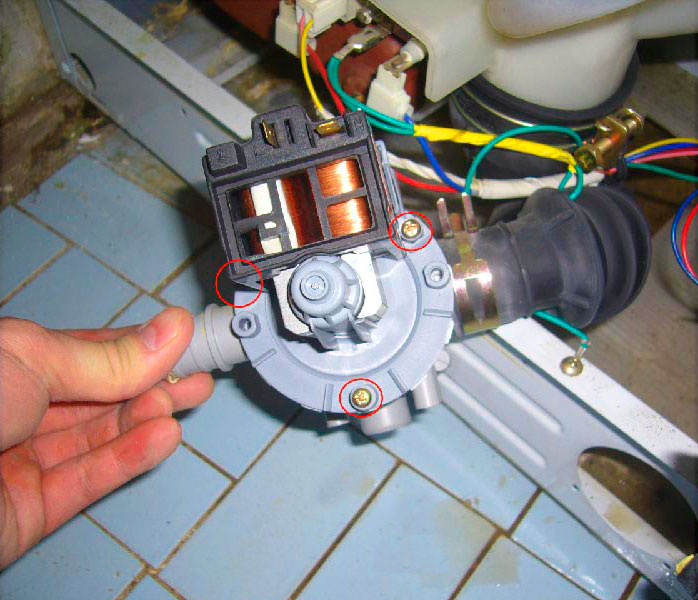
 In modern automatic washing machines, checking the pump isn't a difficult task, but not everyone does it correctly. There have been cases where owners have replaced working drain pumps, spending a significant amount of time and money, only to find the problem persists, indicating a faulty component elsewhere in the washing machine.
We'll tell you how to properly check the pump in your washing machine, which will help you protect yourself and your assistant from a huge number of different breakdowns, and you'll learn how to find and fix them yourself. fix breakdowns of this nature.
What do we need to check the pump?
To determine that the pump is the problem, you need evidence or at least signs of the problem that can be detected during the washing cycle of the washing machine.
Let's talk about the signs in more detail:
 The first sign is error code – it appears due to the results of the self-diagnostic system – almost all modern automatic models are equipped with such a system. If the error code you deciphered leads you to a pump failure, it’s best to first check drain pump.
- Before starting the process of draining water from the drum, the washing machine stands still and is in one position with all the water.
- In a washing machine, the drain pump does not produce any sounds or even signs of life.
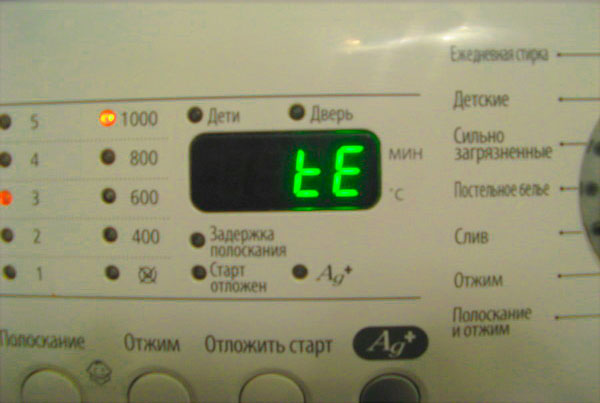
If you already know for sure or even suspect a possible problem with your pump, don't put off repairs; it's best to immediately look for the necessary tools.
We don't really need a lot of equipment like a plumber, we just need a couple tools, which in principle is not difficult to find:
- Screwdrivers (flat and Phillips);
- Multimeter;
- Pliers;
- An awl (or a needle in extreme cases).
If you don't have a multimeter, we recommend getting one, as it will come in handy in the future, not just for this problem, but in general. It's a pretty essential tool for everyone to have around the house. So, grab a working multimeter and get to work troubleshooting.
We are getting closer and closer to the element
In an automatic washing machine, it is possible to examine the drain pump without disassembling the housing.
Many models offer this feature. To access the drain pump, you need to:
 disconnect the machine from the power supply and all communications,
- first drain the water through the drain filter we need,
- withdraw detergent tray (powder or conditioners, etc.),
- Place a floor cloth underneath (so to speak, as a safety net in case there is still water left in the machine)
- turn the structure over to the right side of the body.
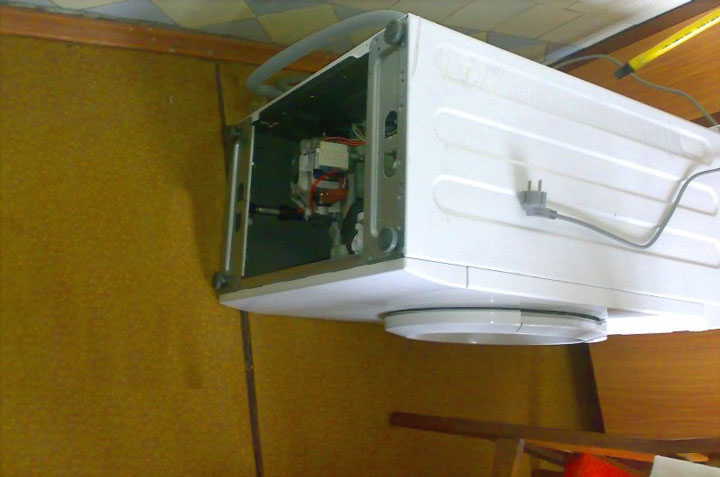
Most washing machines have no bottom, which means that almost all elements are always in the open position.
In principle, this is great. It's good because it allows you to access the pump and even the motor from underneath without disassembling the machine. It's bad because parts can be damaged during transport or handling, or elements can become clogged and eventually fail due to dust.
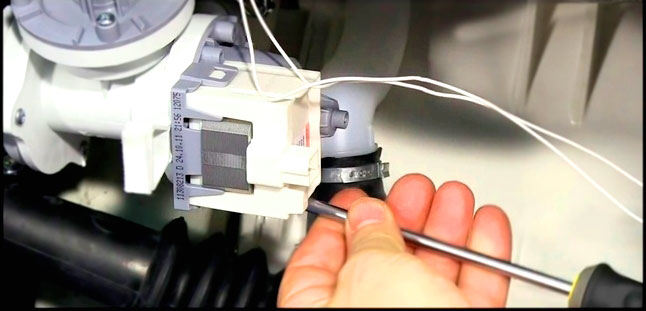 In this case, you need to look through the bottom of the structure into the housing, where you'll see the pump. The pump is located opposite the drain pump, or more precisely, opposite its housing. You probably already know what I'm talking about, since you regularly clean the pump after unscrewing it. The pump is also very hard to miss.
It's possible that your particular washing machine model has a special cover on the bottom. This shouldn't be a problem, however. Just lay the washing machine on its right side, take a Phillips-head screwdriver, and remove the screws holding the cover in place. Once everything is loose, simply pry the cover off (you can use a flathead screwdriver) and remove it, giving you access to the "inner world" of your washing machine.
Things will be a little more complicated if your washing machine is equipped with leak protection.In this case, there will be a tray with a special sensor at the bottom, which also needs to be removed. To achieve this goal and finally examine the washing machine's drain pump in this situation, we need to follow all eight steps of this algorithm:
 It is necessary to disconnect the washing machine from the power supply, the sewer and water;
- Drain all remaining water through the drain filter or through the emergency water drain hose;
- Move the washing machine to the middle of the free space, having first laid dry rags on the floor (for safety);
- We take out the detergent drawer;
- We turn the structure over onto the right side of the body;
- We pry and pull off the tray (you need to pull off 4 latches, a screwdriver (flat) is perfect for this);
- We move the pan a little - this is done in order to disconnect the wire that goes to the sensor attached to the pan body;
- We move the tray further away, and we can now freely dig into the washing machine components through the bottom.
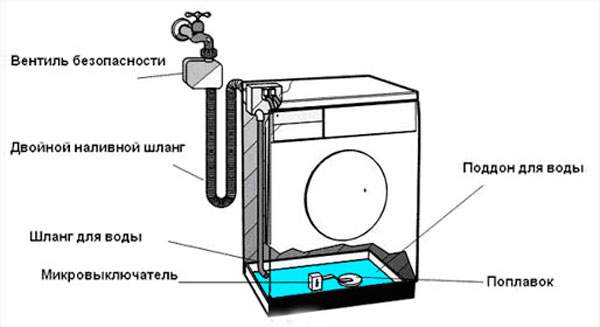
A sensor installed on the tray detects leaks. For example, if water somehow gets into the tray during the wash cycle, the sensor detects this and shuts off the water, simultaneously stopping the wash cycle. This is designed to eliminate the problem of "flooding."
We check the mechanical and electrical parts
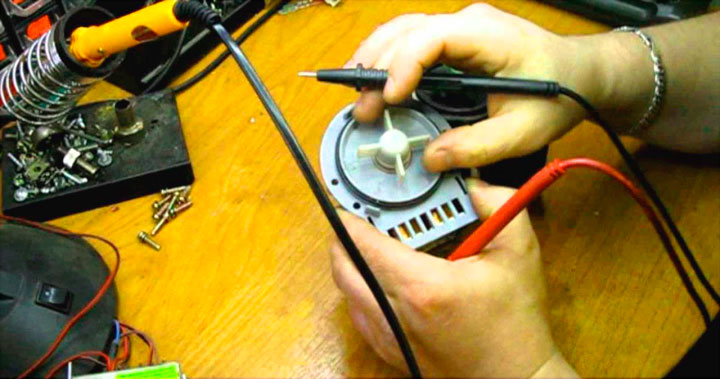
Once you have located the drain pump through the bottom of the washing machine, it should be checked immediately.
When repairing a unit themselves, homeowners typically make one of the most common mistakes newbies make: they immediately try to check the drain pump with a multimeter, imagining that the problem is in the electrical system.
But as practice has shown, one of the most common causes of pump failure is various types of contamination, for example, hair, dirt, or other types of debris.
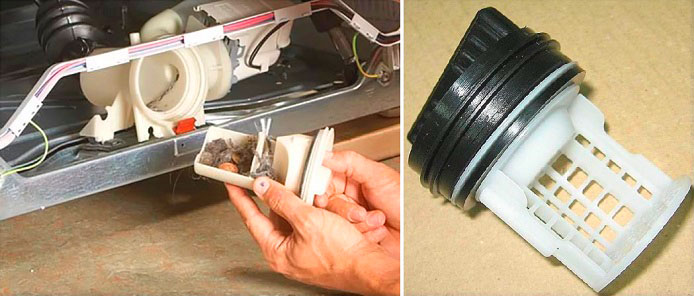 As we know, the drainage system of the washing machine is designed in such a way that almost all the waste that gets into laundry bin By chance, it ends up in the debris filter. However, even the smallest particle of debris that comes into contact with the impeller of the drain pump can cause you a huge number of problems. For example, hair: it gets wrapped around this very same impeller. impeller and thus may stop the pump from working. In such cases, it is necessary to take immediate action and resolve the problem.
Pump repair, as well as its inspection, begins with the removal of this element. The pump is quite easy to remove, here is the correct procedure:
 It is best to take a photo of the location of the wires;
- Then you can disconnect the wires from the element;
- Loosen the clamps (use pliers) that hold the hose and pipe on the pump;
- Remove the pipe and hose;
- Grasp the pump body and turn it half a turn counterclockwise - this will remove the pump.
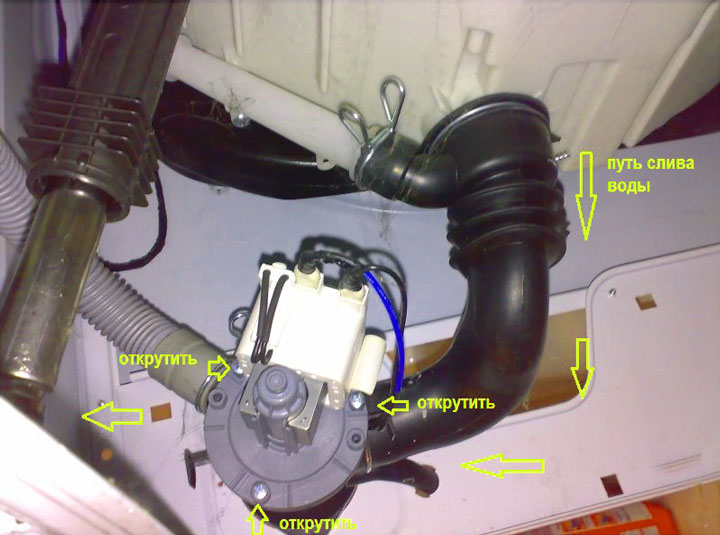
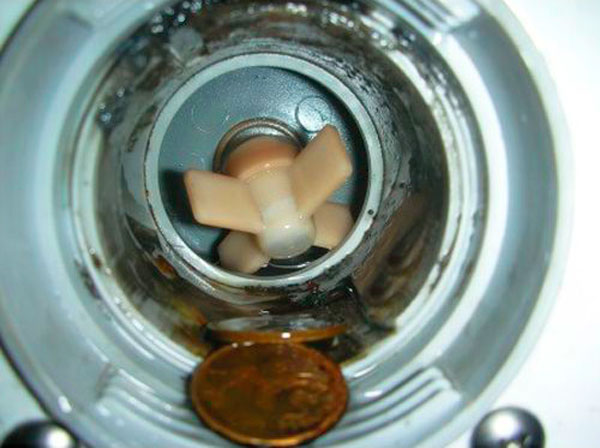 Next, you need to pry off the special latches that hold the pump body in place, but before doing this, you can inspect the impeller. You'll immediately notice if there's something wrong with the impeller, for example, if there's hair tangled up in it. When inspecting the pump's mechanical components, you need to check the mechanism itself, as well as the rubber seals. You should also clean all pump components and check for any remaining dirt. If any is present, clean everything again.
If you've done everything correctly, checked the mechanical part of the pump, the pump, and still haven't found anything, then you can proceed to checking the electrical part.
First, set the multimeter to check voltage, then connect it to the drain pump terminals. If the multimeter display shows a reading of zero or one, your motor is completely and irreparably burned out and needs to be replaced. If the reading is three digits, it's best to continue troubleshooting, as the motor is fully functional, making it clear the pump isn't the problem. There's a slight possibility it could be a triac on the control board, but we can't say for sure.
[warning: There's basically nothing complicated about checking the drain pump and the pump in an automatic washing machine, especially if you've secured help in advance in the form of instructions from the experts.]/warning
To locate, remove, and inspect the pump and drain pump, you don't need to disassemble the machine down to the last screw. Checking all the components will also take a lot of time. Best of luck with your repair!


