
 Without a doubt, the washing machine is our number one helper. It's like being without hands. But there are times when it needs a little help itself.
If during the washing process the machine makes a buzzing sound that was not there before and at the same time water does not drain, it's time to help her. Probably few people want to scoop water out of a washing machine that suddenly refuses to drain.
Indesit washing machine pump design
What is a drainage system?
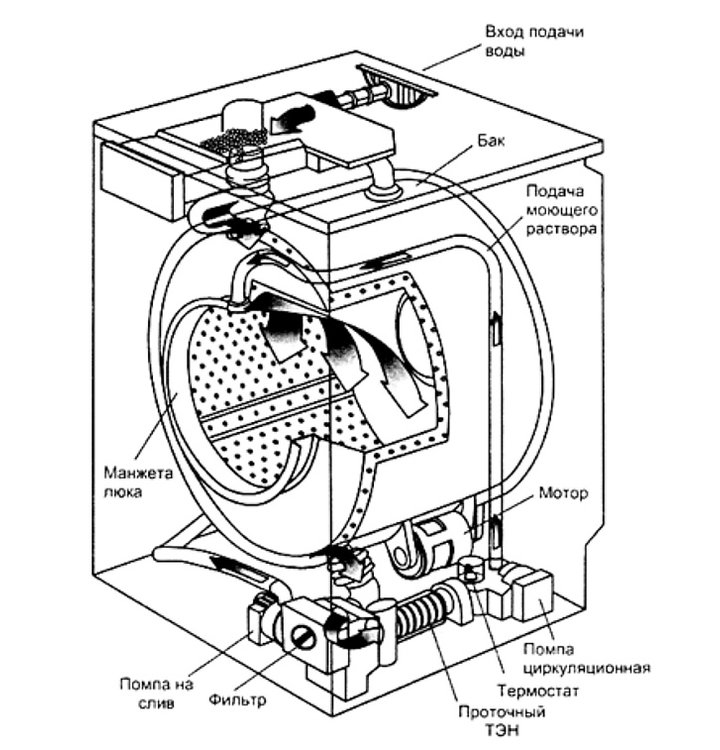 The used water from the drum flows through a short pipe to drain pumpAfter receiving a signal from the electronics, the pump forces water into the drain pipe, which then flows into the sewer. Once the tank is empty, the drain pump turns off.
This entire system is mounted on a volute, the so-called distributor, which resembles it in shape. The enormous load puts a strain on the pump, especially in the wringingThe drain system includes a filter, and it plays a vital role in the washing process. Water from the drum enters the filter, which is a grate that prevents large debris such as coins, pins, buttons, etc. from leaking through. This prevents the pump from failing prematurely due to blockage.
Filter clogged
A clog is the most common cause of a malfunctioning drain system. To remove it, simply clean the pump, drain filter, and drain trap. How do you do this?
 The washing machine is de-energized.
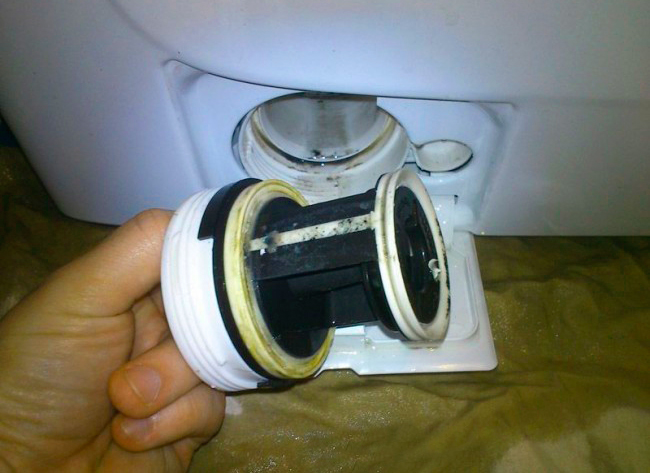
- There is a small door at the bottom, behind which is drain filterBefore you begin unscrewing it, you need to place a low container underneath it or tilt the machine back and place a basin underneath, for example. The liquid that spills out usually totals at least 1 liter.
- It unscrews filter counterclockwise.
- The stage of cleaning and rinsing under strong pressure of running water.
- Reassembly and running a test wash.
If the drain still doesn't work after this, then we move on to the pump.
Pump damage
The rule of de-energizing and shutting off the water is mandatory!
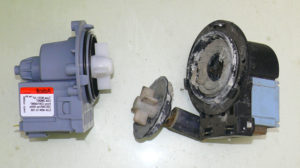
Before accessing the pump and checking its functionality, you'll need to get inside the washing machine. Armed with a wrench and screwdrivers, you'll first need to consult the machine's manual. This is to determine the location of the pump in Indesit and other washing machine models, as its location varies depending on the model.
How to remove the pump from an Indesit washing machine
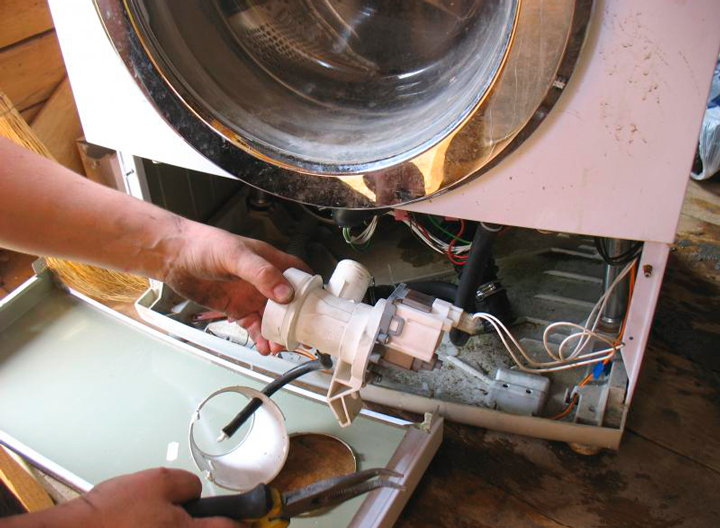
Indesit machines are designed so that the pump is accessed through the bottom of the machine. Most often, the bottom part is completely missing, but if it is, it's easy to remove. So:
- We open the panel or door at the bottom of the machine.

- There is a screw screwed into the side that needs to be unscrewed.
- Place a container for water, tilting the unit backwards.
- Unscrew the filter counterclockwise. Water will begin to flow.
- For convenience, lay the machine on its side. Turn the pump counterclockwise, push it in, and pull it out through the bottom.
- The wires and clamps with pipes are disconnected.
If we consider Bosch, Siemens, AEG models, the algorithm of actions is different.
 The detergent tray is removed from the machine.
- There is a screw underneath that can be unscrewed.
- The filter door opens at the bottom.
- The bottom panel is removed after unscrewing the screw.
 After this, two more screws are unscrewed and the rubber band is removed from the hatch along with the cuff.
- The hatch lock also needs to be released. This can be done by releasing the clamps.
- The front cover is removed.
- The screw is unscrewed and a container for water is placed underneath.
- After removing the clamp, the pipe is removed.
- The water is drained.
- Electrical wires are removed.
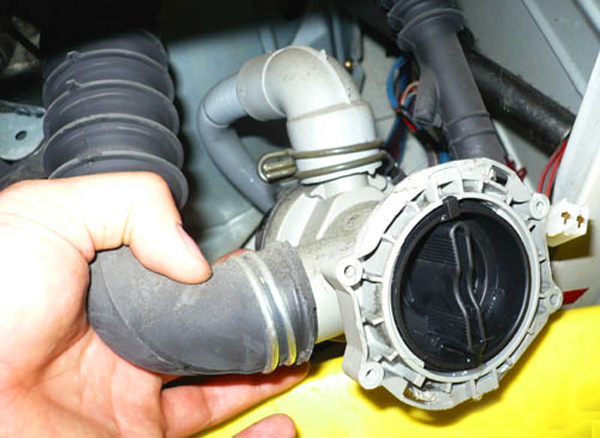
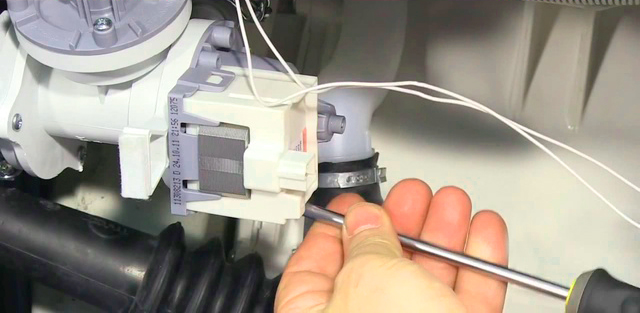
The same steps can be used to access the pump on Ardo, Whirpool, Ariston, Candy Veko, Samsung and Lg models.
To access the pump on a Zanussi or Electrolux washing machine, follow these steps:
 The drain hose is detachable at the back.
- The screws on the back cover are unscrewed and it is removed to the side.
- The terminals with wires are also disconnected.
- The pump unscrews.
- The pipes from the drain hose and filter are disconnected.
- Pump cleaning stage.
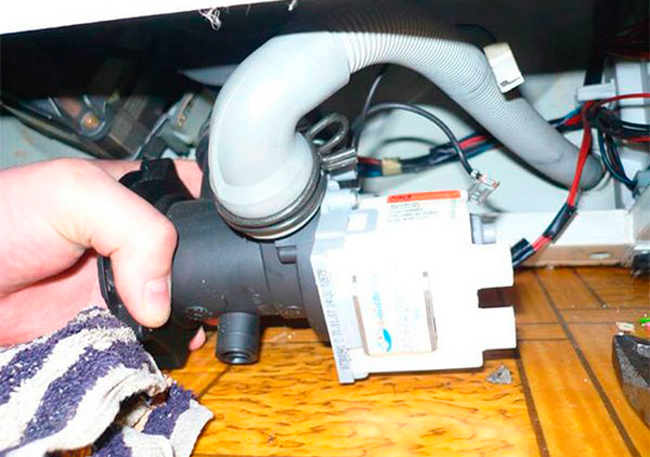
When disassembling a washing machine, it is important to photograph each step to avoid problems during reassembly.
Cleaning the pump of an Indesit washing machine and other models
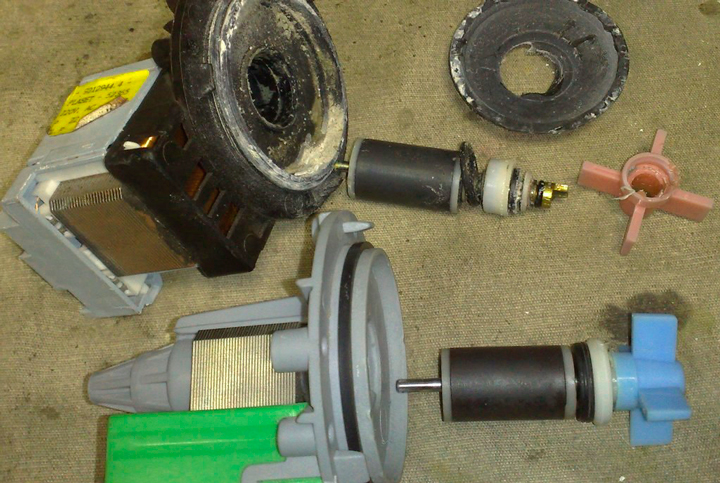 The impeller in the drain pump needs to be cleaned, so it needs to be removed from the pump. To do this, remove several screws on the pump body that connect the two parts. The impeller rotates when it's working properly. Typically, objects such as threads, wool, and fibers get wrapped around it. Carefully remove all these foreign objects. Then, clean the inside of the impeller. After these steps, replace the pump, and reassemble the machine in reverse order. After reassembling the machine, run a test wash, that is, without laundry. The purpose of this test is to determine whether the problem has been resolved. noise, whether there is a leak and whether the drain is working.
If the drainage system cleaning procedure does not produce a positive result, the solution is to replace the old pump with a new one.
Why does the drain pump get clogged?
There are three main reasons:
- Hard and dirty water.
- Foreign objects getting into the drum with laundry.
- Low-quality detergents.
Following simple but important rules for operating your washing machine will help prevent pump failure.


